Russian jet-powered Shahed drone tracked heading north across Cherkasy Oblast
What happened
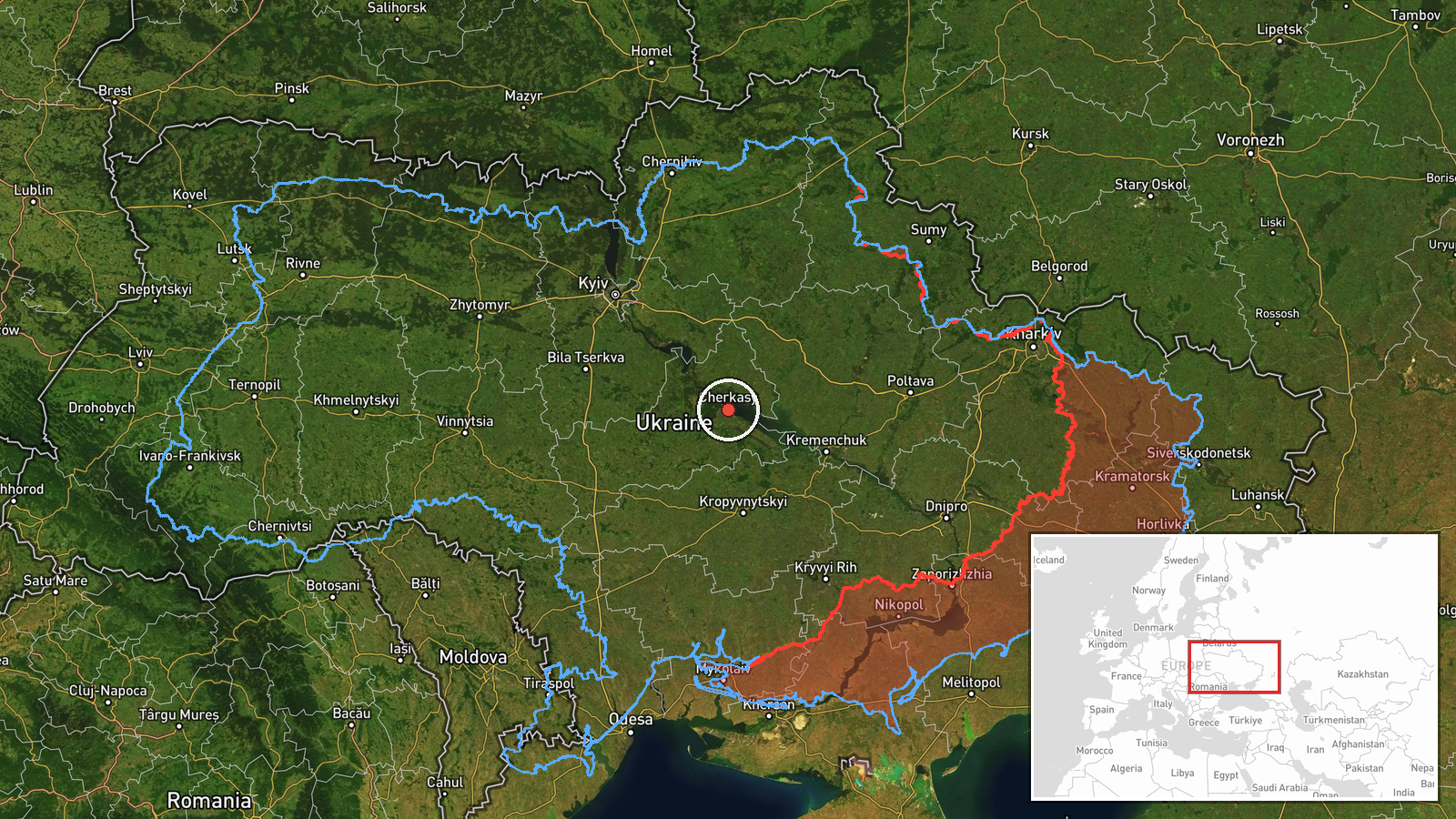
Ukrainian air monitoring reported one Russian jet-powered Shahed (Geran-3) drone transiting the border region between Vinnytsia and Cherkasy Oblast on 15 October at 17:50 UTC, with a northward trajectory. The report was posted by the Command of Air Forces of the Ukrainian Armed Forces via Telegram. The drone's intended target and whether it was intercepted remain unspecified in available reports.
Context and assessment
This sighting occurs within an ongoing Russian drone campaign. Ukrainian air defenses reported downing or suppressing 536 Shahed-type and Geran drones plus decoys during the night of 14–15 October, alongside cruise missile strikes. Intelligence assessments released on 14 October warned of Russian preparations for large-scale combined missile and drone attacks. The Geran-3, a jet-powered variant with extended range, represents a persistent threat to central Ukrainian population centres. Cherkasy Oblast, located west of the Dnipro River and home to significant civilian infrastructure, has been a recurring target corridor in recent Russian aerial campaigns.
Sources and confidence
Single source: Telegram channel of Ukraine's Command of Air Forces (@kpszsu), the authoritative Ukrainian air monitoring body. No independent cross-confirmation reported. Confidence score of 8.0 reflects the source's official status and consistent reporting of drone transits, but the low confidence score (under 10) reflects lack of secondary confirmation and uncertainty about outcome. Confirmation of interception, final location, or damage would substantially raise confidence.
Location
Reported at the administrative border between Vinnytsia and Cherkasy Oblast (approximate coordinates 49.44°N, 32.06°E), with northward heading. Precision rated as regional rather than point-specific. The location lies in central Ukraine west of the Dnipro River, approximately 150 km south of Kyiv. Nearby major settlements include Cherkasy city and Bila Tserkva.
Related events nearby
- Ukrainian air monitoring: 1 Russian jet-powered Shahed (Geran-3) drone passing Cherkasy Oblast, heading northw2026-10-15 07:29 UTC · Drone Transit · Cherkasy Oblast, Ukraine
- Ukrainian air defenses downed/suppressed 536 Russian Shahed-type drones, Geran drones, and decoy drones from n2026-10-15 05:03 UTC · Air Defense · Ukraine
- Intelligence suggests Russia is preparing a large-scale missile and drone attack on Ukraine. Report indicates 2026-10-14 20:00 UTC · Statement · Ukraine
- Ukrainian air monitoring: 1 Russian jet-powered Shahed (Geran-3) drone passing Bila Tserkva, heading toward My2026-10-15 16:56 UTC · Drone Transit · Myronivka, Ukraine
- Ukrainian air monitoring: 2+ Russian jet-powered Shahed (Geran-3) drones from Poltava Oblast toward Lubny.2026-10-15 14:23 UTC · Drone Transit · Lubny, Ukraine
▶ View this event on the live map

Intel Mapper aggregates open-source reports from monitored Telegram and X channels, geolocates them, cross-checks duplicates across sources and assigns a confidence score. Entries are updated as new confirmations arrive. Read how we verify events.