Single Geran-3 jet-powered drone reported heading toward Kovel, Volyn Oblast, per Ukrainian air monitoring
What happened
Ukrainian air monitoring reported one Russian jet-powered Shahed-type drone, designated Geran-3, moving toward Kovel in Volyn Oblast at about 06:35 UTC on 16 October 2026. The alert was posted on Telegram by the channel @kpszsu, the air force monitoring account, with a short Ukrainian-language message describing a jet drone approaching Kovel from the east. The report gives no information on impact, damage, or whether the drone was intercepted. The original wording describes the drone's direction and target city only, and the summary treats the event as a transit warning rather than a confirmed strike. Because the report comes from a single channel, the details should be read as an early alert that has not yet been independently verified.
Context and assessment
Kovel sits in northwestern Ukraine, in the Volyn region close to the Polish and Belarusian borders, and it lies along a rail and road corridor that connects the wider Volyn area with the central and eastern parts of the country. The event is part of a sequence of Geran-3 transit reports in the same area over roughly twelve hours. On 15 October, air monitoring logged two or more jet-powered drones over northern Volyn Oblast, then drones heading toward Manevychi and Kovel. Early on 16 October, single jet-powered drones were reported heading toward Lutsk at 01:57 and 02:26 UTC, and this report adds another single drone bound for Kovel. The pattern suggests a sustained flow of drones moving through the Volyn corridor, with individual drones being tracked as they approach different towns. Operationally, such transits are often used to draw air defense and to test detection coverage across the western regions, though the data alone cannot establish intent. Jet-powered Geran-3 variants are generally faster and harder to intercept than older piston-engine Shaheds, which is why monitoring reports of this type are treated as significant even when no impact is recorded.
Sources and confidence
The event rests on one source, the Telegram channel @kpszsu, which publishes Ukrainian air monitoring alerts. No second outlet in the data confirms the report. The confidence score of 8.0 reflects the channel's established role in issuing air alerts and the specificity of the drone type and target, but it is held below the top of the scale because the report is single-sourced and records no outcome. The related Volyn and Lutsk reports from the same day lend some consistency to the pattern, though they are also drawn from air monitoring and do not independently verify this particular drone. Confidence would rise with corroboration from regional military administrations, an official air force statement, or reports of an impact or interception in Kovel. It would fall if later updates reclassify the track or show that it left the area without approaching the city.
Location
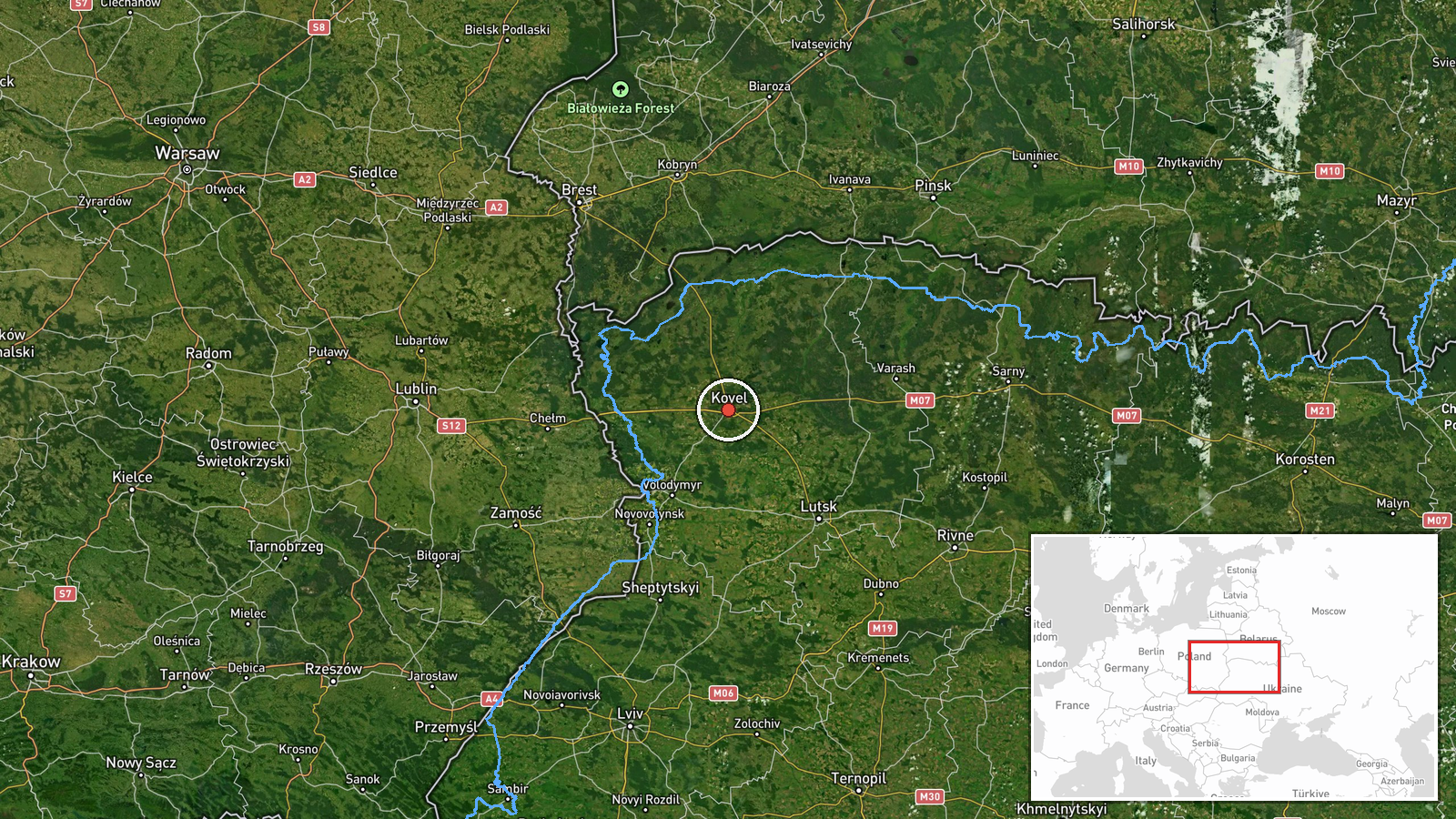
The location is recorded at settlement precision, placing the report on Kovel itself at roughly 51.22 N, 24.70 E, with high location confidence because the city is named directly in the source. Kovel is a mid-sized city in Volyn Oblast, in the flat, forested terrain of the Polesia lowlands. The surrounding area is marked by rivers, wetlands, and extensive pine forests, and the city is an established railway junction. Its position near the Polish and Belarusian frontiers makes it a recurring point on drone transit routes.
Related events nearby
- Ukrainian air monitoring: 2+ Russian jet-powered Shahed (Geran-3) drones from Volyn Oblast toward Kovel.2026-10-15 16:49 UTC · Drone Transit · Kovel, Ukraine
- Ukrainian air monitoring: 2+ Russian jet-powered Shahed (Geran-3) drones over northern Volyn Oblast.2026-10-15 16:28 UTC · Drone Transit · northern Volyn Oblast, Ukraine
- Ukrainian air monitoring: 1 Russian Shahed-type drone from Volyn Oblast toward Manevychi.2026-10-15 16:47 UTC · Drone Transit · Manevychi, Ukraine
- Ukrainian air monitoring: 1 Russian jet-powered Shahed (Geran-3) drone heading toward Lutsk.2026-10-16 02:26 UTC · Drone Transit · Lutsk, Ukraine
- Ukrainian air monitoring: 1 Russian jet-powered Shahed (Geran-3) drone heading toward Lutsk.2026-10-16 01:57 UTC · Drone Transit · Lutsk, Ukraine
▶ View this event on the live map

Intel Mapper aggregates open-source reports from monitored Telegram and X channels, geolocates them, cross-checks duplicates across sources and assigns a confidence score. Entries are updated as new confirmations arrive. Read how we verify events.