Ukrainian Air Force reports jet-powered Shahed drone heading toward Balta, Odesa Oblast
What happened
Ukraine's Air Force Telegram channel reported at 07:50 UTC on 16 October 2026 that a single Russian jet-powered Shahed drone, identified in the notice as a Geran-3, was on a course toward Balta in Odesa Oblast. The original Ukrainian wording, which translates roughly as jet-powered UAV heading for Balta, describes the aircraft's track and does not state that it struck anything or that damage or casualties occurred. The message is a transit notice from air monitoring rather than a post-impact account. It is the latest in a run of similar notices from the same channel over the previous day and a half, each describing a single Geran-3 moving through or past Odesa Oblast.
Context and assessment
Odesa Oblast has been a recurring corridor for Russian long-range drones since 2022, given its Black Sea ports, Danube export routes, and rail and energy infrastructure. The five related notices logged between 09:09 on 15 October and 04:43 on 16 October follow a consistent pattern: single Geran-3 drones approach from the Black Sea, then are tracked as they cross the oblast, with headings varying between northwest and tracks toward Odesa or Lymanka. The Lymanka reference, a community in the southwest of the oblast near the Danube, shows the tracks spanning a wide area rather than converging on one city. The Balta notice fits this pattern: a single aircraft on a northern-leaning course, moving across the region rather than being held over one target. Operationally, a sequence of individual jet-powered drones spaced hours apart is often read as route-testing or steady background pressure meant to stretch air defence and sensor coverage, though the data cannot confirm intent. Jet-powered variants are faster and harder to intercept than older piston-engined Shaheds, which is why each sighting is tracked closely. Without impact reports, these notices alone do not show where any strike was aimed.
Sources and confidence
All information comes from one Telegram channel, @kpszsu, the Ukrainian Air Force's official air-monitoring feed. No independent outlet, wire service, or second channel in the dataset has reported the same notice, so cross-confirmation is absent. The confidence score of 8.0 reflects an official origin and a pattern consistent with related notices, tempered by the single-channel basis and the lack of geolocated or impact evidence. The score would rise if other monitoring channels or regional authorities corroborated the track, or if debris or imagery tied the drone to a specific site. It would fall if the track were later corrected.
Location
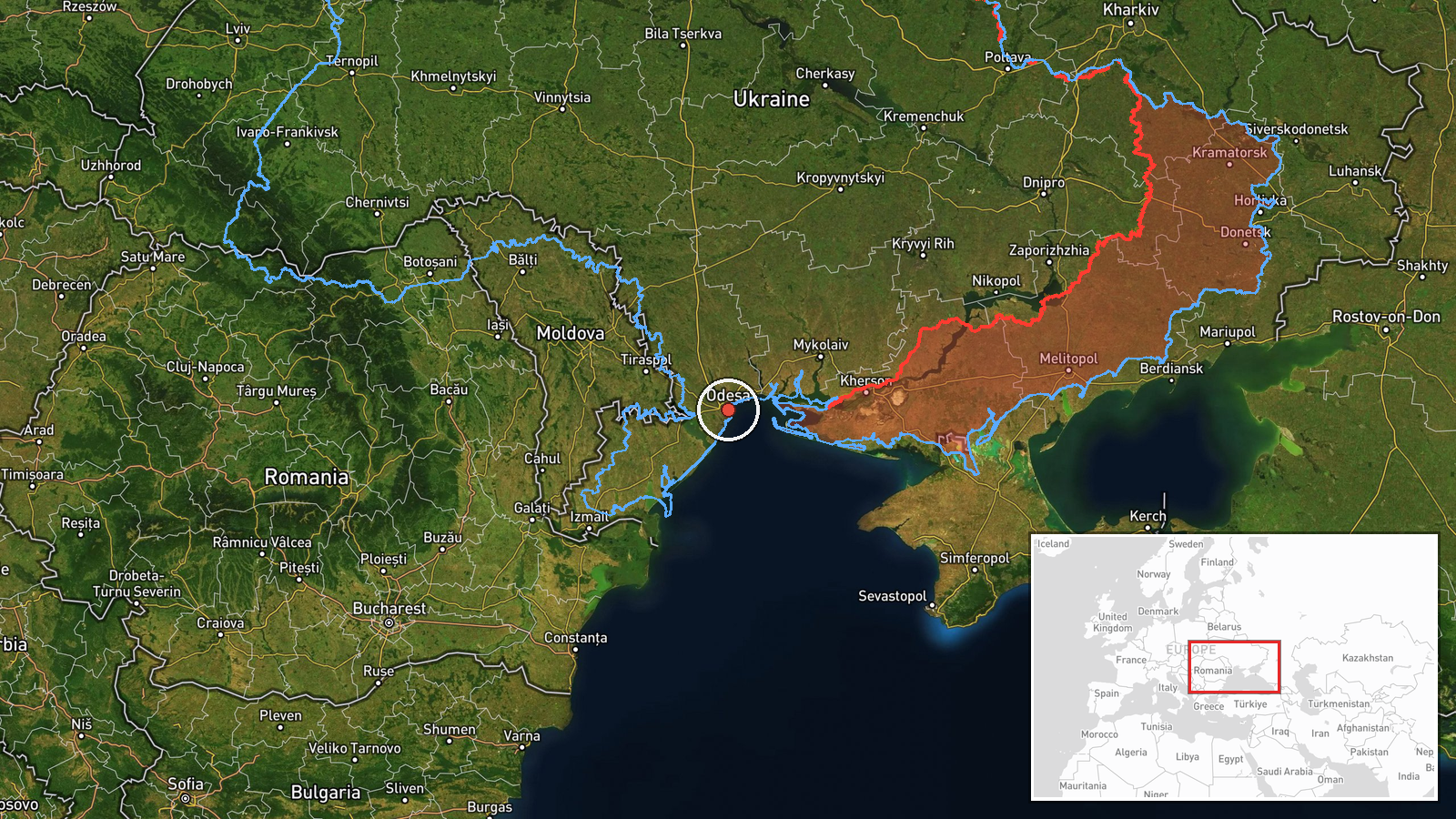
The record's coordinates (46.48, 30.73) match the centre of Odesa city rather than Balta, and the geo-precision is marked as region with low location confidence, so the point is a regional placeholder rather than a confirmed position. The report names Balta, a town in northern Odesa Oblast roughly 180 km north-northwest of Odesa. The surrounding terrain is flat steppe with river valleys, and the Black Sea coast lies to the south.
Related events nearby
- Ukrainian air monitoring: 1 Russian jet-powered Shahed (Geran-3) drone from Black Sea toward Odesa Oblast.2026-10-16 04:43 UTC · Drone Transit · Odesa Oblast, Ukraine
- Ukrainian air monitoring: 1 Russian jet-powered Shahed (Geran-3) drone from Black Sea toward Odesa.2026-10-15 15:59 UTC · Drone Transit · Odesa, Ukraine
- Ukrainian air monitoring: 1 Russian jet-powered Shahed (Geran-3) drone passing Odesa Oblast, heading northwest2026-10-15 15:20 UTC · Drone Transit · Odesa Oblast, Ukraine
- Ukrainian air monitoring: 1 Russian jet-powered Shahed (Geran-3) drone passing Odesa Oblast, heading northwest2026-10-15 11:21 UTC · Drone Transit · Odesa Oblast, Ukraine
- Ukrainian air monitoring: 1 Russian jet-powered Shahed (Geran-3) drone from Black Sea toward Lymanka.2026-10-15 09:09 UTC · Drone Transit · Lymanka, Ukraine
▶ View this event on the live map

Intel Mapper aggregates open-source reports from monitored Telegram and X channels, geolocates them, cross-checks duplicates across sources and assigns a confidence score. Entries are updated as new confirmations arrive. Read how we verify events.