Jet-powered Geran-3 drone reported over Podilsk district in Odesa Oblast, heading northwest
What happened
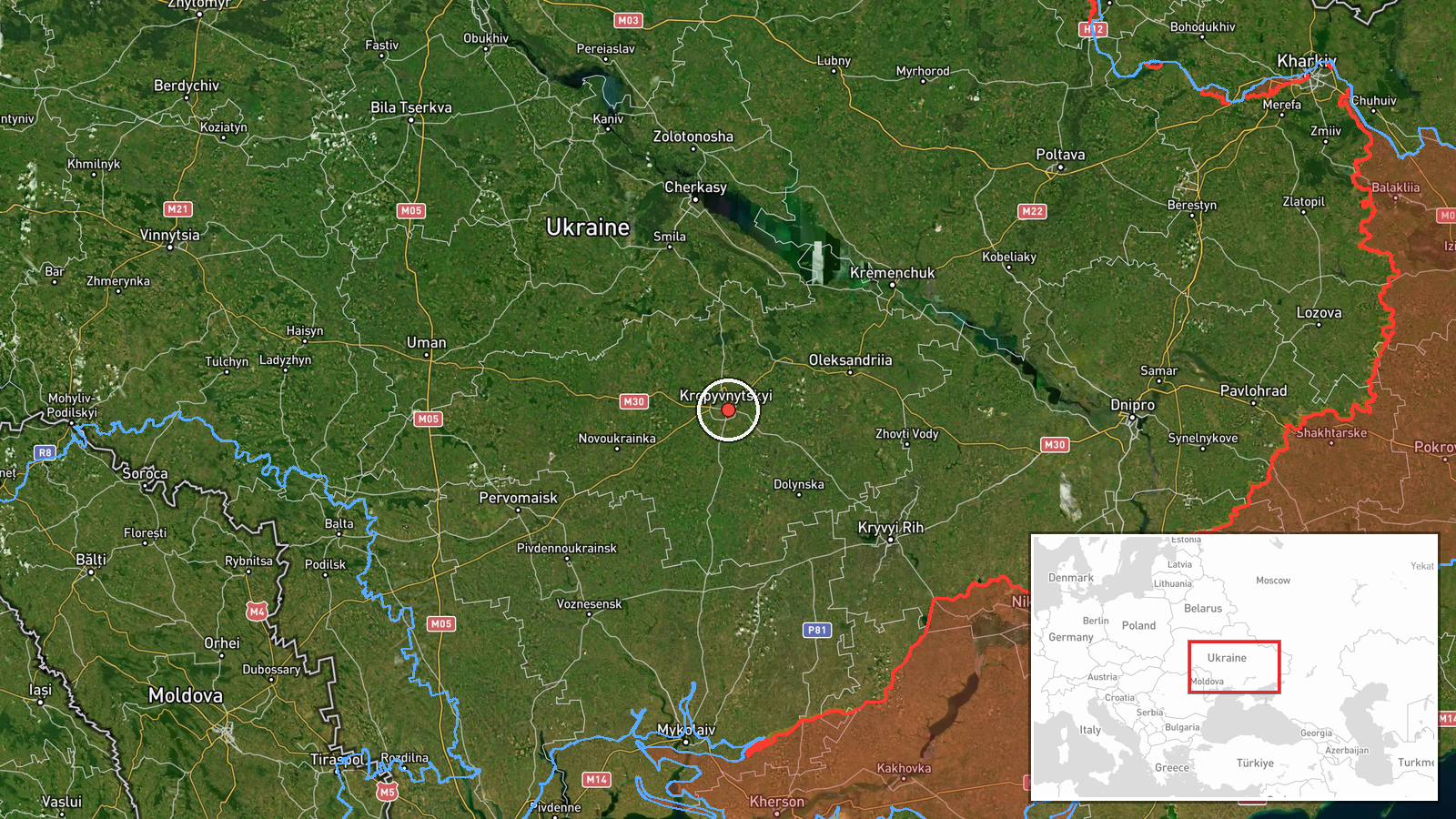
A Ukrainian air monitoring report posted on the Telegram channel @kpszsu on 17 October 2026 at 12:23 UTC states that one jet-powered unmanned aerial vehicle was passing through Podilsk district in Odesa Oblast, moving in a northwest direction. The original Ukrainian wording describes a 'reactive UAV' ('Реактивний БпЛА') in that district, heading 'to the northwest.' The event summary identifies it as a Russian jet-powered Shahed, or Geran-3, type drone. The report gives no count of impacts, damage, or casualties, and it does not say whether the drone was intercepted, lost, or left the area. The message is a short transit notice, so the reported details are limited to location, direction, and aircraft type as characterized by the channel.
Context and assessment
Podilsk district lies in the northern, inland part of Odesa Oblast, a region that Russian long-range drones have crossed repeatedly on routes toward central and western Ukraine. The related events show a sequence of transit reports across central and southern Ukraine within roughly 24 hours. On the evening of 16 October, a Shahed-type drone was reported heading toward Kropyvnytskyi. On the morning of 17 October, two jet-powered Geran-3 drones were reported moving from Mykolaiv Oblast toward Kirovohrad Oblast, at 07:54 and 09:59 UTC. The Podilsk report continues that pattern of northward and northwestward movement through the region. Separately, a 09:09 UTC statement by Zelensky described massive attacks on energy infrastructure, and a 02:22 UTC all-clear cancelled a ballistic missile alert. These items do not confirm a link to this drone, but they place the transit within a wider period of heavy air activity. Operationally, a northwest heading may suggest a route toward central or western Ukraine, though a single transit report cannot establish a target. Drone routes can change, and a track may end without any reported strike.
Sources and confidence
The report comes from one channel, @kpszsu, which is the Ukrainian Air Force's monitoring account and is generally treated as an official-type source for airspace tracking. No independent outlet, regional administration, or second monitoring channel appears in the data to confirm the track. The confidence score of 8.0 reflects the channel's institutional role and the specificity of the location and direction, but it is held below the top of the scale because the event rests on one unverified transit notice with no impact reporting. Confidence would rise with corroboration from regional military administrations, a second monitoring feed, or reports of interception or impact in the area. It would fall if the channel corrected or withdrew the notice, or if later tracking placed the drone elsewhere.
Location
The location is recorded at settlement precision and is centered on Podilsk district in Odesa Oblast, with a location confidence rated high. The point reflects the district as named in the report, not a precise position of the drone at a specific moment, so it describes the general area of transit. Podilsk district sits in the northern inland portion of Odesa Oblast, on the agricultural plains that lie between the Black Sea coast and the central Ukrainian uplands. The area is open terrain with river valleys and farmland, which offers limited cover for low-flying aircraft but is largely unpopulated in comparison with the major cities.
Related events nearby
- Ukrainian air monitoring: 1 Russian Shahed-type drone heading toward Kropyvnytskyi.2026-10-16 19:44 UTC · Drone Transit · Kropyvnytskyi, Ukraine
- Ukrainian air monitoring: 1 Russian jet-powered Shahed (Geran-3) drone passing Kropyvnytskyi district, heading2026-10-17 12:32 UTC · Drone Transit · Kropyvnytskyi district, Ukraine
- Ukrainian air monitoring: 1 Russian jet-powered Shahed (Geran-3) drone from Mykolaiv Oblast toward Kirovohrad 2026-10-17 09:59 UTC · Drone Transit · Kirovohrad Oblast, Ukraine
- Ukrainian air monitoring: 1 Russian jet-powered Shahed (Geran-3) drone from Mykolaiv Oblast toward Kirovohrad 2026-10-17 07:54 UTC · Drone Transit · Kirovohrad Oblast, Ukraine
- Zelensky says Russia is launching massive energy infrastructure attacks while the US ignores the Lindsey Graha2026-10-17 09:09 UTC · Statement · Ukraine (energy infrastructure, multiple sites)
▶ View this event on the live map

Intel Mapper aggregates open-source reports from monitored Telegram and X channels, geolocates them, cross-checks duplicates across sources and assigns a confidence score. Entries are updated as new confirmations arrive. Read how we verify events.