Single jet-powered Shahed drone reported heading toward Zakharivka, Odesa Oblast
What happened
Ukrainian air monitoring reported on Telegram (@kpszsu) that one Russian jet-powered Shahed, identified as a Geran-3, was heading toward Zakharivka in Odesa Oblast. The alert was logged at 03:05 UTC on 18 October 2026. The original post is a brief Ukrainian-language notice, which in translation reads as a jet-type UAV moving in the direction of Zakharivka, with no further detail on altitude, speed, or payload. The report does not describe any impact, casualties, or damage, and it does not say whether the drone was later shot down or lost track of. Attribution to Russia rests on the monitoring post's description of the drone as a Russian system, which is consistent with the Geran family used in long-range strikes. Because the notice is a transit warning rather than an impact report, the event should be read as a sighting, not a confirmed attack on the settlement.
Context and assessment
Zakharivka lies in the Odesa region, which has been repeatedly crossed by Shahed-type drones moving along the western Black Sea coast and into the interior. The related events logged on 17 and 18 October 2026 show a sustained pattern: a Shahed-type drone from Odesa Oblast toward Berezivka at 12:44, a drone from Vinnytsia Oblast toward Bershad at 13:21, a jet-powered Geran-3 from Kirovohrad Oblast toward Bershad at 10:02, another drone passing Holovanivsk district heading northwest at 14:18, and jet-powered drones tracked at the Odesa-Mykolaiv border heading north at 02:47 on 18 October. Taken together, these entries describe several drones moving through the same corridor over roughly 17 hours, with a mix of standard Shahed-type and jet-powered variants. The recurrence of jet-powered models is notable because Geran-3 airframes are generally faster and harder to intercept than older designs, which may matter for air defense planning. The northward heading of the most recent track, combined with the Zakharivka warning, suggests the drones were moving through the region rather than being directed at one fixed point, though the data cannot confirm intent. Operationally, such transit reports may indicate launches from the southeast or east, routing across Black Sea or Odesa-area approaches, or a deliberate effort to stretch regional air defenses across multiple districts. Readers should treat these inferences as provisional.
Sources and confidence
The alert comes from a single Telegram channel, @kpszsu, and no second independent outlet in the supplied data carries the same report, so cross-confirmation is absent. The confidence score of 8.0 reflects the channel's role as an official Ukrainian air monitoring source, the specific model identification, and the timestamp, but it is held below the maximum because the report is a transit notice with no independent imagery, impact confirmation, or secondary reporting. Confidence would rise with corroboration from other Ukrainian military channels, regional military administration statements, or confirmed interception or debris reports. It would fall if the track were revised, the drone's destination changed, or the channel corrected or retracted the notice. The related entries carry no separate sourcing in the data, so they add pattern context but do not independently verify this track.
Location
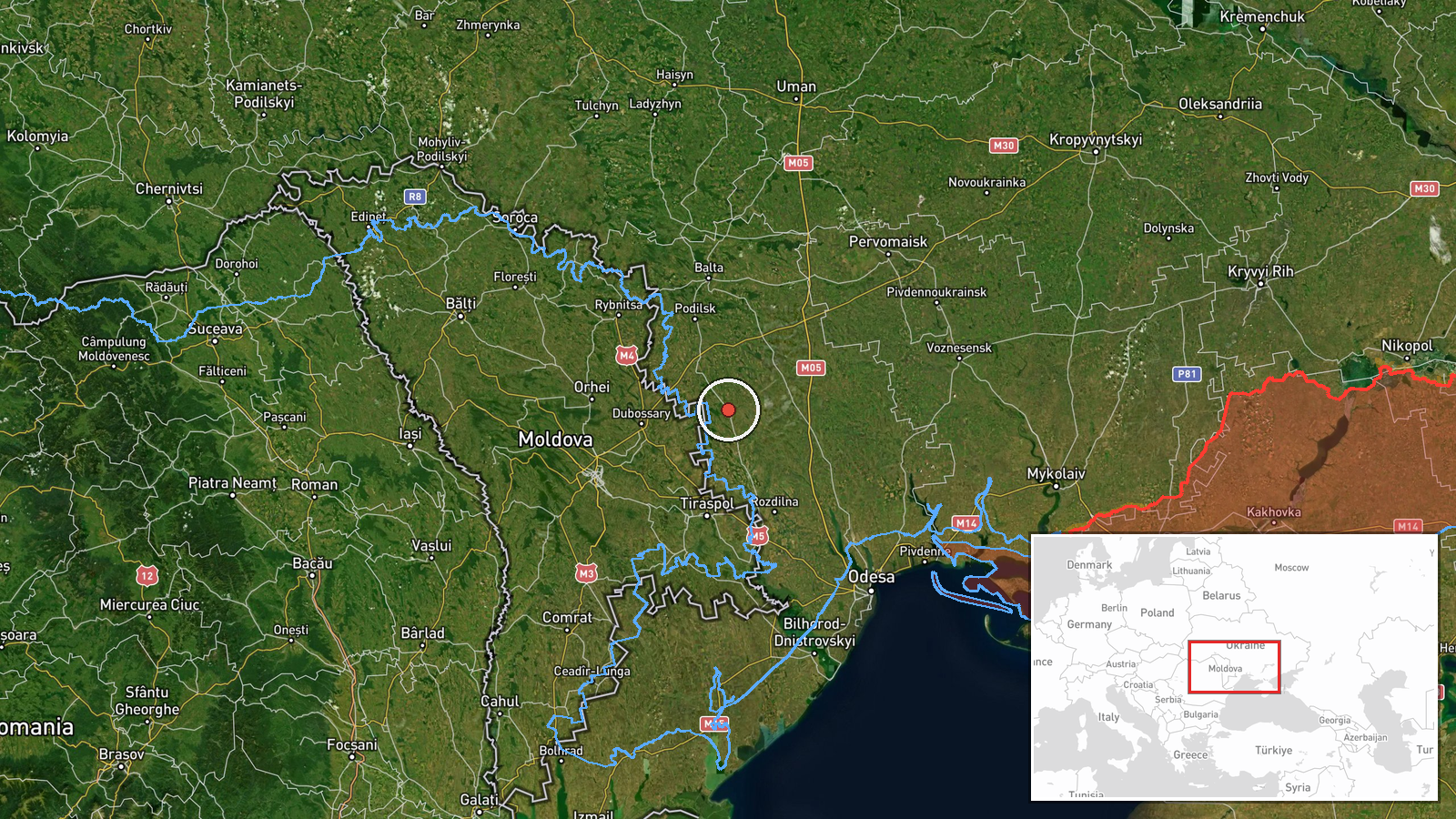
The location is recorded at settlement level for Zakharivka, Odesa Oblast, with high location confidence. The coordinates, approximately 47.33 N and 29.75 E, mark the settlement as a whole rather than a precise facility, so the drone's exact position when the notice was issued is unknown. The area is mostly flat agricultural steppe in the lowlands northwest of Odesa, near the regional boundary with Mykolaiv Oblast, where farmland, rural roads, and small river valleys dominate the landscape.
Related events nearby
- Ukrainian air monitoring: 1 Russian Shahed-type drone from Odesa Oblast toward Berezivka.2026-10-17 12:44 UTC · Drone Transit · Berezivka, Ukraine
- Ukrainian air monitoring: 1 Russian Shahed-type drone from Vinnytsia Oblast toward Bershad.2026-10-17 13:21 UTC · Drone Transit · Bershad, Ukraine
- Ukrainian air monitoring: 1 Russian jet-powered Shahed (Geran-3) drone from Kirovohrad Oblast toward Bershad.2026-10-17 10:02 UTC · Drone Transit · Bershad, Ukraine
- Ukrainian air monitoring: 1 Russian Shahed-type drone passing Holovanivsk district, heading northwest.2026-10-17 14:18 UTC · Drone Transit · Holovanivsk district, Ukraine
- Ukrainian air monitoring: jet-powered Shahed (Geran-3) drones tracked at the Odesa-Mykolaiv border, heading no2026-10-18 02:47 UTC · Drone Transit · Odesa-Mykolaiv Oblast border, Ukraine
▶ View this event on the live map

Intel Mapper aggregates open-source reports from monitored Telegram and X channels, geolocates them, cross-checks duplicates across sources and assigns a confidence score. Entries are updated as new confirmations arrive. Read how we verify events.