Ukrainian air monitoring reports one jet-powered Shahed-type drone heading toward Kharkiv
What happened
Ukrainian air monitoring reported one Russian jet-powered Shahed-type drone, identified as a Geran-3, heading toward Kharkiv, the country's second-largest city in the northeast. The report was posted on the Telegram channel @kpszsu with a timestamp of 18 October 2026 at 03:31 UTC. The original Ukrainian wording describes a jet-powered UAV on a course toward Kharkiv from the south, which indicates direction of approach rather than a confirmed strike. The message does not report impact, damage, casualties, or interception, and no follow-up update appears in the available data. The alert is one of several drone transit notices logged over Kharkiv and its oblast the previous day.
Context and assessment
Kharkiv lies close to the Russian border and has been a recurring target of drones and missiles since the full-scale invasion began, so repeated air alerts there carry weight for civil defence and local air-defence planning. The related events show a sustained pattern on 17 October. Single-drone transit reports toward Kharkiv were logged at 06:48, 07:38 and 08:56 UTC, one of them from northern Kharkiv Oblast. At 08:28 a ballistic missile was reported moving from Kharkiv Oblast toward Zmiyiv, a settlement to the southeast of the city, which suggests activity across a wider area than the city alone. At 11:40 two or more Geran-3 drones were reported passing through the oblast heading northwest. Taken together, this looks more like repeated probing or distributed launches than a single coordinated salvo, though that reading is inferred from timing and wording only. A drone described as approaching from the south may follow a different flight corridor from the northwest-bound groups, which could reflect routing changes or a separate launch axis, but the data does not establish this. Because the jet-powered variant is faster than piston-engined Shahed types, the warning window for air defence is likely shorter.
Sources and confidence
All information comes from a single channel, @kpszsu on Telegram, which is associated with Ukraine's Air Force and is a primary source for air-threat warnings. No cross-confirmation from a second Ukrainian official outlet, regional authority, or independent monitor appears in the data. The confidence score of 8.0 reflects the channel's official origin, the specificity of the report, and its consistency with earlier transit alerts on the same day, but it is held below the maximum because the report is single-sourced and records no impact outcome. Confidence would rise with corroboration from a second monitoring source, a subsequent air-defence or impact statement, or regional authority reporting. It would fall if the channel later amended or retracted the alert, or if later data contradicted the track.
Location
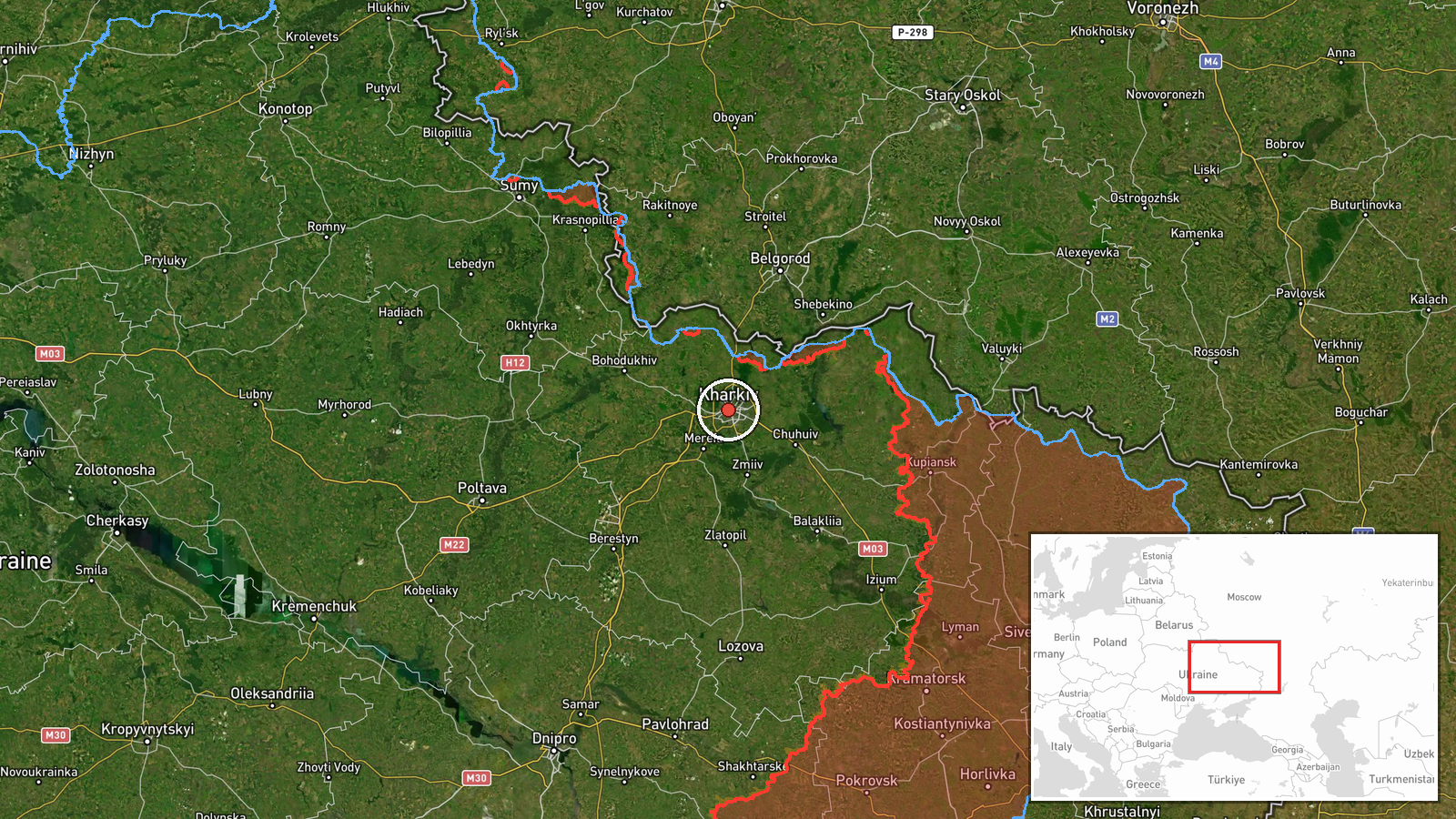
The location is recorded at settlement precision, with coordinates of 49.99 latitude and 36.23 longitude, which correspond to the city of Kharkiv, and location confidence is rated high. The point is most likely a city-centre reference rather than a specific site, since the alert names the city and not a facility. Kharkiv sits in northeastern Ukraine near the Russian border, on flat steppe terrain at the confluence of the Lopan and Kharkiv rivers, with dense urban development across the city.
Related events nearby
- Ukrainian air monitoring: 2+ Russian jet-powered Shahed (Geran-3) drones passing Kharkiv Oblast, heading north2026-10-17 11:40 UTC · Drone Transit · Kharkiv Oblast, Ukraine
- Ukrainian air monitoring: 1 Russian Shahed-type drone heading toward Kharkiv.2026-10-17 08:56 UTC · Drone Transit · Kharkiv, Ukraine
- Ukrainian air monitoring: 1 Russian Shahed-type drone from northern Kharkiv Oblast toward Kharkiv.2026-10-17 07:38 UTC · Drone Transit · Kharkiv, Ukraine
- Ukrainian air monitoring: 1 Russian Shahed-type drone heading toward Kharkiv.2026-10-17 06:48 UTC · Drone Transit · Kharkiv, Ukraine
- Ukrainian air monitoring: 1 Russian ballistic missile from Kharkiv Oblast toward Zmiyiv.2026-10-17 08:28 UTC · Ballistic Missile · Zmiyiv, Ukraine
▶ View this event on the live map

Intel Mapper aggregates open-source reports from monitored Telegram and X channels, geolocates them, cross-checks duplicates across sources and assigns a confidence score. Entries are updated as new confirmations arrive. Read how we verify events.