Air monitoring reports one Russian guided glide bomb heading toward northern Kharkiv Oblast
What happened
Ukrainian air monitoring, relayed through the Telegram channel @kpszsu, reported on 20 October 2026 at 05:15 UTC that one Russian guided glide bomb (KAB) was heading toward northern Kharkiv Oblast. The original post is a short Ukrainian-language alert, roughly translated as 'KABs to the north of Kharkiv region!'. It uses the plural form of the weapon name, while the English summary specifies a single munition. The report gives no impact point, no casualty information and no confirmation that the munition struck anything. Because the alert describes an inbound weapon rather than a completed strike, the event is recorded as an airstrike warning. Attribution to Russia rests on the alert's framing of the munition and on the wider pattern of Russian aerial attacks in the Kharkiv area during the same period.
Context and assessment
Northern Kharkiv Oblast sits close to the Russian border, and Kharkiv city, Ukraine's second-largest urban centre, lies to the south. Guided glide bombs are typically launched from aircraft at a standoff distance, which allows Russian forces to strike Ukrainian positions and nearby settlements without entering air defence coverage. The alert fits a sequence of Russian actions in the region over the preceding day. Ukraine's General Staff reportedly recorded 22 combat clashes in 24 hours along the South-Slobozhansky direction near Starytsia and other Kharkiv Oblast villages. Separately, a Russian drone attack on Kharkiv reportedly killed a 14-month-old infant, an 11-year-old girl and their mother. Several Shahed-type drone transits toward Kharkiv were also logged between 16:12 and 22:35 UTC on 19 October. Taken together, these reports suggest sustained pressure on the Kharkiv axis combining ground assaults, drone raids and standoff glide bombs. The munition may be aimed at frontline units or logistics routes rather than the city itself, but the available reporting does not establish a target. Monitoring alerts of this kind usually signal intent and timing, not outcome, so any impact should be treated as unknown until other sources or local officials confirm it.
Sources and confidence
The event rests on a single Telegram channel, @kpszsu, which is associated with Ukrainian air monitoring alerts. No second outlet has been identified confirming the inbound munition in this record. The confidence score of 8.0 reflects a credible official-linked source with consistent alert formatting, offset by the lack of independent corroboration and the absence of any impact report. Confidence would rise if regional Ukrainian authorities, a wire agency or a second monitoring channel reported the same munition, or if a strike location were published. It would fall if the alert were later retracted or identified as a false warning.
Location
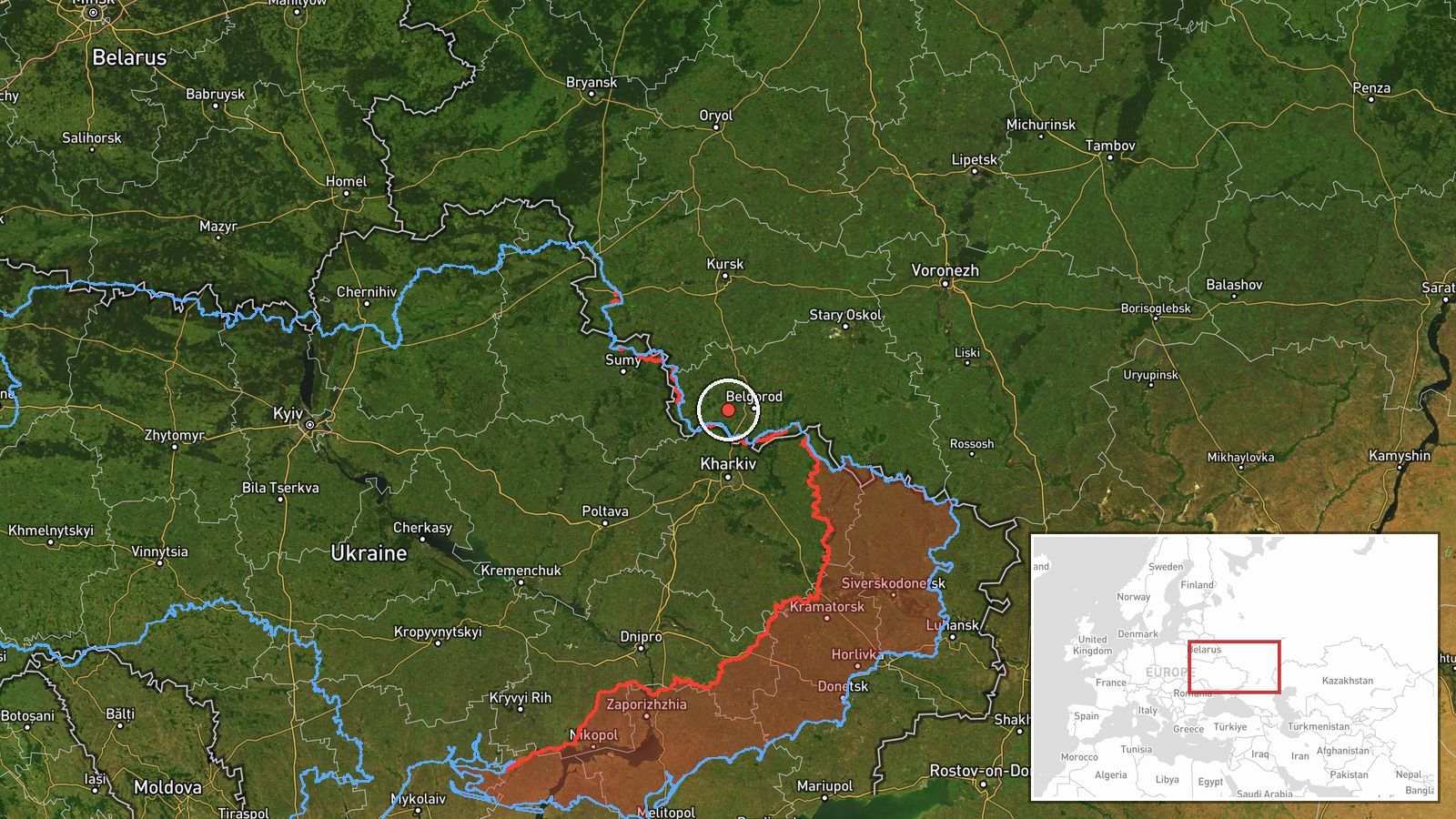
The coordinates place the event at a regional level, roughly 50.58 N and 36.23 E, rather than at a named settlement, so the location confidence is recorded as low. The alert itself names only northern Kharkiv Oblast. The area is a largely rural zone of farmland, small villages and river valleys, lying north of Kharkiv city and close to the Russian border. The point should be read as an approximate area, not a target.
Related events nearby
- Ukrainian General Staff reports 22 combat clashes in 24h along the South-Slobozhansky direction near Starytsia2026-10-19 19:02 UTC · Combat · Starytsia, Kharkiv Oblast, Ukraine
- Russian drone attack on Kharkiv killed a 14-month-old infant, an 11-year-old girl and their mother.2026-10-19 17:50 UTC · UAS Strike · Kharkiv, Kharkiv Oblast, Ukraine
- Ukrainian air monitoring: 1 Russian Shahed-type drone heading toward Kharkiv.2026-10-19 22:35 UTC · Drone Transit · Kharkiv, Ukraine
- Ukrainian air monitoring: 1 Russian Shahed-type drone heading toward Kharkiv.2026-10-19 18:42 UTC · Drone Transit · Kharkiv, Ukraine
- Ukrainian air monitoring: 1 Russian Shahed-type drone heading toward Kharkiv.2026-10-19 16:12 UTC · Drone Transit · Kharkiv, Ukraine
▶ View this event on the live map

Intel Mapper aggregates open-source reports from monitored Telegram and X channels, geolocates them, cross-checks duplicates across sources and assigns a confidence score. Entries are updated as new confirmations arrive. Read how we verify events.