Ukrainian air monitoring reports Russian Banderol cruise missiles heading toward Poltava
What happened
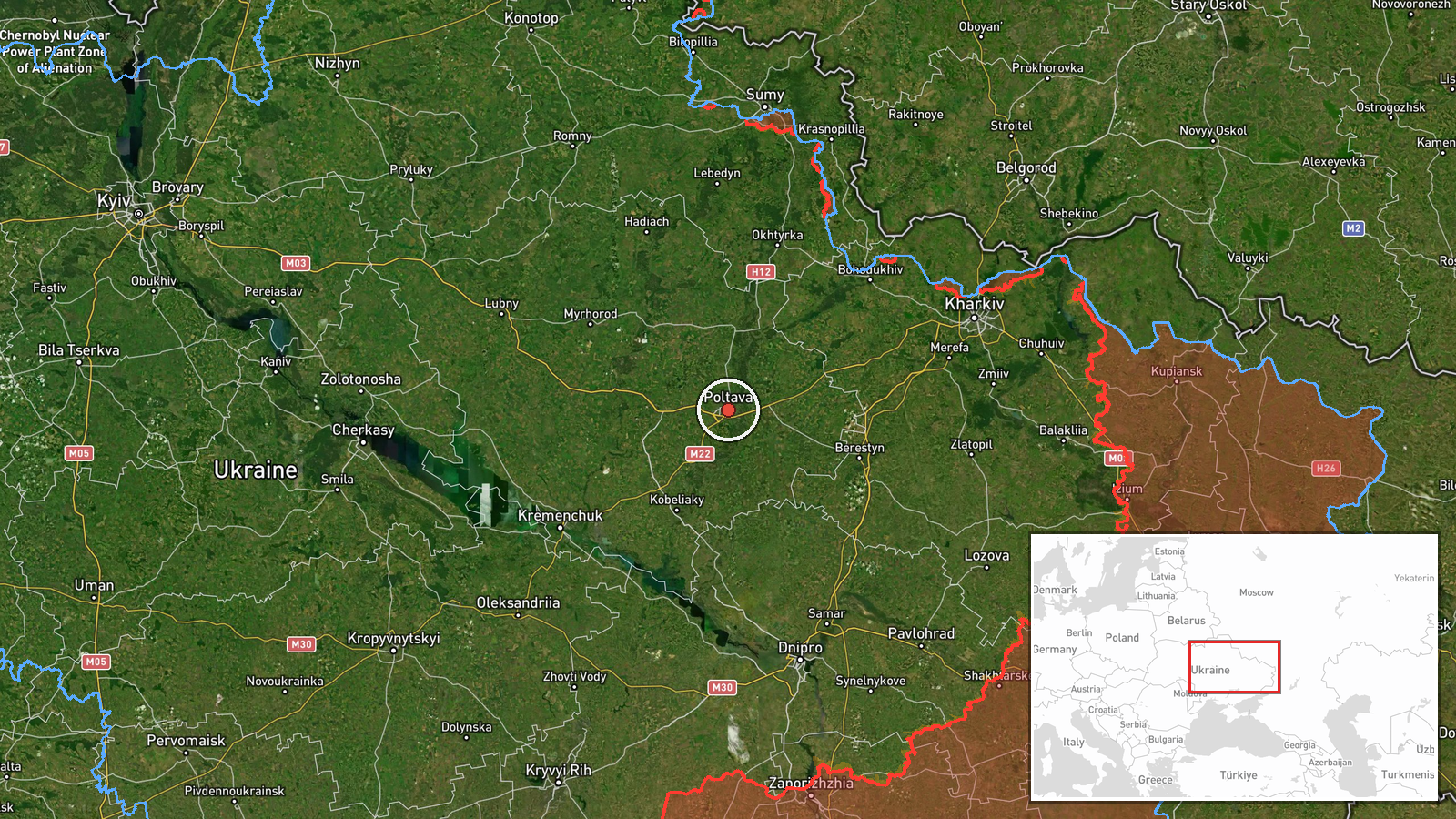
Ukrainian air monitoring reported on 22 October 2026, at 08:17 UTC, that at least two Russian Banderol mini cruise missiles were heading toward Poltava in central Ukraine. The alert was carried by the Telegram channel @kpszsu, which is associated with Ukraine's air force monitoring reporting. The original Ukrainian wording, '«Бандеролі» курсом на Полтаву, Кременчук', says the missiles were on a course toward Poltava and Kremenchuk, so the alert names two cities rather than a single point. The summary's phrase 'at least two' reflects a reported count of 2 or more, so the true number may be higher. The report describes a heading in flight, not a confirmed impact, and it does not mention casualties, damage or interception. The event is logged as a cruise missile incident with Russia as the attributed actor.
Context and assessment
Poltava sits on the main east-west rail and road corridor of central Ukraine and has been a recurring reference point in air alerts, both for its city and for the wider Poltava Oblast. The related events from 21 October show a dense sequence over roughly a day. A Zircon or Oniks missile alert for Poltava Oblast was logged late on 21 October, and earlier that day a Banderol mini cruise missile was reported heading toward Poltava, with a second one reported from Kharkiv Oblast minutes apart. Several jet-powered Geran-3 drone transits were tracked north of Kremenchuk and near Semenivka the same day. Taken together, the pattern suggests a sustained, multi-axis air campaign that mixes drones as decoys or saturation with cruise missiles aimed at the same region. Mini cruise missiles of this class are generally low-flying and harder to track early, which may explain why alerts describe headings rather than confirmed targets. Operationally, the repeated targeting of Poltava and Kremenchuk may point to energy, transport or military logistics sites, but the available data does not establish which facility, if any, was intended.
Sources and confidence
The event rests on a single Telegram channel, @kpszsu, with no independent second source in the data provided, which is why the confidence score is 8.0 rather than higher. The channel's role in relaying air monitoring alerts gives the report institutional weight, and the original wording is specific about the cities named. Confidence would rise if independent outlets, regional military administrations or open-source flight trackers recorded matching trajectories or impact reports. It would fall if later updates revised the missile type, count or destination, or if the alert was superseded by a correction. The related 21 October alerts from the same type of monitoring add context but do not confirm this particular heading.
Location
The coordinates correspond to the city of Poltava, which is the settlement level precision recorded for this event and is marked high confidence. Poltava lies in central Ukraine on the Vorskla River, in the oblast of the same name, and is an administrative and transport hub. The Kremenchuk named in the alert lies to the southwest on the Dnipro reservoir, but no coordinates for it are attached to this event. The city's flat, river-influenced terrain is typical of the region and offers few natural barriers to low-flying systems.
Related events nearby
- Ukrainian air monitoring: 2 Russian Zircon/Oniks missiles heading toward Poltava Oblast.2026-10-21 22:59 UTC · Cruise Missile · Poltava Oblast, Ukraine
- Ukrainian air monitoring: 1 Russian Banderol mini cruise missile heading toward Poltava.2026-10-21 10:28 UTC · Cruise Missile · Poltava, Poltava Oblast, Ukraine
- Ukrainian air monitoring: 1 Russian Banderol mini cruise missile from Kharkiv Oblast toward Poltava.2026-10-21 10:27 UTC · Cruise Missile · Poltava, Ukraine
- Ukrainian air monitoring: one Russian jet-powered Shahed (Geran-3) drone tracked north of Kremenchuk, heading 2026-10-21 14:03 UTC · Drone Transit · North of Kremenchuk, Poltava Oblast, Ukraine
- Ukrainian air monitoring: 1 Russian jet-powered Shahed (Geran-3) drone heading toward Semenivka.2026-10-21 08:59 UTC · Drone Transit · Semenivka, Ukraine
▶ View this event on the live map

Intel Mapper aggregates open-source reports from monitored Telegram and X channels, geolocates them, cross-checks duplicates across sources and assigns a confidence score. Entries are updated as new confirmations arrive. Read how we verify events.