Ukrainian air monitoring reports Russian Banderol cruise missile launched toward Poltava
What happened
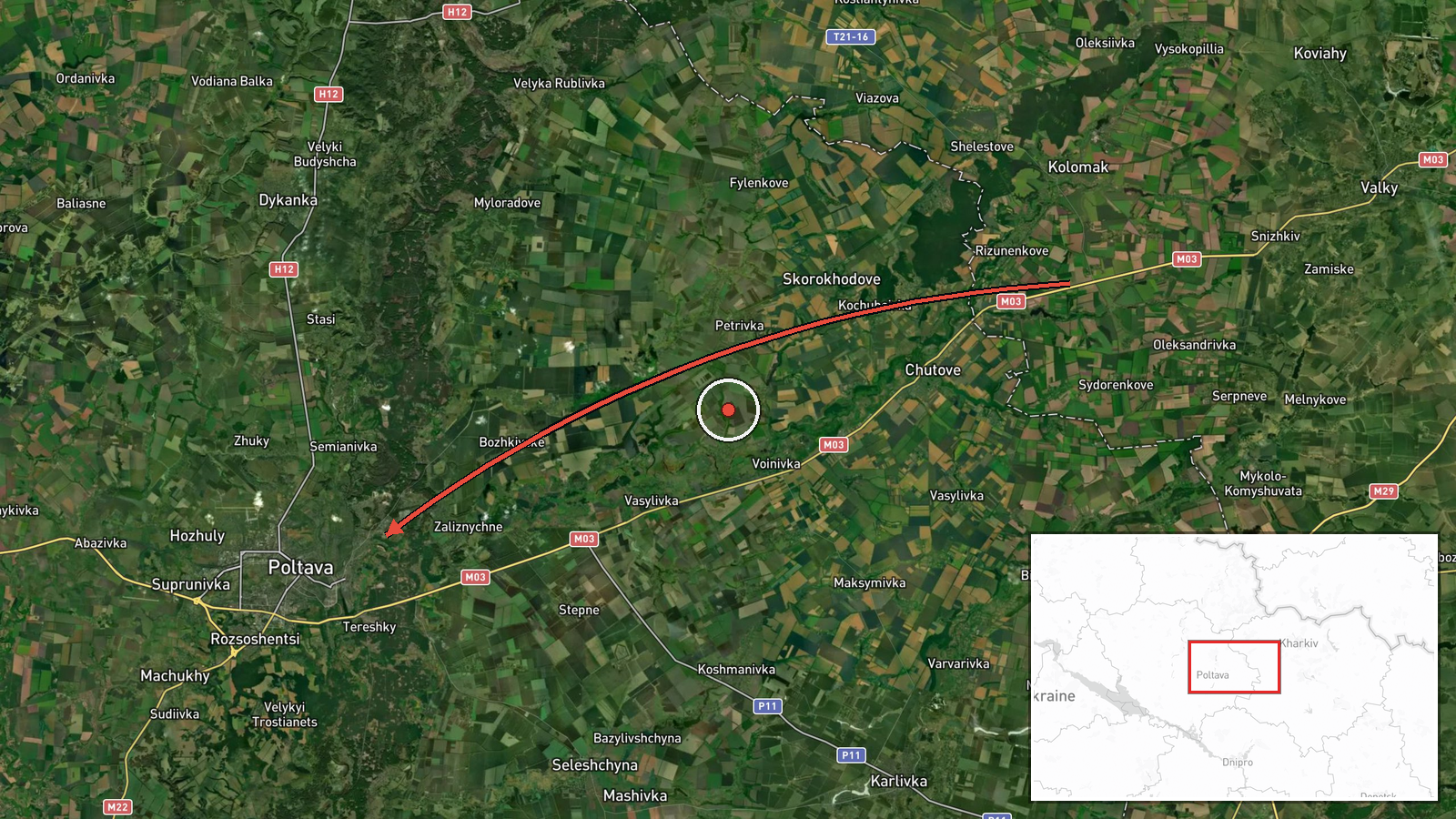
On 21 October 2026 at about 10:27 UTC, Ukrainian air monitoring reported one Russian Banderol munition moving from Kharkiv Oblast toward Poltava, in central Ukraine. The alert was posted on Telegram by the channel @kpszsu, which is widely associated with the Ukrainian Air Force. The original Ukrainian wording describes the item as a loitering munition ('баражуючий боєприпас'), while the English summary calls it a mini cruise missile, so the exact weapon classification rests on the source's terminology. A follow-up alert at 10:28 UTC reported the same missile heading toward Poltava and stated that a shelter warning had been issued. No impact, casualties or damage were reported in the material available for this event.
Context and assessment
Poltava sits on the main east-west and north-south corridors of central Ukraine and hosts energy, logistics and defence-related infrastructure, which makes it a recurring point of interest in air campaigns. The alert follows a sequence of Russian jet-powered Shahed-type drone transits (designated Geran-3 in the source) on 20 and 21 October. Those earlier reports tracked groups of two or more drones from Dnipropetrovsk Oblast toward Bilyky, Novi Sanzhary and Poltava Oblast, starting at about 13:10 UTC on 20 October and continuing into the morning of 21 October. The sequence suggests a sustained, multi-axis effort in which drones are used for saturation and missiles are used for more targeted strikes, with the single munition here fitting that pattern. Operationally, mixing loitering munitions with cruise-type weapons on the same axis may be intended to stretch air defence response times and reduce the reaction window for warnings. Because the sequence reflects only launch and transit alerts, it is not possible to say from these reports alone which target, if any, was intended.
Sources and confidence
The event rests on a single Telegram channel, @kpszsu, and no independent outlet has been identified confirming the same track. The score of 8.0 reflects a credible official-style source with a clear timestamp and a specific destination, but it is held below the top of the scale because there is no second channel, no radar or wreckage corroboration and no post-event impact report. Confidence would rise with corroboration from Ukrainian regional military administrations, Poltava-area officials reporting explosions or interceptions, or imagery of debris. It would fall if later official updates revised the weapon type, the route or the claimed launch area, particularly given the discrepancy between 'loitering munition' and 'cruise missile' in the source wording.
Location
The coordinates correspond to the centre of Poltava city, which was assigned from the settlement-level match and is rated high confidence for the city itself, though the exact point of impact or interception is not known. Poltava lies on the Vorskla River in the Poltava Oblast of central Ukraine, on relatively flat terrain of the forest-steppe zone. The city's built-up core and industrial areas are the most likely focus of any alert of this kind. The origin in Kharkiv Oblast is not geolocated to a specific site in the source.
Related events nearby
- Ukrainian air monitoring: Russian Banderol mini cruise missile heading toward Poltava; shelter warning issued.2026-10-21 10:28 UTC · Cruise Missile · Poltava, Poltava Oblast, Ukraine
- Ukrainian air monitoring: 2+ Russian jet-powered Shahed (Geran-3) drones from Dnipropetrovsk Oblast toward Pol2026-10-21 08:26 UTC · Drone Transit · Poltava Oblast, Ukraine
- Ukrainian air monitoring: 2+ Russian jet-powered Shahed (Geran-3) drones from Dnipropetrovsk Oblast toward Pol2026-10-20 16:30 UTC · Drone Transit · Poltava Oblast, Ukraine
- Ukrainian air monitoring: 2+ Russian jet-powered Shahed (Geran-3) drones from Dnipropetrovsk Oblast toward Nov2026-10-20 15:11 UTC · Drone Transit · Novi Sanzhary, Ukraine
- Ukrainian air monitoring: 2+ Russian jet-powered Shahed (Geran-3) drones heading toward Bilyky.2026-10-20 13:10 UTC · Drone Transit · Bilyky, Ukraine
▶ View this event on the live map

Intel Mapper aggregates open-source reports from monitored Telegram and X channels, geolocates them, cross-checks duplicates across sources and assigns a confidence score. Entries are updated as new confirmations arrive. Read how we verify events.