Jet-powered Shahed drones reported moving from Dnipropetrovsk Oblast toward Novi Sanzhary, Poltava
What happened
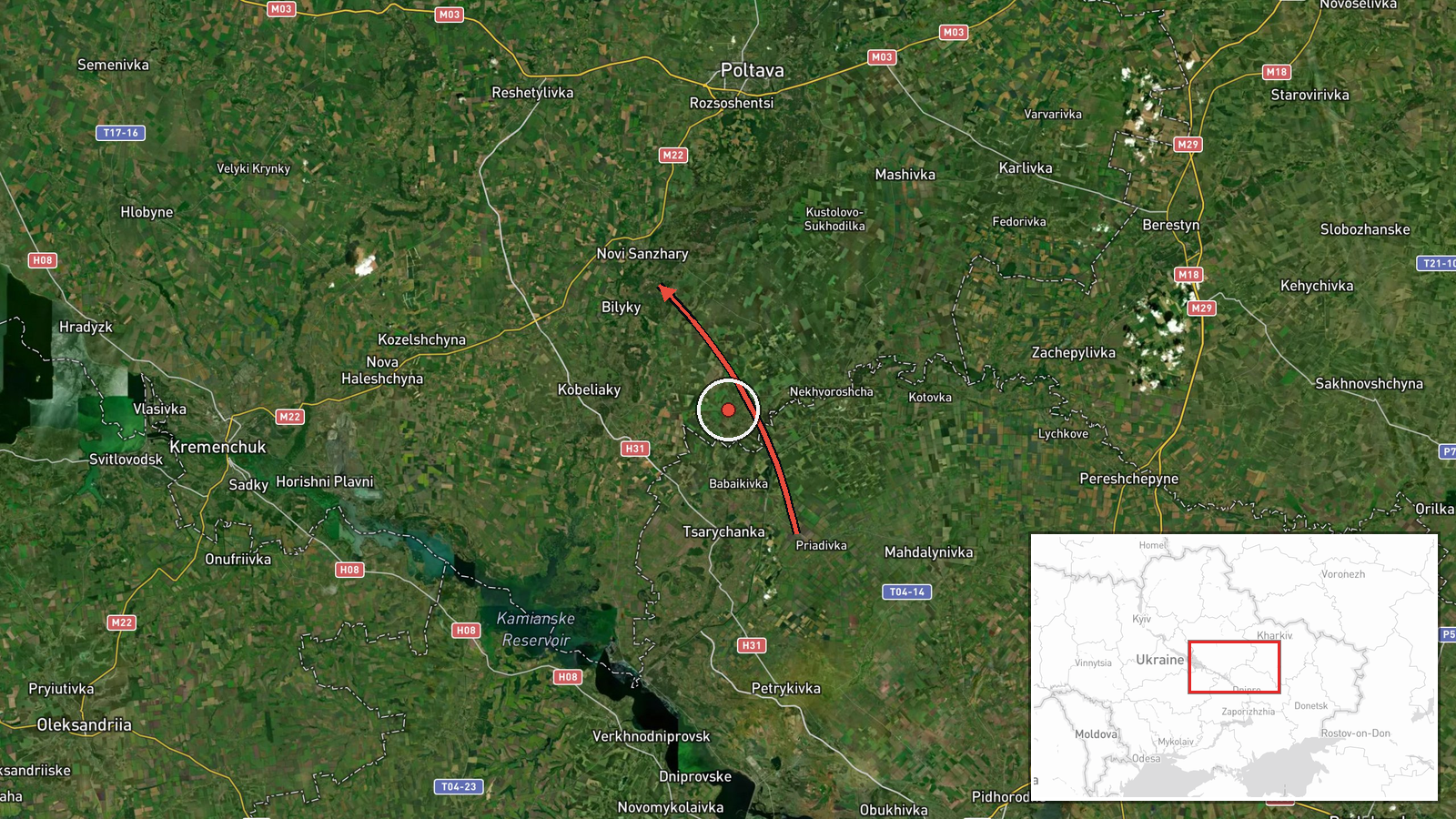
On 20 October 2026 at 15:11 UTC, the Telegram channel @kpszsu, which posts Ukrainian air monitoring updates, reported that two or more jet-powered drones, identified as Russian Shahed-type Geran-3 units, were moving from Dnipropetrovsk Oblast on a course toward Poltava Oblast, specifically the settlement of Novi Sanzhary. The original Ukrainian wording, translated, reads: jet-powered UAVs from the Dnipropetrovsk region, on course for the Poltava region (Novi Sanzhary). The report describes a transit only. The source does not mention any impact, damage, or casualties, and none are described here. The item rests on a single channel and has not been matched by another outlet in the dataset.
Context and assessment
Novi Sanzhary sits in the Poltava area of central-eastern Ukraine, a region that has been crossed repeatedly by long-range drones in the same period. The related events in this dataset show a sustained pattern. Between 19 October at 17:03 and 20 October at 13:10, Ukrainian air monitoring reported separate Geran-3 transits over or near Poltava Oblast on several headings, including northwest, west, and south, and one track toward Bilyky. Repeated routing through the same corridor over roughly twenty hours may suggest that operators are using central Ukraine as a transit path toward targets further west or north, or that the flights are part of a wider saturation effort designed to stretch air defense coverage. The shifting headings also make it hard to infer a single destination from the tracks alone. Because the Geran-3 is a jet-powered variant, it typically flies faster than piston-engine Shahed models, which would leave shorter warning windows for regional air defense and civil alert systems. These points are interpretive and should be read as possibilities, not confirmed intent.
Sources and confidence
The event rests on one Telegram channel, @kpszsu, which is linked to Ukrainian air monitoring reporting and is generally treated as an official-style feed. The confidence score of 8.0 reflects the channel's role, the specific and consistent format of its reports, and the fact that several related transits from the same period appear in the dataset. It is not higher because no second source confirms this particular track and no impact reporting exists to test it against. Confidence would rise with corroboration from Ukraine's Air Force statements, Poltava regional authorities, or independent drone-tracking analysts. It would fall if the track is revised, retracted, or contradicted by later official reporting.
Location
The coordinates correspond to Novi Sanzhary, a settlement in Poltava Oblast, and were assigned at settlement precision with high location confidence. The event was not corrected. The area lies on the flat to gently rolling steppe of the Dnipro river basin, an agricultural landscape with river valleys, rail lines, and scattered rural settlements. Because the report describes a heading rather than a point of impact, the marker identifies the destination named in the source, not the exact location of any drone at the time of reporting.
Related events nearby
- Ukrainian air monitoring: 2+ Russian jet-powered Shahed (Geran-3) drones heading toward Bilyky.2026-10-20 13:10 UTC · Drone Transit · Bilyky, Ukraine
- Ukrainian air monitoring: 2+ Russian jet-powered Shahed (Geran-3) drones from Dnipropetrovsk Oblast toward Pol2026-10-20 16:30 UTC · Drone Transit · Poltava Oblast, Ukraine
- Ukrainian air monitoring: 1 Russian jet-powered Shahed (Geran-3) drone passing Poltava Oblast, heading west.2026-10-20 05:40 UTC · Drone Transit · Poltava Oblast, Ukraine
- Ukrainian air monitoring: 1 Russian jet-powered Shahed (Geran-3) drone passing Poltava Oblast, heading northwe2026-10-19 17:03 UTC · Drone Transit · Poltava Oblast, Ukraine
- Ukrainian air monitoring: 1 Russian jet-powered Shahed (Geran-3) drone passing Poltava district, heading west.2026-10-20 04:02 UTC · Drone Transit · Poltava district, Ukraine
▶ View this event on the live map

Intel Mapper aggregates open-source reports from monitored Telegram and X channels, geolocates them, cross-checks duplicates across sources and assigns a confidence score. Entries are updated as new confirmations arrive. Read how we verify events.