Jet-powered Geran-3 drone reported heading toward Kozelets, Chernihiv Oblast
What happened
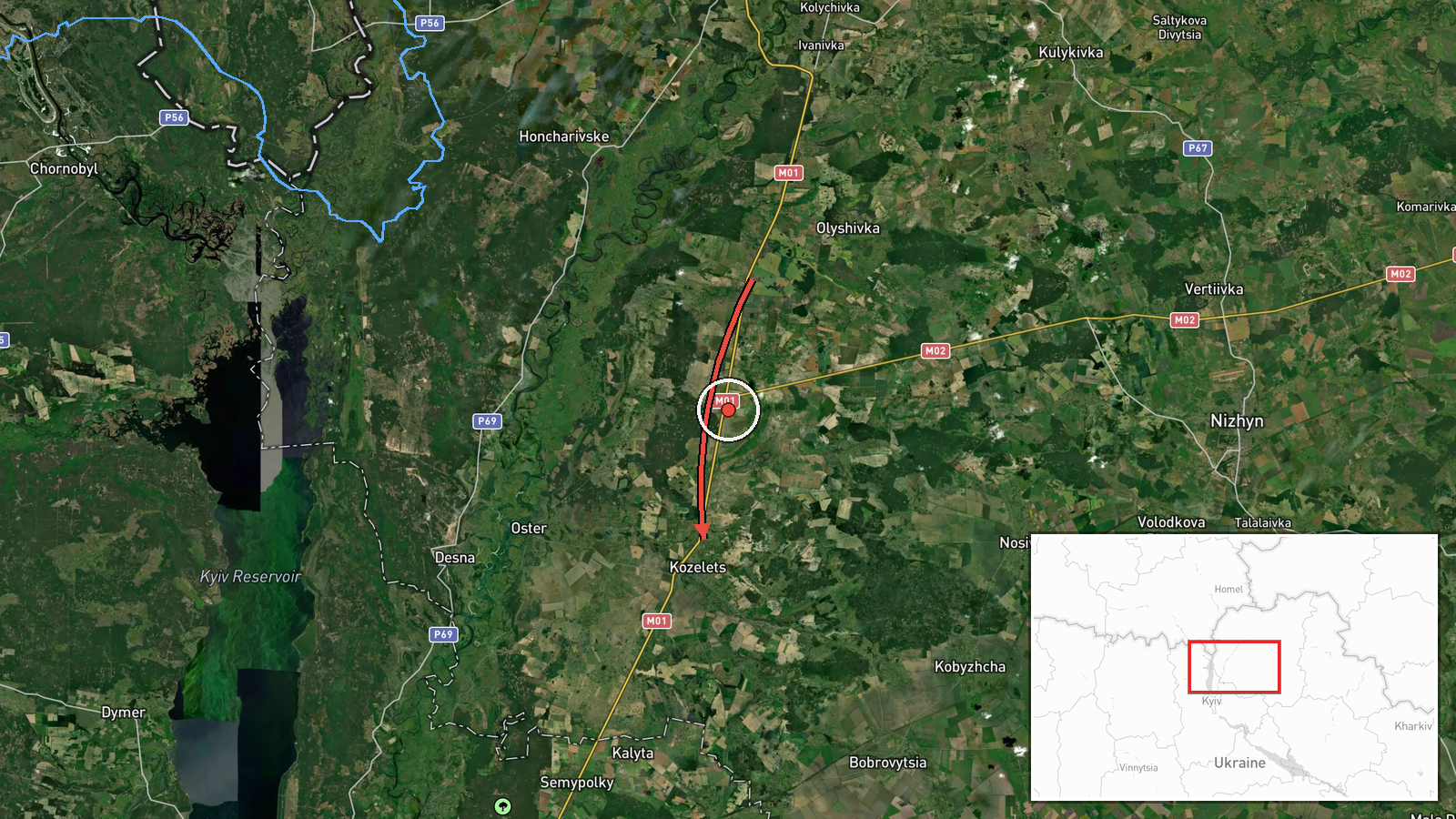
Ukrainian air monitoring channel @kpszsu, the official Telegram account associated with Ukraine's Air Force, reported one Russian jet-powered Shahed drone, identified as the Geran-3 variant, moving toward Kozelets in Chernihiv Oblast on 23 October 2026. The post is timestamped 07:58 UTC. The original Ukrainian-language message is brief and reads as an operational alert: a jet-powered drone heading to Kozelets in Chernihiv region. The report does not describe any impact, casualties, or damage, and it does not state whether the drone was intercepted or where it was lost from tracking. The alert came during a run of similar single-drone transit warnings across northern Ukraine that morning, several of them pointing toward Brovary in Kyiv Oblast. The event should therefore be read as a reported drone movement, not a confirmed strike on the settlement.
Context and assessment
Kozelets sits in northern Chernihiv Oblast, a border region that Russian long-range drones have repeatedly crossed on routes toward Kyiv and its surrounding oblast. The related events on the same morning show a steady sequence of single-drone transit reports from 00:19 to 07:13 UTC, with most pointing toward Brovary, a town on the eastern approaches to the Ukrainian capital. The pattern of many individually reported drones moving along similar northern corridors suggests the attacks were being routed through the Chernihiv and northern Kyiv airspace rather than launched at one fixed target. The Geran-3 is a jet-powered development of the Shahed family, generally considered faster and harder to intercept with older gun systems than the piston-engined original, so its appearance in these alerts may matter for air defence planning. Operationally, a single drone heading toward a small settlement could indicate route testing, reconnaissance, a decoy role within a larger raid, or a drone that was simply diverted. The available data cannot confirm which of these applies, and the Kozelets report alone does not establish that the settlement itself was an intended target.
Sources and confidence
The event rests on a single Telegram channel, @kpszsu, which carries official Ukrainian air alerts and is generally treated as a primary source for air-threat notices. No second outlet, Ukrainian regional administration, or independent monitoring source in the data corroborates this specific Kozelets report. The confidence score of 8.0 reflects the channel's established role and the precise, procedural wording of the alert, offset by the absence of cross-confirmation and the single-source basis. Confidence would rise with independent confirmation from Chernihiv regional authorities, reports of impact or interception, or matching reports from other monitoring channels. It would fall if the channel issued a correction, if the track was later reassigned to another location, or if official sources contradicted the drone's destination.
Location
The location is recorded at settlement level, with coordinates placed at the centre of Kozelets, a town in Chernihiv Oblast, and location confidence is rated high. The point is an approximate town centre rather than any specific facility. Kozelets lies in the lowland terrain of northern Ukraine, where rivers, wetlands, and forest belts are common, and the surrounding landscape is largely agricultural with dispersed rural settlements.
Related events nearby
- Ukrainian air monitoring: 1 Russian jet-powered Shahed (Geran-3) drone from northern Chernihiv Oblast toward n2026-10-23 07:00 UTC · Drone Transit · northern Kyiv Oblast, Ukraine
- Ukrainian air monitoring: 1 Russian jet-powered Shahed (Geran-3) drone heading toward Brovary.2026-10-23 07:13 UTC · Drone Transit · Brovary, Ukraine
- Ukrainian air monitoring: 1 Russian jet-powered Shahed (Geran-3) drone heading toward Brovary.2026-10-23 05:28 UTC · Drone Transit · Brovary, Ukraine
- Ukrainian air monitoring: 1 Russian jet-powered Shahed (Geran-3) drone heading toward Brovary.2026-10-23 03:09 UTC · Drone Transit · Brovary, Ukraine
- Ukrainian air monitoring: 1 Russian Shahed-type drone heading toward Brovary.2026-10-23 00:19 UTC · Drone Transit · Brovary, Ukraine
▶ View this event on the live map

Intel Mapper aggregates open-source reports from monitored Telegram and X channels, geolocates them, cross-checks duplicates across sources and assigns a confidence score. Entries are updated as new confirmations arrive. Read how we verify events.