Ukrainian air monitoring reports one Russian Banderol cruise missile heading toward Chernihiv
What happened
Ukrainian air monitoring reported on 23 October 2026 at 10:47 UTC that one Russian Banderol mini cruise missile was heading toward Chernihiv, a city in northern Ukraine close to the Belarusian and Russian borders. The report was posted on Telegram by the channel @kpszsu. The original post, written in Ukrainian, reads in translation roughly as a rocket symbol followed by 'Banderol' toward Chernihiv, and it does not describe the missile's launch point, detailed flight path, or outcome. The post does not say whether the missile struck a target or was intercepted. No casualties, damage, or follow-up assessments were included. The attribution to Russia and the weapon type come from the channel's wording rather than from independent confirmation in the available data.
Context and assessment
Chernihiv sits in the north of Ukraine, a short distance from the Belarusian border, and lies within reach of routes used by Russian long-range strike aircraft and drones launched over Russian territory. Its importance to air defence planning is practical: the city and surrounding oblast contain a regional population centre, transport links and energy infrastructure that have been targeted repeatedly in the wider war. The Banderol is a small cruise missile type associated with Russian forces, and its appearance here fits a pattern visible within the same morning. Earlier on 23 October, air monitoring logged several Geran-3 jet-powered drone transits over Snovsk, Slavutych and Berezna, including a group of two or more drones moving from Bryansk toward northern Chernihiv Oblast at 06:48 UTC. A further single Geran-3 was reported heading toward Chernihiv at 10:57 UTC, about ten minutes after the missile alert. Taken together, the sequence suggests a sustained effort to probe or saturate air defences across Chernihiv Oblast, with missiles and drones arriving in overlapping waves. Operationally, combining a slower missile with drones may be intended to stretch interceptor availability, though the data alone cannot confirm intent.
Sources and confidence
The alert came from a single Telegram channel, @kpszsu, which is widely understood to be the Ukrainian Air Force's monitoring feed used for real-time aerial threat warnings. No second independent channel, wire service, or official statement in the dataset corroborates the Banderol report, so the source count is one. The confidence score of 8.0 reflects a credible, specialised channel with a consistent role in surrounding alerts, while stopping short of full confirmation because of the single-source base and the absence of impact reporting. Confidence would rise if air force statements, regional officials, or wire agencies confirmed the missile type and target, or if debris or impact imagery emerged. It would fall if later updates revised the weapon type or reported a false alarm.
Location
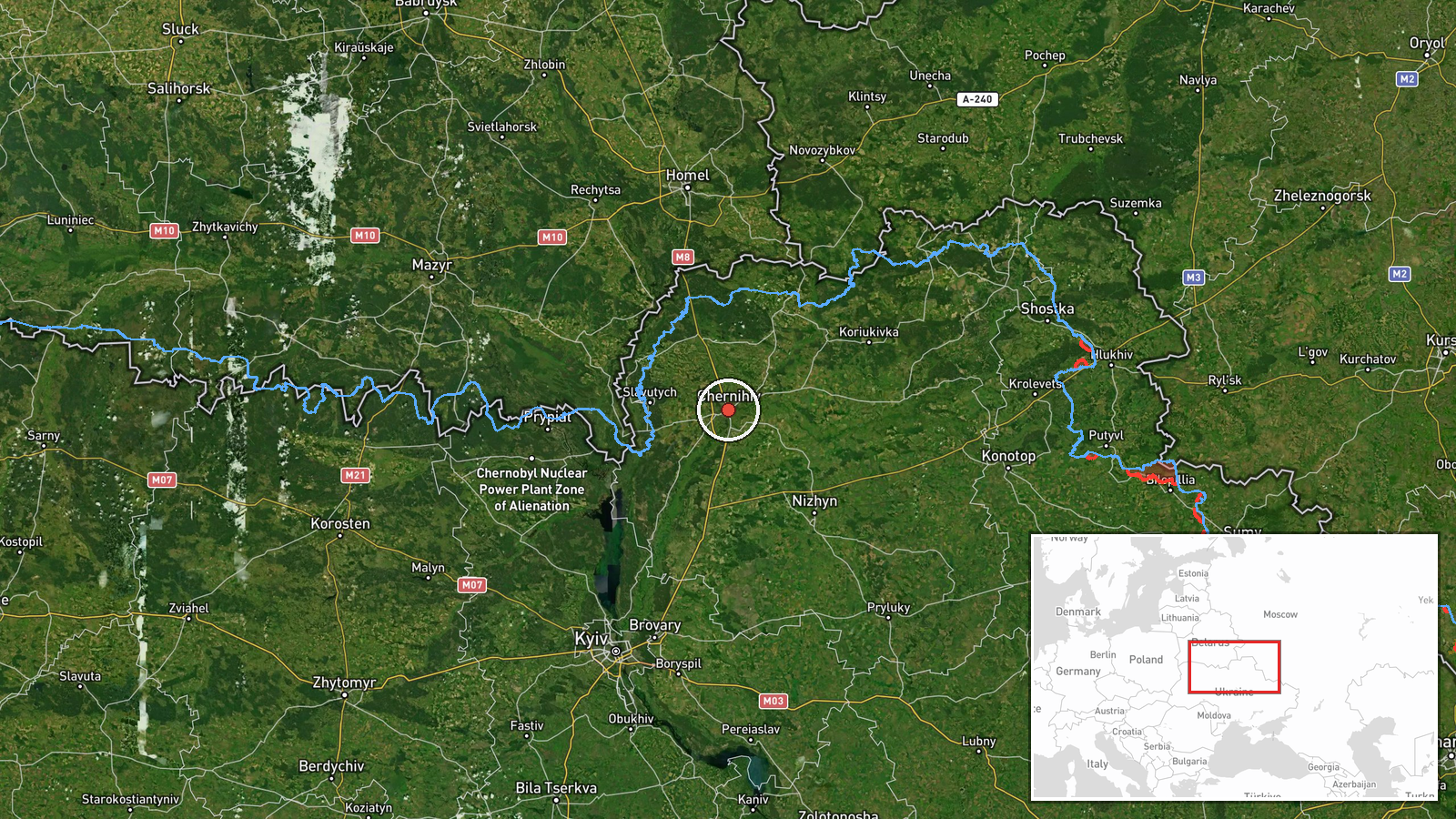
The coordinates correspond to the city of Chernihiv, a settlement-level match that the data marks as high confidence, so the point represents the city rather than a specific facility. Chernihiv lies on the Desna River in northern Ukraine, near the Belarusian border and the Russian region of Bryansk to the northeast. The surrounding terrain is largely flat, with forests and wetlands typical of the Polissia lowlands, which can complicate radar coverage at low altitude.
Related events nearby
- Ukrainian air monitoring: 1 Russian jet-powered Shahed (Geran-3) drone heading toward Chernihiv.2026-10-23 10:57 UTC · Drone Transit · Chernihiv, Ukraine
- Ukrainian air monitoring: 1 Russian jet-powered Shahed (Geran-3) drone from Chernihiv Oblast toward Berezna.2026-10-23 10:40 UTC · Drone Transit · Berezna, Ukraine
- Ukrainian air monitoring: 2+ Russian jet-powered Shahed (Geran-3) drones heading toward Slavutych.2026-10-23 06:44 UTC · Drone Transit · Slavutych, Ukraine
- Ukrainian air monitoring: 2+ Russian jet-powered Shahed (Geran-3) drones over Snovsk.2026-10-23 00:18 UTC · Drone Transit · Snovsk, Ukraine
- Ukrainian air monitoring: 2+ Russian jet-powered Shahed (Geran-3) drones from Bryansk (Russia) toward northern2026-10-23 06:48 UTC · Drone Transit · northern Chernihiv Oblast, Ukraine
▶ View this event on the live map

Intel Mapper aggregates open-source reports from monitored Telegram and X channels, geolocates them, cross-checks duplicates across sources and assigns a confidence score. Entries are updated as new confirmations arrive. Read how we verify events.