Three Russian Shahed-136 drones tracked transiting Poltava Oblast toward Kyiv
What happened
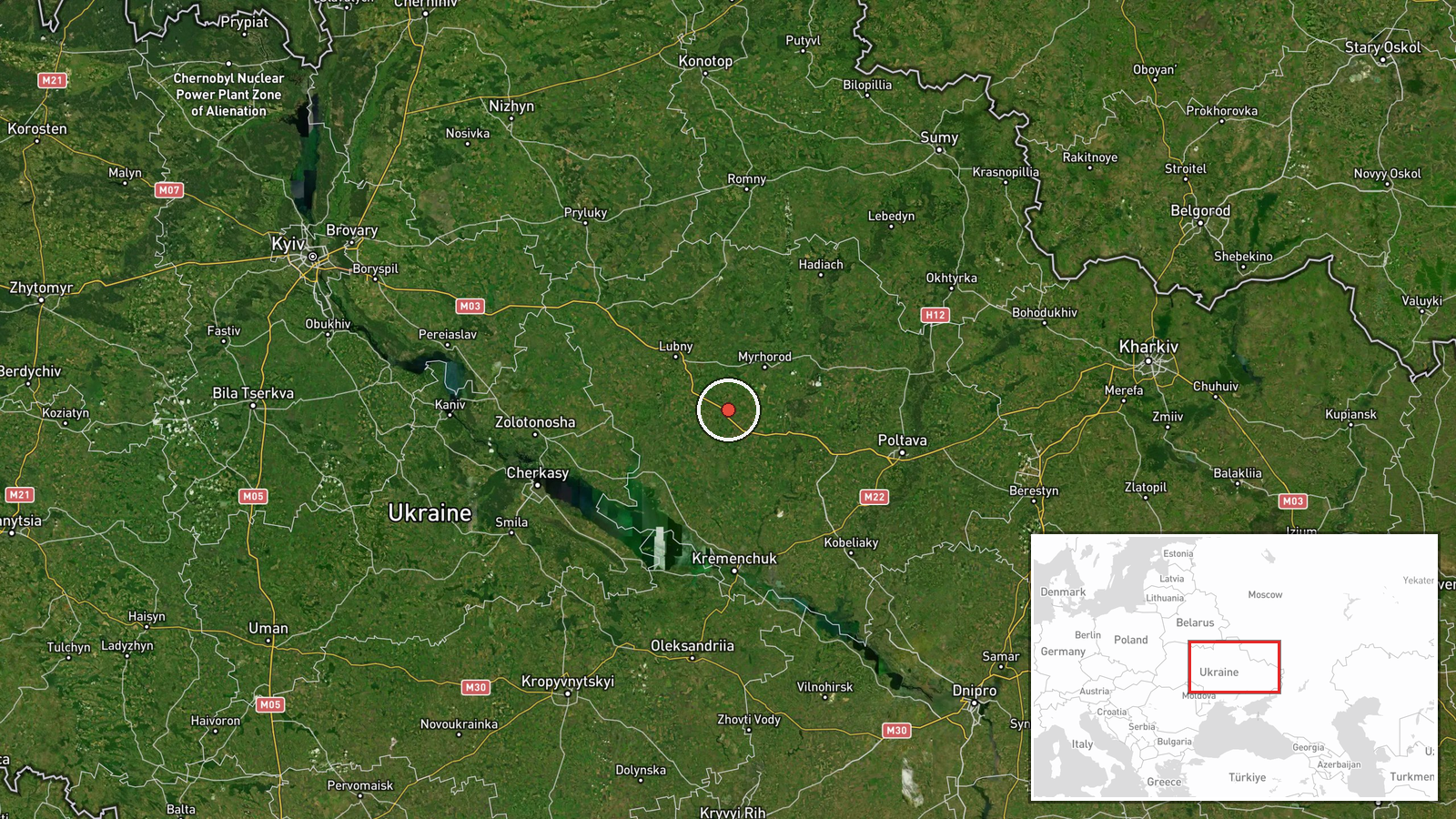
Three Russian Shahed-136 jet-powered kamikaze drones were reportedly tracked moving through Poltava Oblast on September 2, passing near Reshetylivka and Drabiv before continuing toward Kyiv Oblast. The report, posted to Telegram by @war_monitor, indicates the drones remained en route with no impact yet confirmed. The trajectory suggests these weapons were headed deeper into Ukrainian territory, though the intended target was not specified in the source material.
Context and assessment
Poltava Oblast has faced repeated drone transits as Russian forces conduct sustained strikes deeper into Ukrainian airspace. This transit follows a September 1 incident in which two similar reactive drones were detected moving from Tsarychanka toward Dnipro, suggesting a pattern of multi-axis drone attacks across central Ukraine. The Shahed-136, a relatively low-cost loitering weapon, has become a staple of Russian air operations against civilian and military infrastructure. The proximity to Kyiv Oblast indicates Russia may be targeting assets or infrastructure in and around the capital region, consistent with broader offensive pressure.
Sources and confidence
Single Telegram channel (@war_monitor) reported the transit. No cross-confirmation from other monitoring accounts or Ukrainian official sources cited. Confidence score of 6.0 reflects the source singularity and lack of post-impact verification. Confirmation of drone impacts or Ukrainian air defense response would increase confidence; secondary corroboration from official Ukrainian sources or additional independent monitoring channels would strengthen the assessment.
Location
The drones were tracked en route through central Poltava Oblast, passing near Reshetylivka and Drabiv—settlements roughly 100–120 km southeast of Kyiv. The region is primarily agricultural with scattered towns; the drones' northwestward trajectory toward Kyiv Oblast suggests targeting of assets in or near the capital or its industrial surroundings.
Related events nearby
- Three Russian Shahed-136 reactive (jet-powered) kamikaze drones tracked transiting from Poltava Oblast toward 2026-09-02 10:08 UTC · Drone Transit · En route: Poltava Oblast → Kyiv Oblast, Ukraine
- Signum Battalion (Ukraine) released footage of FPV kamikaze drone strikes against Russian targets. Specific im2026-09-01 13:45 UTC · UAS Strike · Poltava, Poltava Oblast, Ukraine
- Ukrainian air defense monitoring detected 2 reactive (jet-powered) kamikaze drones transiting from Tsarychanka2026-09-01 13:34 UTC · Drone Transit · Tsarychanka, Poltava Oblast, Ukraine
▶ View this event on the live map
Intel Mapper aggregates open-source reports from monitored Telegram and X channels, geolocates them, cross-checks duplicates across sources and assigns a confidence score. Entries are updated as new confirmations arrive. Read how we verify events.