Russia strikes Dnipro, Kamyanske with 5 ballistic missiles and 130+ kamikaze drones
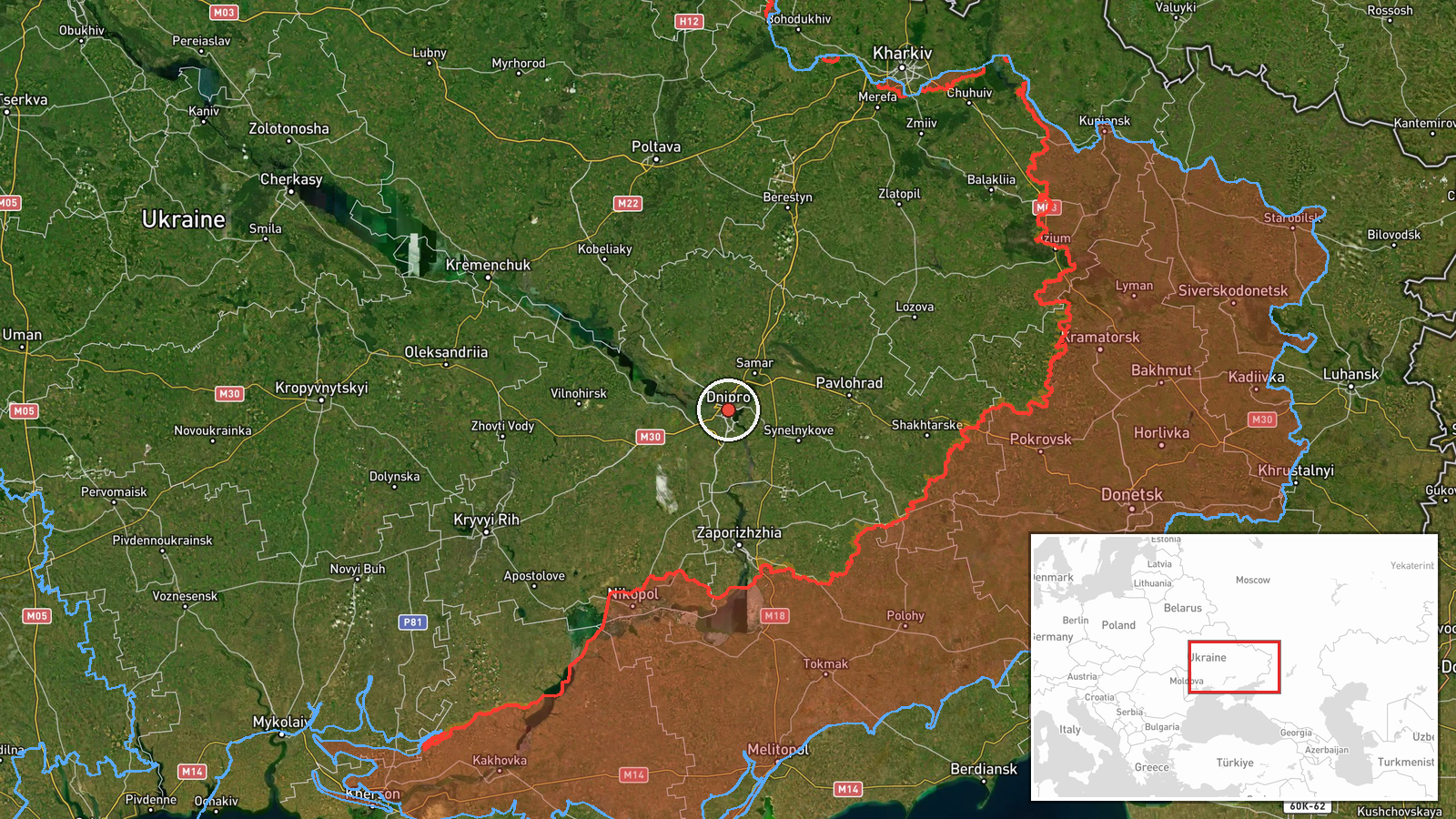
What happened
Russian forces conducted an overnight strike across Ukrainian territory on the night of September 4–5, 2026, according to @war_monitor. The attack comprised approximately 5 KN-23 ballistic missiles targeting the cities of Dnipro and Kamyanske in Dnipropetrovsk Oblast, supplemented by over 130 Geran-2 and Geran-4 kamikaze drones deployed across wider Ukrainian territory. No immediate damage or casualty figures were reported in the initial alert.
Context and assessment
Dnipro and Kamyanske represent significant industrial and logistical nodes in central-eastern Ukraine. This strike follows a pattern of Russian air assaults on the region within the preceding 24 hours: ballistic missile strikes on Kamyanske on September 4 evening, cruise missile detections toward Dnipro on September 4 morning, and multiple drone transits through Dnipropetrovsk Oblast. The scale of the drone component—over 130 units—suggests a coordinated saturation attack designed to overwhelm Ukrainian air defenses, consistent with recent Russian operational doctrine. Related events show Ukrainian air defense losses, including destruction of a key 35D6 radar system on September 4, which may have reduced defensive capability across the region.
Sources and confidence
@war_monitor reported the strike via Telegram. The source is a single channel, and no cross-confirmation from official Ukrainian sources is noted in available data. Confidence of 6.0 reflects single-source reporting; confirmation from Ukrainian military or civilian authority would strengthen assessment. Subsequent damage reports or air defense engagement data would raise confidence; absence of follow-up reporting would lower it.
Location
Dnipro and Kamyanske are located in Dnipropetrovsk Oblast, central-eastern Ukraine, approximately 60 kilometers apart. Dnipro sits on the Dnieper River and is Ukraine's fourth-largest city; Kamyanske lies south along the same river. Both are major industrial centers with Soviet-era manufacturing infrastructure. Precision to settlement level; exact facilities struck not specified.
Related events nearby
- Ukrainian air defense monitoring reports no active strategic bombers or reactive (jet-powered) Shahed drones c2026-09-05 18:13 UTC · Siren · Ukraine
- Russian kamikaze drones targeted a UAV manufacturing facility in Dnipro, Ukraine. Attack type consistent with 2026-09-05 20:04 UTC · UAS Strike · Dnipro, Dnipropetrovsk Oblast, Ukraine
- Ukrainian air defense monitoring reports reactive (jet-powered Shahed-variant) kamikaze drone transits across 2026-09-05 20:20 UTC · Drone Transit · Dnipropetrovsk Oblast, Ukraine
- One Russian Banderol cruise missile detected transiting over Dnipro, Dnipropetrovsk Oblast. Ukrainian air defe2026-09-05 23:05 UTC · UAS Strike · Dnipropetrovsk Oblast, Ukraine (general)
- Russian reactive (jet-powered kamikaze) drone detected transiting over Dnipropetrovsk Oblast from Solone towar2026-09-05 19:56 UTC · Drone Transit · Kamyanske, Dnipropetrovsk Oblast, Ukraine
▶ View this event on the live map
Intel Mapper aggregates open-source reports from monitored Telegram and X channels, geolocates them, cross-checks duplicates across sources and assigns a confidence score. Entries are updated as new confirmations arrive. Read how we verify events.