Ukrainian air defense reports ballistic missile threat neutralized over Kremenchuk
What happened
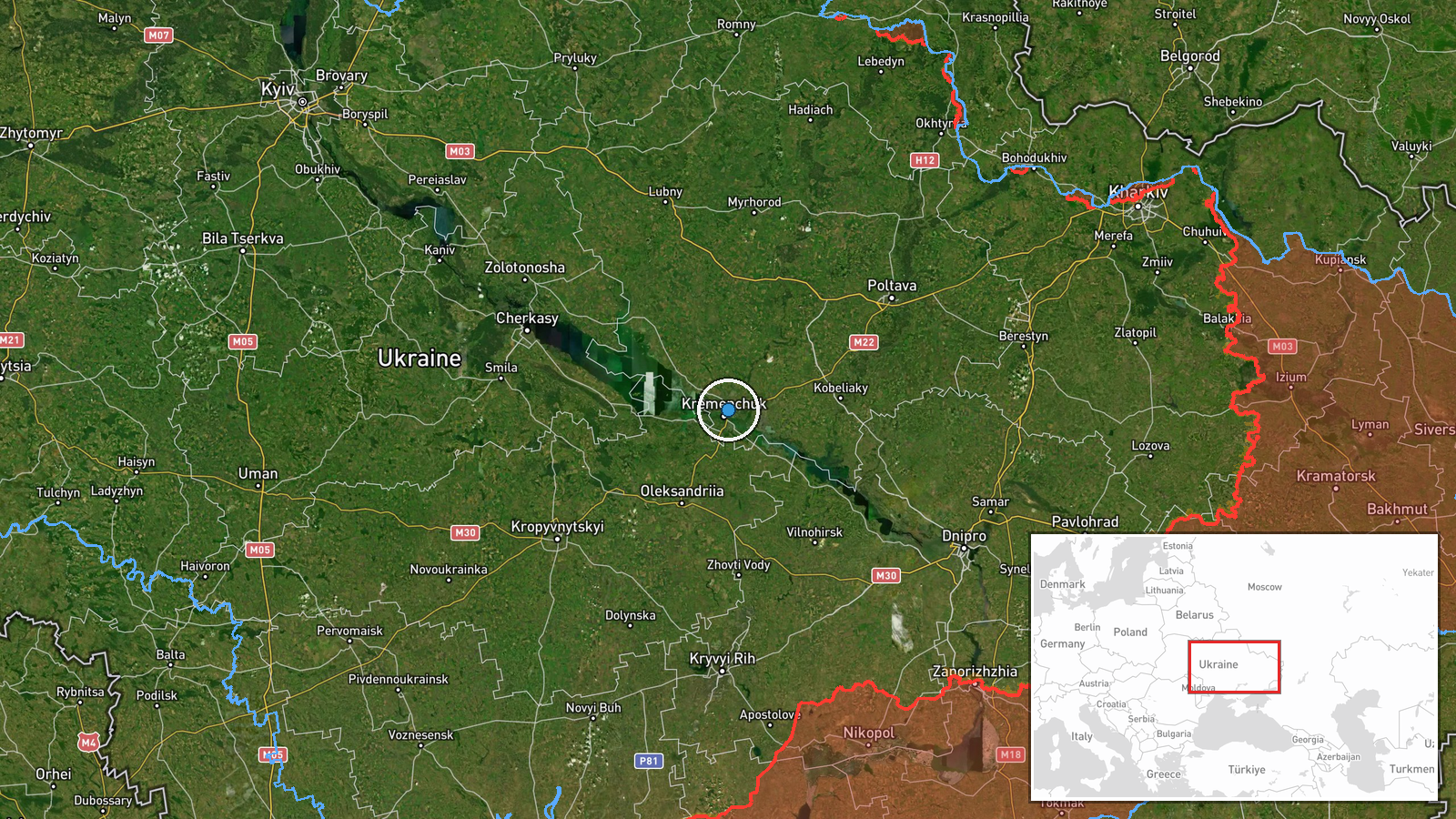
Ukrainian air defense forces reportedly issued an all-clear signal on September 22 at 00:26 UTC after intercepting a ballistic missile threat over Kremenchuk in Poltava Oblast. The report, posted via Telegram channel War Monitor, indicated a series of successful intercepts concluded the immediate threat. This followed a detection alert roughly 11 minutes earlier of Russian Onyx-M or Zircon cruise missiles transiting toward the same area.
Context and assessment
Kremenchuk, an industrial city of roughly 217,000 people in central Ukraine, has been a recurring target of Russian strikes throughout the conflict due to its petroleum refinery, power infrastructure, and rail junction. The intercept claim fits a pattern of intensive Russian missile and drone activity over the region documented throughout late September, including multiple Shahed-type drone transits detected over nearby districts and toward Poltava Oblast. Such sustained pressure suggests Russian forces are attempting to degrade Ukrainian infrastructure and air defense readiness across central Ukraine, though the effectiveness of reported intercepts would be significant if confirmed.
Sources and confidence
Single-source report via Telegram channel War Monitor, a Ukrainian monitoring account with established track record but not independently cross-confirmed in available data. Confidence score of 6.0 reflects lack of corroboration from official Ukrainian military channels or independent verification. Score could increase with statements from Ukrainian Air Force; could decrease if subsequent reporting contradicts the intercept claim.
Location
Kremenchuk city center, Poltava Oblast, central Ukraine (49.09°N, 33.43°E). Located along the Dnipro River roughly 330 km southeast of Kyiv. The city contains major petroleum refinery and rail infrastructure, making it a strategic target. Nearby Dnipropetrovsk and Cherkasy oblasts also under reported drone activity during this period.
Related events nearby
- Russian Zircon/Onyx-M cruise missiles detected in transit toward Kremenchuk, Poltava Oblast. Ukrainian air mon2026-09-22 00:15 UTC · Cruise Missile · Kremenchuk, Poltava Oblast, Ukraine
- Two Russian jet-propelled reconnaissance drones (Shahed-class) transited from Donetsk via Kremenchuk toward Gl2026-09-21 16:47 UTC · Drone Transit · Hlobyne, Poltava Oblast, Ukraine
- One Russian jet-propelled reconnaissance drone (Shahed-class) transited over Smila heading toward Cherkasy in 2026-09-21 17:16 UTC · Drone Transit · Cherkasy, Cherkasy Oblast, Ukraine
- Two Russian jet-propelled reconnaissance drones (Shahed-class) transited over Kropyvnytskyi area in Kirovohrad2026-09-21 17:16 UTC · Drone Transit · Kropyvnytskyi, Kirovohrad Oblast, Ukraine
▶ View this event on the live map
Intel Mapper aggregates open-source reports from monitored Telegram and X channels, geolocates them, cross-checks duplicates across sources and assigns a confidence score. Entries are updated as new confirmations arrive. Read how we verify events.