Russian drone transits over Kyiv Reservoir amid escalating aerial activity
What happened
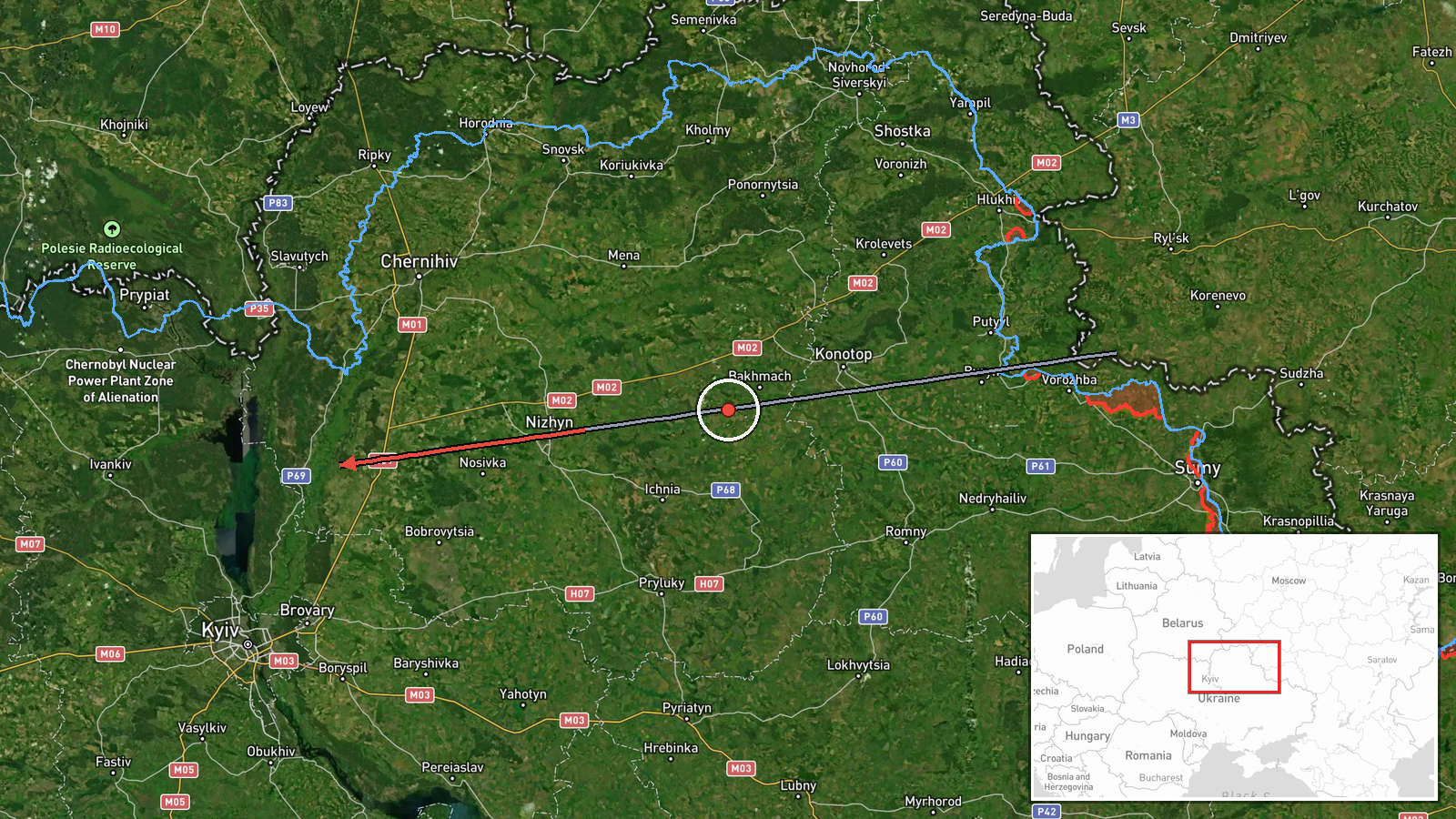
A single Russian Shahed reactive drone was detected on 26 September at 19:32 UTC transiting over the Kyiv Reservoir in Kyiv region, reportedly originating from the direction of Nizhyn in Chernihiv Oblast. The detection represents a continuation of Russian reconnaissance and strike operations over Ukrainian airspace, occurring during an intensified period of aerial activity over the capital region.
Context and assessment
The Kyiv Reservoir, a major freshwater source serving the capital, has been a recurring focus of Russian reconnaissance and targeting efforts. This transit follows multiple related drone detections the same day, including Shahed-136 movements toward Borodyanky and Moshchun in Kyiv Oblast. The activity aligns with Ukrainian military intelligence warnings issued on 26 September of preparations for a combined Russian missile attack anticipated on the night of 27 September. Earlier on 26 September, Russian forces struck the Kosmonova data center in Kyiv, suggesting a coordinated effort to degrade Ukrainian infrastructure and communications. The pattern indicates sustained Russian focus on Kyiv region's strategic and logistical targets.
Sources and confidence
Reported by Telegram channel @war_monitor. Single source limits cross-confirmation; confidence score of 6.0 reflects the channel's tracking reliability but lack of independent corroboration. Confirmation from multiple Ukrainian military or civil sources, or visual evidence, would strengthen confidence. Continued detections of similar drone transits would reinforce the assessment.
Location
The Kyiv Reservoir (also called Kyivske Lake), located northwest of central Kyiv in Kyiv Oblast. The precise coordinates indicate the reservoir body. The location was determined at regional precision level. Nearby features include the Dnieper River system and proximity to suburban Kyiv settlements including Borodyanky and settlements along the water supply infrastructure serving the capital.
Related events nearby
- Russian Shahed-136 reactive (jet-propelled) kamikaze drone detected transiting toward Moshchun, Kyiv Oblast. O2026-09-26 00:17 UTC · Drone Transit · Borodyanky, Kyiv Oblast, Ukraine
- Ukrainian President Zelenskyy states that according to intelligence reports, Putin plans to expand the war in 2026-09-26 18:29 UTC · Statement · Kyiv, Ukraine
- Ukrainian military intelligence warns of Russian preparations for a combined missile attack on the night of 272026-09-26 18:25 UTC · Report · Kyiv, Ukraine
- Russian forces conducted an airstrike on the Kosmonova data center in Kyiv, reportedly supporting Ukrainian mi2026-09-26 10:20 UTC · Airstrike · Kosmonova Data Center, Kyiv, Ukraine
- One Russian Shahed-136 reactive (jet-propelled) kamikaze drone detected transiting from Bryansk Oblast toward 2026-09-26 06:03 UTC · Air Defense · Kyiv, Ukraine
▶ View this event on the live map
Intel Mapper aggregates open-source reports from monitored Telegram and X channels, geolocates them, cross-checks duplicates across sources and assigns a confidence score. Entries are updated as new confirmations arrive. Read how we verify events.