Russian Shahed-variant drone transits Vasylkiv sector heading toward Kyiv region
What happened
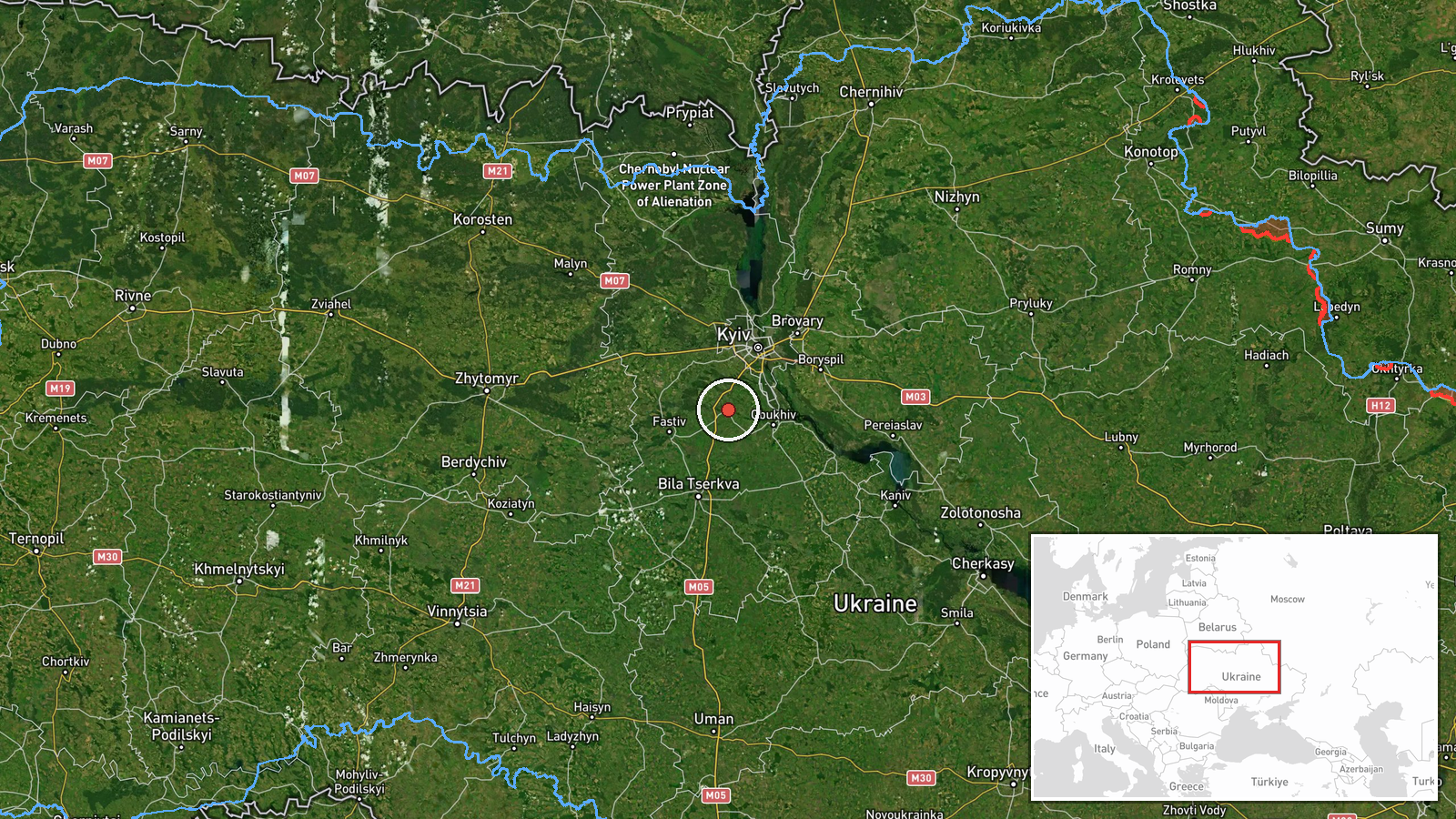
Ukrainian air monitoring reportedly detected one Russian reactive jet-powered Shahed-variant kamikaze drone transiting through the Vasylkiv sector in Kyiv Oblast on the morning of October 2, 2026, at approximately 02:33 UTC. The drone was tracked en route to an unspecified target within Kyiv region. The report came from the Telegram channel @war_monitor and provided no information on interception or impact.
Context and assessment
The detection represents part of an ongoing pattern of Russian drone strikes against the Kyiv region documented over October 1–2, 2026. Related reports place similar Shahed-variant drones transiting nearby areas including Obukhiv, Lisnyky, Holosiyivskyi Park in central Kyiv, and the Hatne/Chabany sector during the same period, suggesting a coordinated massed attack. Vasylkiv, located approximately 50 kilometers southwest of Kyiv city center, sits along a common approach vector for Russian strikes on the capital. The pattern indicates sustained pressure on Ukrainian air defenses across multiple southern and western approaches to the metropolitan area.
Sources and confidence
Single source: Telegram channel @war_monitor. No cross-confirmation from other channels or official Ukrainian sources provided in available data. Confidence score of 6.0 reflects single-source reporting from an established monitoring account but lack of independent verification. Corroboration from Ukrainian air force statements or detection by multiple monitors would raise confidence; retraction by the source or contradictory official statements would lower it.
Location
Vasylkiv sector, Kyiv Oblast, located approximately 50 kilometers south-southwest of Kyiv city at coordinates 50.18°N, 30.32°E. The sector designation indicates regional-level tracking rather than precise strike location. Vasylkiv is situated along the Stuhna River in agricultural territory south of the capital, a known transit zone for Russian aerial approaches to Kyiv.
Related events nearby
- Russian Shahed-type kamikaze drone detected transiting from Pyrohiv toward Lisnyky (Ukrainian air monitoring).2026-10-01 17:55 UTC · Drone Transit · Lisnyky, Ukraine
- Russian reactive/jet-powered Shahed-variant kamikaze drone tracked transiting over Gatne / Chabany sector, Kyi2026-10-02 02:54 UTC · Drone Transit · 🅿 Hatne, Ukraine
- Two Russian reactive/jet-powered Shahed-variant kamikaze drones tracked transiting over Svyatopetrivske and Ch2026-10-02 03:13 UTC · Drone Transit · Svyatopetrivske, Kyiv City, Ukraine
- Russian Shahed-type kamikaze drone detected over Obukhiv (Ukrainian air monitoring).2026-10-01 17:08 UTC · Drone Transit · Obukhiv, Ukraine
- Russian reactive/jet-powered Shahed-variant kamikaze drone tracked transiting over Holosiyivskyi Park district2026-10-02 02:54 UTC · Drone Transit · Holosiyivskyi Park, Kyiv, Ukraine
▶ View this event on the live map
Intel Mapper aggregates open-source reports from monitored Telegram and X channels, geolocates them, cross-checks duplicates across sources and assigns a confidence score. Entries are updated as new confirmations arrive. Read how we verify events.