Russian Kh-101 cruise missiles tracked toward Poltava district in renewed strike wave
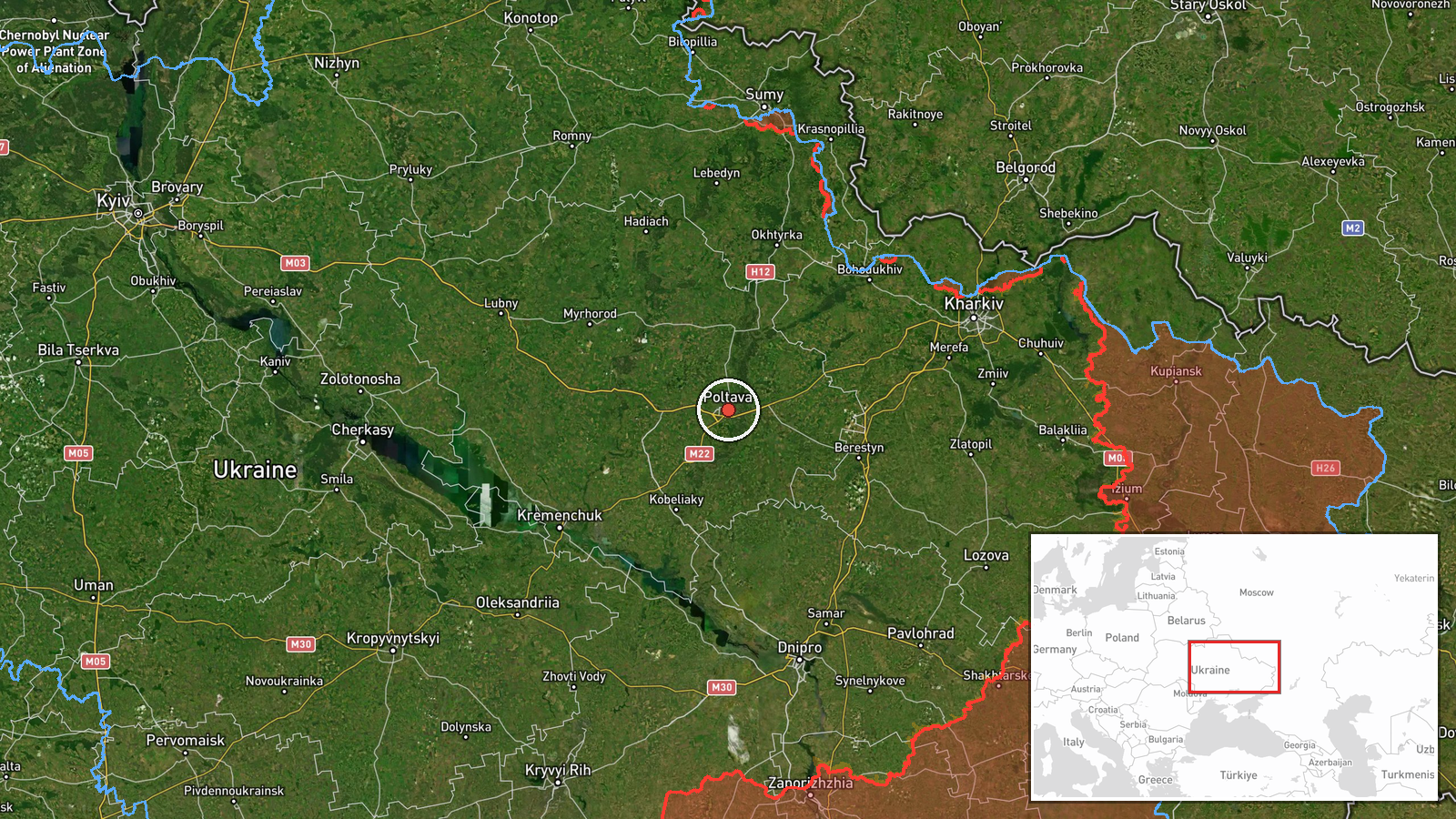
What happened
Ukrainian air monitoring systems detected three groups of Russian Kh-101 cruise missiles heading toward Poltava district on the morning of October 7, 2026, at approximately 02:53 UTC. The Kh-101 is a long-range standoff cruise missile typically employed in strikes against rear-area infrastructure. The report was disseminated via Telegram by the war monitoring channel, which tracks Ukrainian air defense alerts in real time.
Context and assessment
Poltava district in central Ukraine has emerged as a consistent target in Russia's sustained air campaign. The detection comes as part of a broader multi-wave strike involving Kh-101, Kalibr, Zircon, and Oniks missiles directed at multiple populated centers across eastern and central Ukraine, including Kremenchuk (also in Poltava Oblast), Kamyanske, and Zaporizhzhia. The geographic spread and weapon diversity suggest a coordinated campaign aimed at degrading civilian and military infrastructure across Ukraine's industrial heartland. Kremenchuk, historically a major manufacturing hub, has been struck repeatedly in recent weeks, indicating persistent Russian interest in targeting production capacity and logistics nodes.
Sources and confidence
Single source via Telegram (@war_monitor), a channel documenting Ukrainian air defense assessments. No cross-confirmation from independent sources or Ukrainian official statements provided in available reports. Confidence score of 6.0 reflects the single-source reporting and the nature of real-time air monitoring alerts, which typically precede strike outcome confirmation. Independent verification of missile strikes or impacts would strengthen confidence.
Location
Poltava district is located in central-eastern Ukraine at approximately 49.59°N, 34.55°E. The district comprises agricultural and light industrial areas north of the city of Poltava. Geographic precision is set to settlement level. The region lies roughly 280 kilometers southeast of Kyiv and is part of a corridor targeted repeatedly in recent Russian strikes.
Related events nearby
- Ongoing Russian ballistic missile strikes continue against Kyiv. Multiple ballistic threats detected over the 2026-10-07 00:33 UTC · Ballistic Missile · Kremenchuk, Poltava Oblast, Ukraine
- Ukrainian air monitoring: 1 Russian Kh-101 cruise missile passing Poltava, heading toward Kremenchuk.2026-10-07 03:14 UTC · Cruise Missile · Kremenchuk, Ukraine
- Ukrainian air monitoring: 1 Russian Kh-101 cruise missile passing Poltava, heading toward Kremenchuk.2026-10-07 03:09 UTC · Cruise Missile · Kremenchuk, Ukraine
- Ukrainian air monitoring: 1 Russian Kh-101 cruise missile heading toward Kremenchuk.2026-10-07 03:03 UTC · Cruise Missile · Kremenchuk, Ukraine
- Ukrainian air monitoring: 1 Russian Kh-101 cruise missile heading toward Kremenchuk.2026-10-07 02:58 UTC · Cruise Missile · Kremenchuk, Ukraine
▶ View this event on the live map
Intel Mapper aggregates open-source reports from monitored Telegram and X channels, geolocates them, cross-checks duplicates across sources and assigns a confidence score. Entries are updated as new confirmations arrive. Read how we verify events.