Russian Kh-101 cruise missile reported heading toward Kremenchuk
What happened
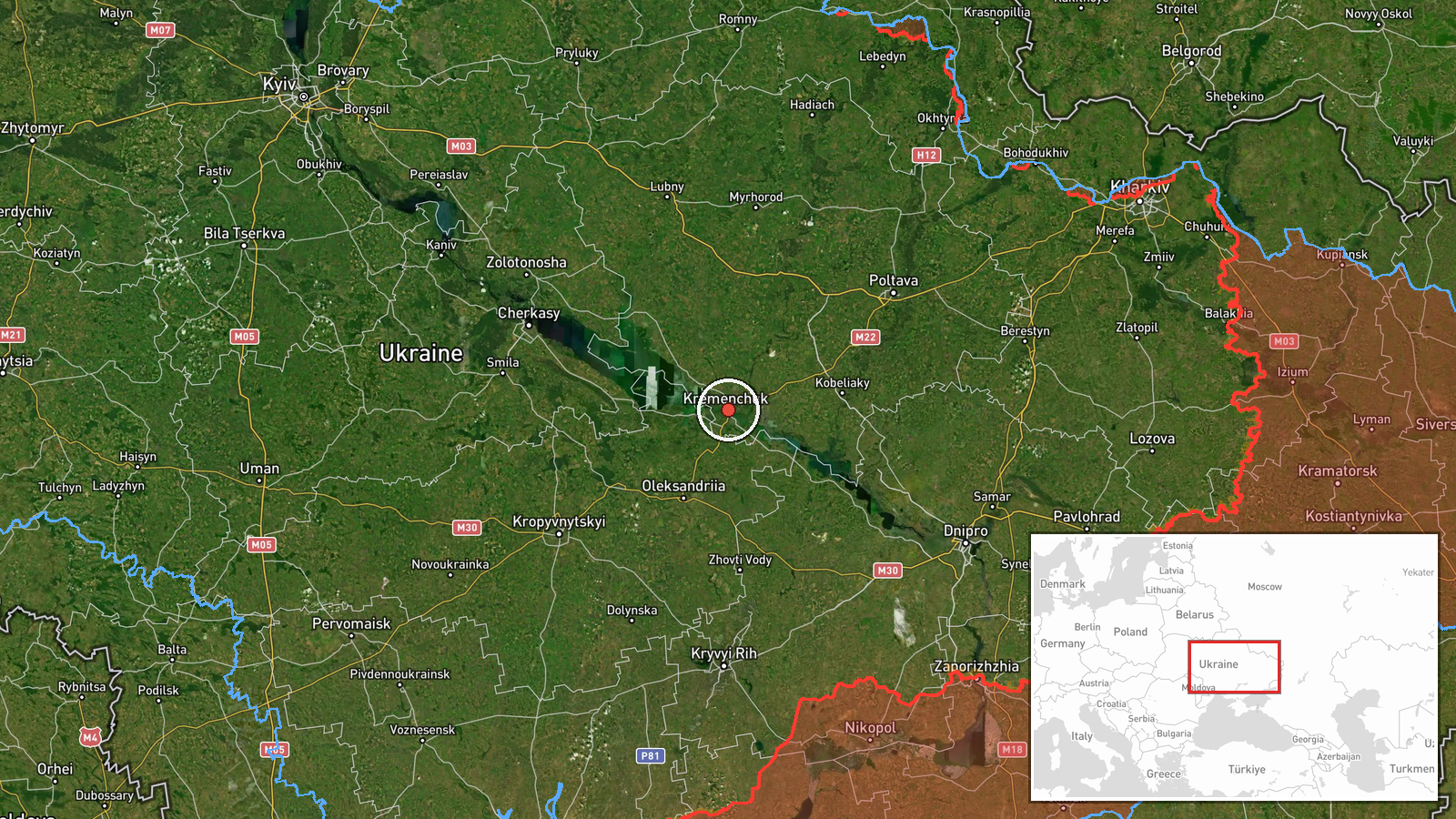
Ukrainian air monitoring reportedly detected one Russian Kh-101 cruise missile directed toward Kremenchuk on the morning of October 7, 2026. The alert was issued at 02:58 UTC. The Kh-101 is a long-range standoff cruise missile typically employed for strikes against strategic targets. This report came as part of a broader Russian air campaign that night, with multiple missile types reported inbound toward the Kremenchuk area and surrounding Poltava Oblast within a span of a few minutes.
Context and assessment
Kremenchuk, an industrial city in central Ukraine's Poltava Oblast, has been a recurring target in Russia's air campaign. The city hosts significant infrastructure including an oil refinery and power facilities. Within approximately three minutes of this Kh-101 alert, Ukrainian monitoring also reported Zircon/Oniks missiles and a Kalibr cruise missile targeting the same area, suggesting a coordinated or nearly simultaneous strike package. Earlier that same morning, ballistic missile activity was also reported over Kyiv. This pattern of multiple cruise missile systems targeting a single location within minutes is consistent with Russia's tactic of saturating air defenses through volume and mixed weapon types.
Sources and confidence
Reported by Telegram channel @war_monitor, which monitors Ukrainian air defense alerts. Single source report with no independent cross-confirmation noted in available data. Confidence score of 6.0 reflects reliance on a single monitoring channel; would increase with corroborating reports from Ukrainian official sources, visual confirmation, or impact assessments. Would decrease if subsequent reports contradict the direction or missile type.
Location
Kremenchuk, a city of roughly 200,000 in Poltava Oblast, central Ukraine, located approximately 300 km southeast of Kyiv. The settlement sits on the Dnipro River and is a major industrial and transportation hub. Precision is marked as high at settlement level (49.07°N, 33.42°E). No specific facility or impact location was named in the report.
Related events nearby
- Ukrainian air monitoring: 1 Russian Kh-101 cruise missile passing Poltava, heading toward Kremenchuk.2026-10-07 03:14 UTC · Cruise Missile · Kremenchuk, Ukraine
- Ukrainian air monitoring: 1 Russian Kh-101 cruise missile passing Poltava, heading toward Kremenchuk.2026-10-07 03:09 UTC · Cruise Missile · Kremenchuk, Ukraine
- Ukrainian air monitoring: 1 Russian Kh-101 cruise missile heading toward Kremenchuk.2026-10-07 03:03 UTC · Cruise Missile · Kremenchuk, Ukraine
- Ukrainian air monitoring: 1 Russian Kalibr cruise missile passing Kamyanske, heading toward Kremenchuk; 1 Russ2026-10-07 01:50 UTC · Cruise Missile · Kremenchuk, Ukraine
- Ongoing Russian ballistic missile strikes continue against Kyiv. Multiple ballistic threats detected over the 2026-10-07 00:33 UTC · Ballistic Missile · Kremenchuk, Poltava Oblast, Ukraine
▶ View this event on the live map
Intel Mapper aggregates open-source reports from monitored Telegram and X channels, geolocates them, cross-checks duplicates across sources and assigns a confidence score. Entries are updated as new confirmations arrive. Read how we verify events.