Russian Kalibr missiles tracked toward Kremenchuk and Dnipro in overnight strike
What happened
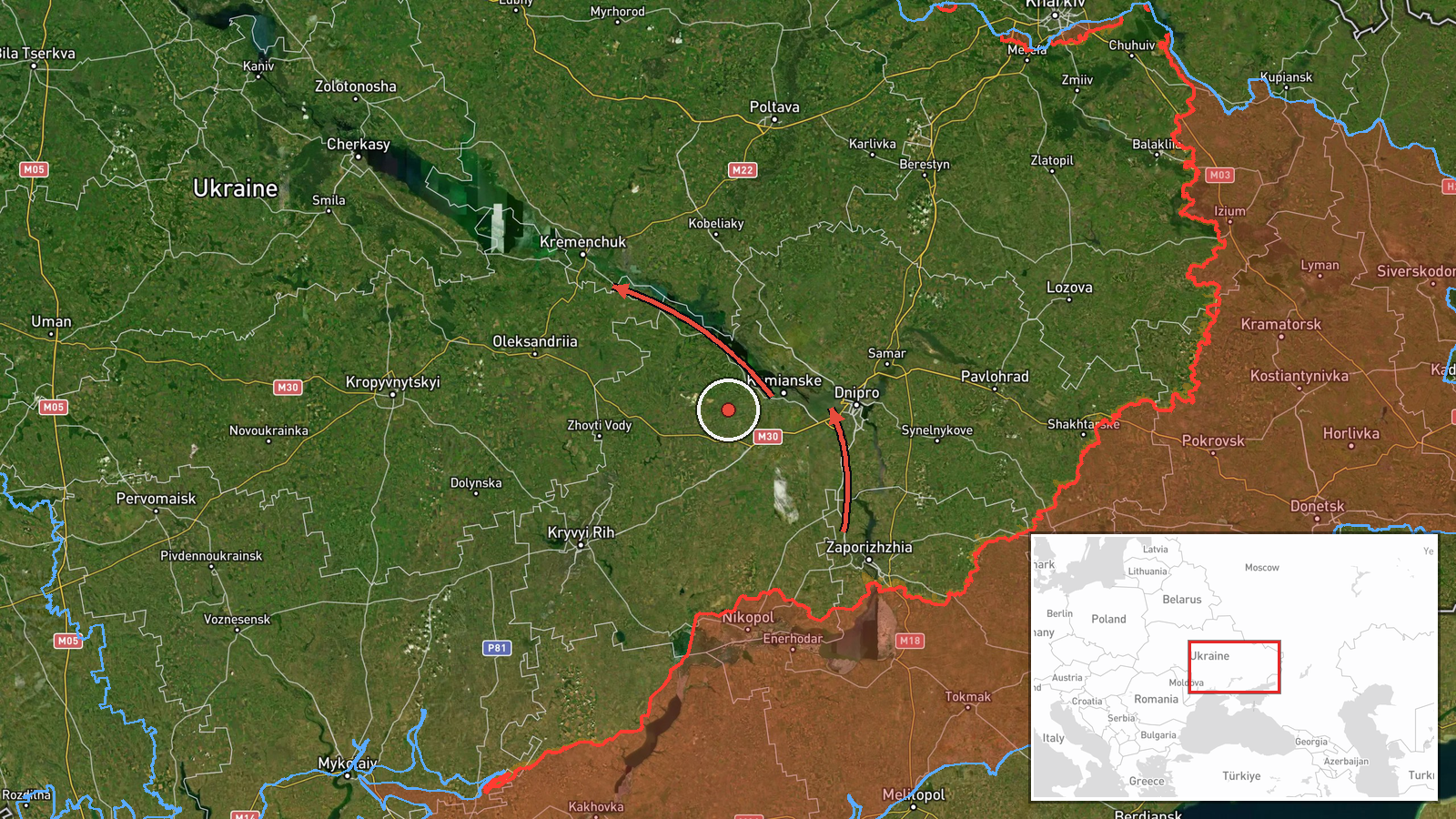
Ukrainian air monitoring detected Russian cruise missiles in flight on the morning of October 7. According to the report from Telegram channel @war_monitor, three groups of Kalibr missiles were tracked passing through Kamyanske airspace heading toward Kremenchuk and nearby Horshni Plavni, while two additional groups of Kalibr missiles were detected heading toward Dnipro from the direction of Zaporizhzhia. The detection occurred at approximately 01:50 UTC.
Context and assessment
The strikes represent a continuation of sustained Russian cruise and ballistic missile operations against central Ukrainian cities. Kremenchuk and Dnipro are major industrial and population centers in Dnipropetrovsk and Poltava oblasts respectively. The timing follows a series of related Russian missile and drone launches detected over the same locations within hours, including ballistic missile threats and Zircon/Oniks hypersonic missiles reported earlier on October 7, as well as overnight drone operations. This pattern suggests a coordinated or sustained campaign targeting Ukrainian infrastructure in the Dnieper region, though the specific objectives remain unclear from monitoring data alone.
Sources and confidence
Single source: Telegram channel @war_monitor. No independent cross-confirmation is noted in available data. Confidence score of 6.0 reflects reliance on a single Ukrainian air monitoring channel. Confidence would increase with reports from additional Ukrainian sources or from impact assessments; it would decrease if missile paths were not verified or if subsequent reports contradicted the trajectory data.
Location
Kremenchuk is a city of roughly 220,000 in Poltava Oblast on the Dnieper River, approximately 280 kilometers southeast of Kyiv. Kamyanske is situated nearby in Dnipropetrovsk Oblast along the same river corridor. Dnipro, Ukraine's fourth-largest city, lies approximately 100 kilometers south of Kremenchuk on the Dnieper. The reported missile paths follow the major river valley.
Related events nearby
- Ukrainian air monitoring: 1 Russian Kh-101 cruise missile heading toward Kremenchuk.2026-10-07 02:58 UTC · Cruise Missile · Kremenchuk, Ukraine
- Ongoing Russian ballistic missile strikes continue against Kyiv. Multiple ballistic threats detected over the 2026-10-07 00:33 UTC · Ballistic Missile · Kremenchuk, Poltava Oblast, Ukraine
- Ukrainian air monitoring: 2 Russian Zircon/Oniks missiles heading toward Kremenchuk.2026-10-07 00:32 UTC · Cruise Missile · Kremenchuk, Ukraine
- Ukrainian air monitoring: 1 Russian Kh-101 cruise missile heading toward Poltava district.2026-10-07 02:53 UTC · Cruise Missile · Poltava district, Ukraine
- Ukrainian air defense forces intercepted/suppressed 114 enemy drones overnight (Shahed, Gerber, Banderol types2026-10-06 07:02 UTC · Air Defense · Ukraine (Air Defense Operations)
▶ View this event on the live map
Intel Mapper aggregates open-source reports from monitored Telegram and X channels, geolocates them, cross-checks duplicates across sources and assigns a confidence score. Entries are updated as new confirmations arrive. Read how we verify events.