Two Russian Shahed drones spotted circling over Dnipro
What happened
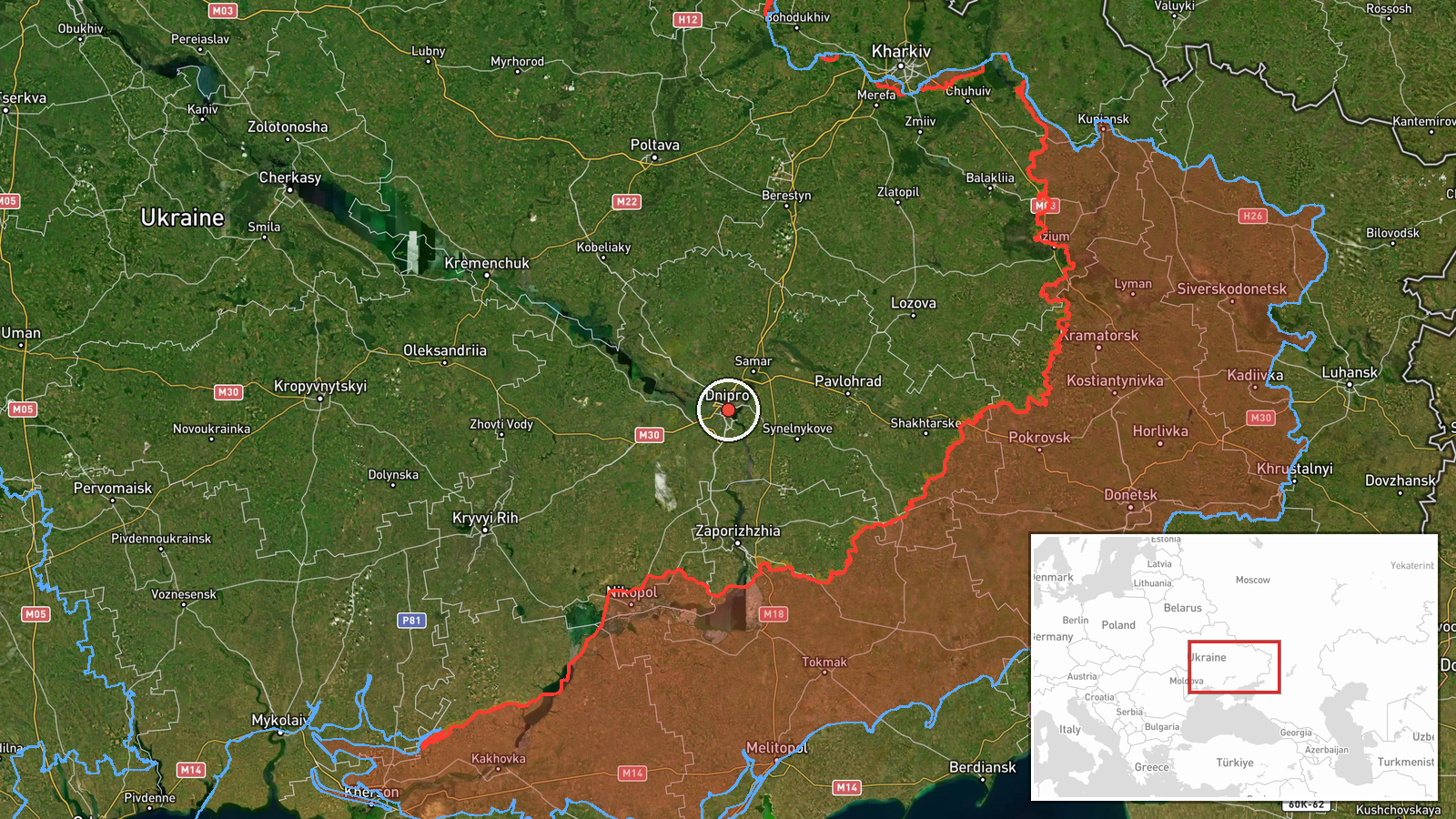
Ukrainian air monitoring detected two Russian jet-powered Shahed (Geran-3) drones circling over Dnipro on October 9 at approximately 11:36 UTC. The report comes from the Telegram channel @war_monitor, which regularly tracks Russian air activity. The drones were observed in a loitering pattern over the city rather than in direct transit, suggesting possible reconnaissance or targeting preparation.
Context and assessment
Dnipro, Ukraine's fourth-largest city and a major industrial and logistics hub in the southeastern Dnipro Oblast, has been repeatedly targeted by Russian strikes since the full-scale invasion began. The Geran-3 is a jet-powered variant of the Shahed loitering munition, capable of carrying warheads or conducting extended surveillance. This sighting follows a pattern of Russian drone activity across central and eastern Ukraine on October 8, with similar Shahed aircraft detected over Kremenchuk and Oleksandriya. Combined with reported Russian ground advances near Girke in Zaporizhzhia Oblast on the same period, the drone activity may reflect an intensified operational tempo. Such circling patterns often precede strikes, though sustained loitering can also indicate surveillance for damage assessment or targeting refinement.
Sources and confidence
Single source: Telegram channel @war_monitor, a Ukrainian monitoring account. No cross-confirmation from other open-source channels is noted. Confidence score of 6.0 reflects the single-source basis; corroboration by independent observers or official Ukrainian air defense statements would strengthen reliability. Ukrainian air monitoring channels have generally demonstrated accuracy in real-time drone tracking.
Location
Dnipro city center, Dnipro Oblast, central-eastern Ukraine (approximately 48.46°N, 35.05°E). The settlement-level precision indicates the observation applies to the urban area. Dnipro lies roughly 400 km from the front lines and serves as a major rear-area target for Russian strikes.
Related events nearby
- Ukrainian air monitoring: 3 Russian jet-powered Shahed (Geran-3) drones over Kremenchuk.2026-10-08 12:55 UTC · Drone Transit · Kremenchuk, Ukraine
- Ukrainian air monitoring: 2 Russian jet-powered Shahed (Geran-3) drones circling over Oleksandriya.2026-10-09 12:05 UTC · Drone Transit · Oleksandriya, Ukraine
- Ukrainian air monitoring: 1 Russian jet-powered Shahed (Geran-3) drone over Oleksandriya.2026-10-08 12:42 UTC · Drone Transit · Oleksandriya, Ukraine
▶ View this event on the live map

Intel Mapper aggregates open-source reports from monitored Telegram and X channels, geolocates them, cross-checks duplicates across sources and assigns a confidence score. Entries are updated as new confirmations arrive. Read how we verify events.