Six Russian Shahed drones tracked heading toward Kremenchuk district
What happened
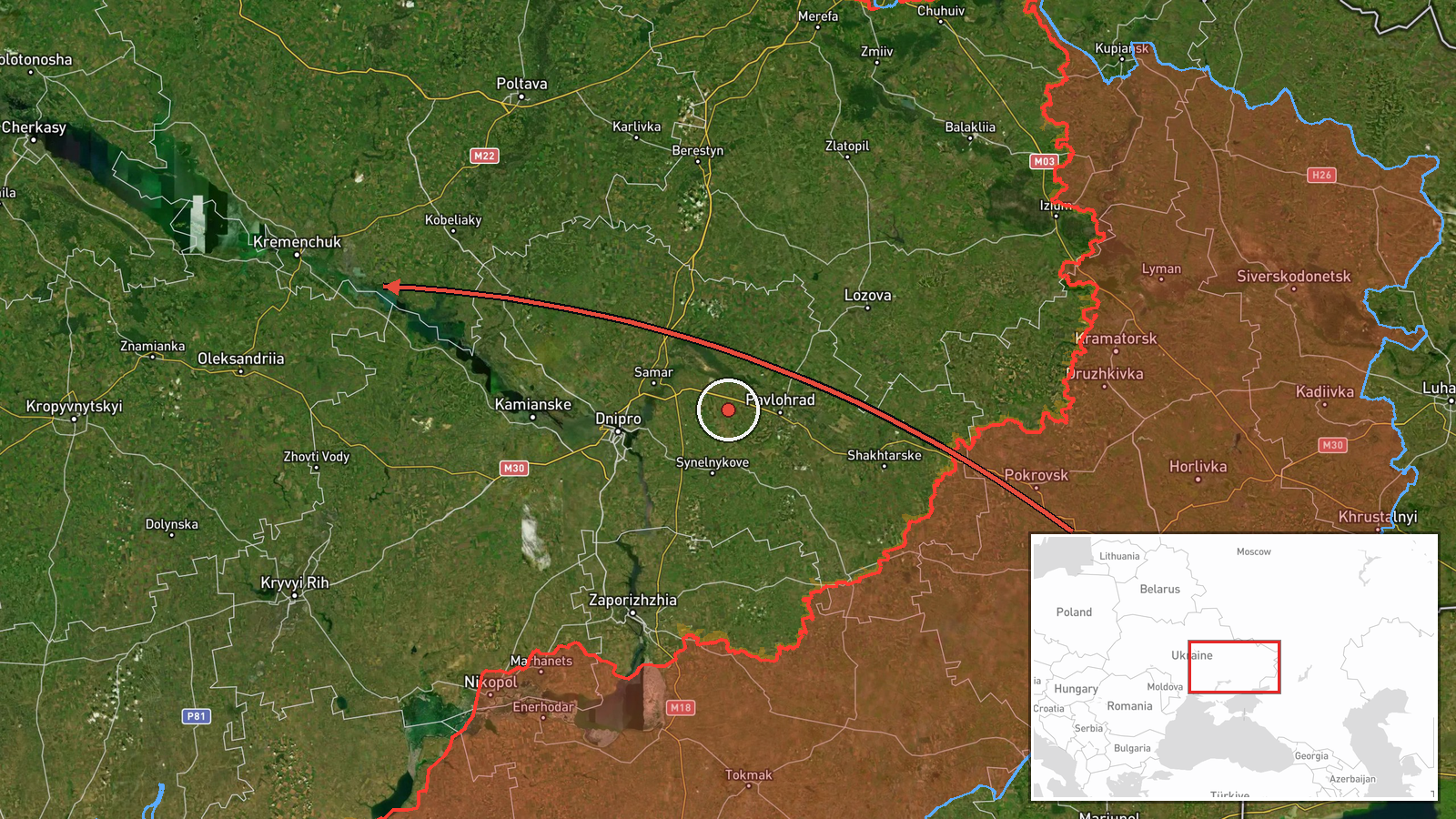
Ukrainian air monitoring reported six Russian Shahed-type unmanned aerial vehicles transiting from Donetsk toward Kremenchuk district on October 14 at 07:39 UTC. The report, issued via Telegram channel @war_monitor, characterizes the observation as a drone transit rather than a confirmed strike, indicating the drones were tracked in flight but their final disposition was not specified in the monitoring alert.
Context and assessment
Kremenchuk district, located in central Poltava Oblast roughly 330 kilometers from the front lines, hosts significant industrial infrastructure including an oil refinery—a target category Russia has repeatedly engaged since 2022. The October 13–14 reporting window shows sustained Russian drone activity across the region: single Shahed transits were detected heading toward Kremenchuk on October 13, while Geran-3 variants were tracked toward Poltava, Myrhorod, and surrounding areas. The concentration of six drones in a single transit suggests a coordinated wave, consistent with Russian patterns of multi-drone attacks intended to overwhelm air defenses. This grouping may indicate targeting of distributed infrastructure or an attempt to penetrate defenses through saturation.
Sources and confidence
Single source: Telegram channel @war_monitor, a Ukrainian air monitoring account with established reporting on drone transits. No cross-confirmation from Ukrainian official defense accounts or visual/damage reports is noted. Confidence of 6.0 reflects unconfirmed single-source detection; independent verification (air defense engagement, impact reports, or secondary monitoring channels) would substantially increase confidence.
Location
Kremenchuk district, Poltava Oblast, central Ukraine (49.06°N, 33.40°E). The settlement-level precision indicates monitoring of the administrative district rather than a specific point target. Located approximately 300 kilometers from Russian territory and 330 kilometers from active front-line positions.
Related events nearby
- Ukrainian air monitoring: 1 Russian Shahed-type drone heading toward Kremenchuk.2026-10-13 17:40 UTC · Drone Transit · Kremenchuk, Ukraine
- Ukrainian air monitoring: 1 Russian jet-powered Shahed (Geran-3) drone heading toward Semenivka.2026-10-13 14:37 UTC · Drone Transit · Semenivka, Ukraine
- Ukrainian air monitoring: 1 Russian jet-powered Shahed (Geran-3) drone from Poltava Oblast toward Myrhorod.2026-10-13 17:47 UTC · Drone Transit · Myrhorod, Ukraine
- Ukrainian air monitoring: 1 Russian jet-powered Shahed (Geran-3) drone heading toward Poltava Oblast.2026-10-14 00:32 UTC · Drone Transit · Poltava Oblast, Ukraine
- Ukrainian air monitoring: 1 Russian jet-powered Shahed (Geran-3) drone heading toward Poltava.2026-10-13 21:13 UTC · Drone Transit · Poltava, Ukraine
▶ View this event on the live map

Intel Mapper aggregates open-source reports from monitored Telegram and X channels, geolocates them, cross-checks duplicates across sources and assigns a confidence score. Entries are updated as new confirmations arrive. Read how we verify events.