Russian Kh-101 cruise missile strikes residential area in Kremenchuk
What happened
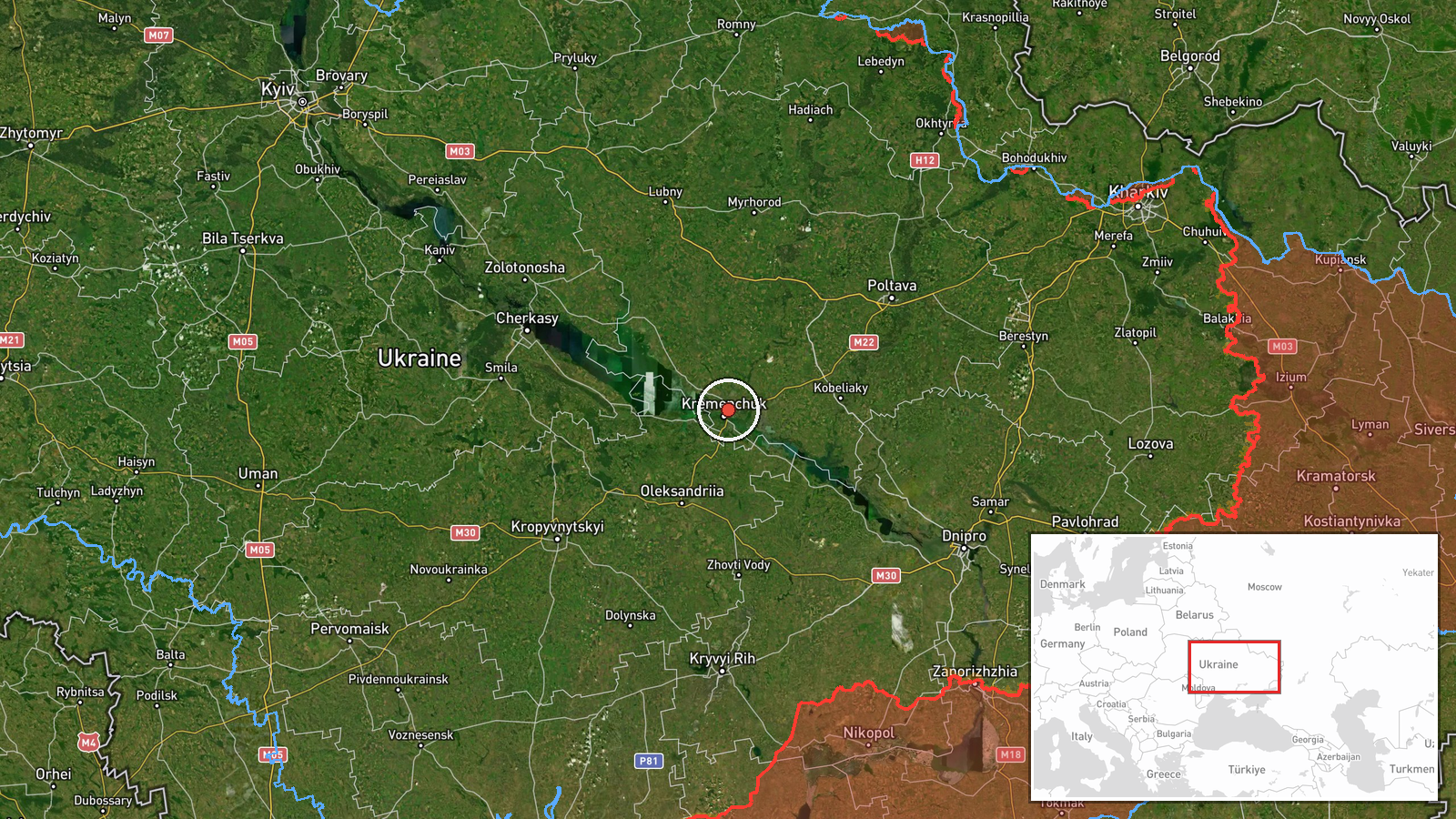
A Russian Kh-101 cruise missile struck a residential area in Kremenchuk, Poltava Oblast, on October 7, 2026 at approximately 09:02 UTC, causing heavy damage to buildings. The strike followed multiple Ukrainian air monitoring alerts beginning at 03:03 UTC that same morning, tracking at least one Kh-101 missile passing through Poltava airspace and heading toward Kremenchuk. The attack represents a continuation of Russian strikes against the city using standoff cruise missile systems.
Context and assessment
Kremenchuk, located in central-eastern Ukraine along the Dnipro River, has been repeatedly targeted by Russian strikes throughout the conflict. The city hosts significant industrial infrastructure and lies within range of Russian cruise missile operations launched from territory to the east and north. The morning sequence of multiple Kh-101 detections suggests either a coordinated multi-missile strike or surveillance of the missile approach corridor. Repeated targeting of residential areas in Kremenchuk indicates either deliberate focus on civilian infrastructure or difficulty in distinguishing military from civilian targets in the urban environment. Such strikes have characterized Russian air operations over the past year, particularly against cities beyond the immediate front lines.
Sources and confidence
The strike was reported by OSINT613 on X (formerly Twitter) with photographic evidence of building damage. Ukrainian air defense monitoring provided corroborating detection data of inbound Kh-101 missiles in the hours preceding impact. Confidence is rated 6.0 due to single-source visual reporting of strike effects, though Ukrainian air tracking of the missile approach provides supporting evidence of the attack sequence.
Location
Kremenchuk lies at approximately 49.09°N, 33.43°E in Poltava Oblast, central Ukraine, situated on the Dnipro River. The strike targeted a residential area within the city proper. Kremenchuk is roughly 300 kilometers south of the Russian border and approximately 80 kilometers west of the Dnipro River's current front-line positions.
Related events nearby
- Ukrainian air monitoring: 1 Russian cruise missile heading toward Kremenchuk; 1 Russian cruise missile passing2026-10-07 03:30 UTC · Cruise Missile · Kremenchuk, Ukraine
- Ukrainian air monitoring: 1 Russian Kh-101 cruise missile passing Poltava, heading toward Kremenchuk.2026-10-07 03:30 UTC · Cruise Missile · Kremenchuk, Ukraine
- Ukrainian air monitoring: 1 Russian Kh-101 cruise missile passing Poltava, heading toward Kremenchuk.2026-10-07 03:14 UTC · Cruise Missile · Kremenchuk, Ukraine
- Ukrainian air monitoring: 1 Russian Kh-101 cruise missile passing Poltava, heading toward Kremenchuk.2026-10-07 03:09 UTC · Cruise Missile · Kremenchuk, Ukraine
- Ukrainian air monitoring: 1 Russian Kh-101 cruise missile heading toward Kremenchuk.2026-10-07 03:03 UTC · Cruise Missile · Kremenchuk, Ukraine
▶ View this event on the live map
Intel Mapper aggregates open-source reports from monitored Telegram and X channels, geolocates them, cross-checks duplicates across sources and assigns a confidence score. Entries are updated as new confirmations arrive. Read how we verify events.