Reported Ukrainian missile strike near Vuhledar kills 68 Russians, per single-channel claim
What happened
A post on X from the account @ConflictTR, written in Turkish, reports that Ukrainian ballistic missiles struck coordinates shared by Russian Lieutenant Lev Stupnikov, reportedly killing 68 Russian soldiers, including Colonel Guseyn Musayev. The post is dated 17 October 2026 at 20:32 UTC and places the strike in the Vuhledar area of Donetsk Oblast, Ukraine. The post describes Stupnikov as a Russian officer who passed troop movement details, battle plans and drone and surveillance footage to Ukrainian intelligence, claiming this helped kill more than 300 Russian soldiers. It says he later joined the fight against Moscow in Ukraine. A summary attached to the event adds that the Wall Street Journal reports a wider Russian informant network; the post itself does not confirm that.
Context and assessment
Vuhledar has been one of the most contested points on the southern Donetsk front since 2022. This former coal-mining town and the ridgelines and roads around it have changed hands repeatedly in heavy fighting, so its importance to any strike is largely tactical, since troop concentrations, logistics and command posts tend to cluster in such zones. The related events logged the same day show the wider tempo: Ukrainian General Staff reports of dozens of Russian attacks on the Pokrovsk axis, fifteen repelled assaults near Kostiantynivka, seven attempts toward Chervona Krynytsia in the Orikhiv direction, and a Ukrainian strike on Russian logistics warehouses near Novoandriivka and Mariupol overnight on 16-17 October. Those entries come from the Ukrainian side and are not independently verified, but they suggest a broad, multi-sector front rather than a single isolated action. If the claim is accurate, it would point to targeting based on human intelligence, in which a source supplies coordinates for a gathering of officers, and the strike would fit a pattern of precision fires against command nodes. The informant narrative, if confirmed, would also suggest that counterintelligence weaknesses inside Russian units are a continuing concern. Without corroboration, however, the link between the Stupnikov material and the strike remains an inference drawn from a single post.
Sources and confidence
The report comes from a single channel, the X account @ConflictTR, which posted a Turkish-language thread. No other source in the data corroborates the strike, the casualty figure or the named officers, and the reference to the Wall Street Journal is not tied to a verifiable article here. The confidence score of 5.5 reflects single-source status and the absence of imagery, geolocation or official statements from either side. Confidence would rise with independent confirmation from official statements, geolocated imagery, or established outlets citing named sources. It would fall if the account's earlier reporting proves unreliable or if no verifiable Wall Street Journal report emerges.
Location
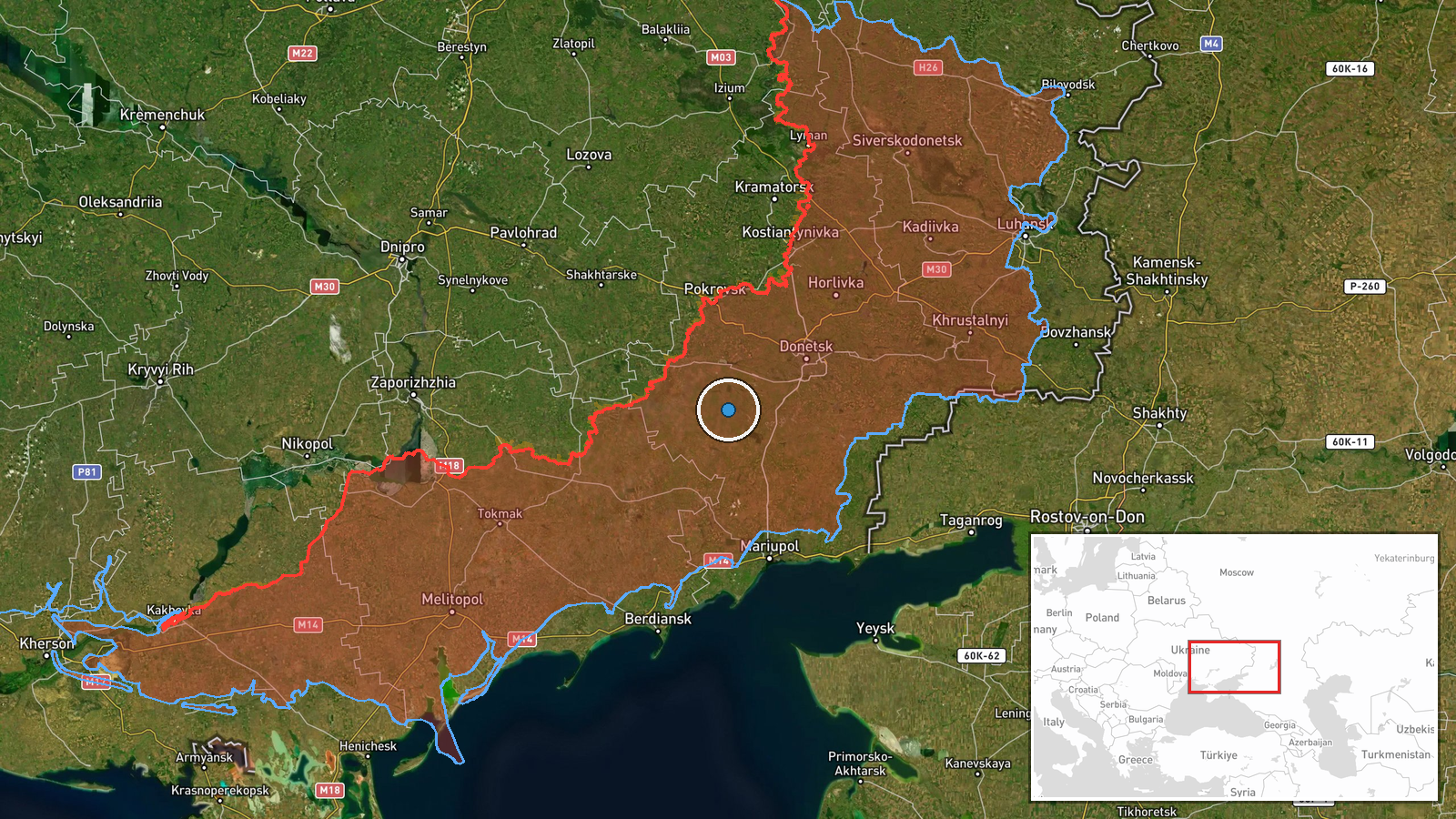
The coordinates 47.7833, 37.2667 are given at region precision, so the pin marks the general Vuhledar area rather than a specific building or position. The location was likely derived from the settlement name in the report, and no separate location confidence value is recorded. Vuhledar is a former coal-mining town in southwestern Donetsk Oblast, close to the Zaporizhzhia border and surrounded by open fields, slag heaps and mine works. Treat the exact point as approximate.
Related events nearby
- Ukrainian General Staff reports 30 Russian attacks on the Pokrovsk axis as of 08:00 on 17.10.2026, across ten 2026-10-17 05:08 UTC · Combat · Near Pokrovsk, Donetsk, Ukraine (front line, estim
- Ukrainian Defense Forces struck Russian logistics (MTZ) warehouses in occupied Donetsk Oblast near Novoandriiv2026-10-17 09:28 UTC · Combat · Novoandriivka, Donetsk, Ukraine
- Ukrainian General Staff reports 13 Russian attacks in 24 hours on the Huliaipole axis, around Vozdvyzhivka, Ri2026-10-17 05:08 UTC · Combat · Vozdvyzhivka, Zaporizhzhia Oblast, Ukraine
- Ukrainian General Staff: Ukrainian forces repelled 15 Russian assaults near Kostiantynivka and toward Novoseli2026-10-17 19:03 UTC · Combat · Kostiantynivka, Donetsk, Ukraine
- Ukrainian General Staff: as of 22:00 on 17.10.2026, Russian forces made seven assault attempts in the Orikhiv 2026-10-17 19:04 UTC · Combat · Chervona Krynytsia, Zaporizhzhia Oblast, Ukraine
▶ View this event on the live map

Intel Mapper aggregates open-source reports from monitored Telegram and X channels, geolocates them, cross-checks duplicates across sources and assigns a confidence score. Entries are updated as new confirmations arrive. Read how we verify events.