Ukraine intensifies Russian rear strikes; Germany-Russia talks resume as Middle East diplomacy hardens
Key developments
- Ukraine struck six Russian oil refineries on 25-26 September, including major Perm facility, amid systematic campaign to degrade Russian fuel supply chains.
- Russian Foreign Minister Lavrov met German counterpart Wadephul in New York—first bilateral contact in 4.5 years—with no reported substantive outcomes.
- Iraq announced closure of U.S.-led coalition headquarters effective 30 September, marking major shift in American military presence.
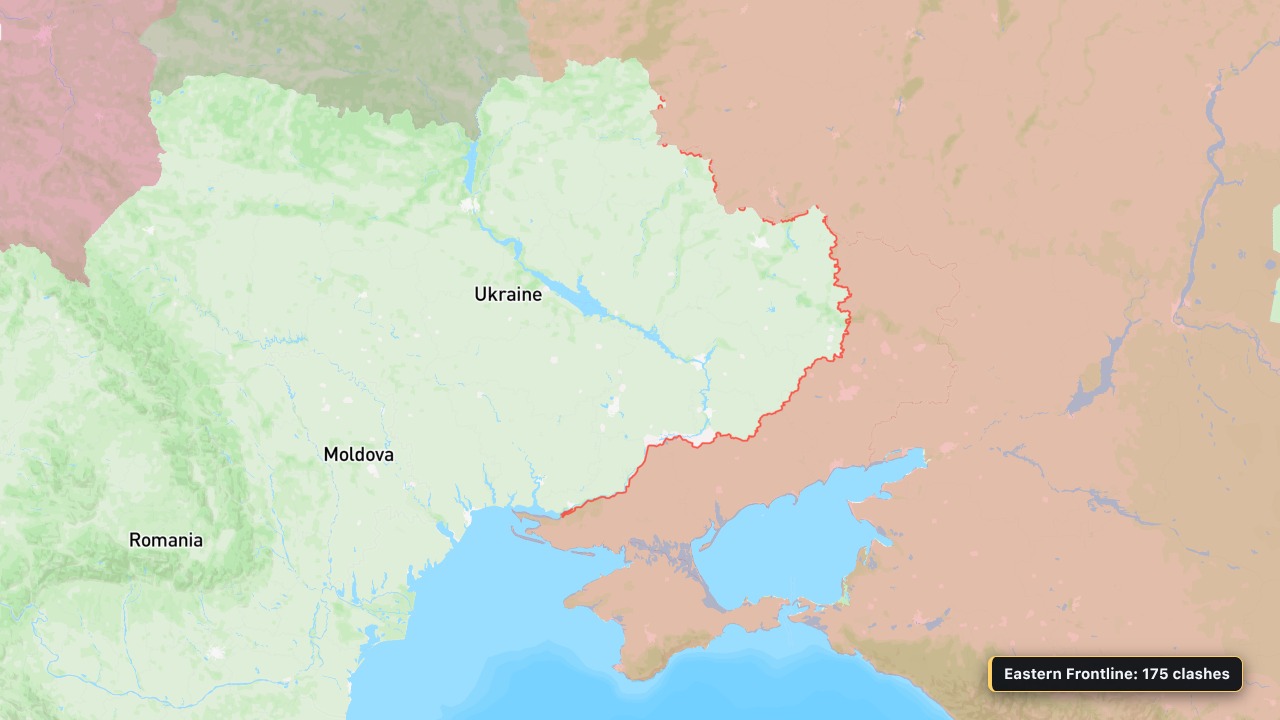
- 175 combat clashes reported across Ukraine front-lines; Russia deployed 6,681 kamikaze drones; Ukrainian intelligence warns of imminent combined missile attack.
- Saudi Arabia, Turkey reaffirmed Palestinian statehood position and expanded military coordination; U.S. intensified Iran sanctions campaign targeting 50+ trade partner nations.
- Assembly of Experts member reportedly claimed Supreme Leader Khamenei injured in Tehran hospital bombing with three hospitals subsequently struck.
- Israeli forces expanded control ~15 km² in Nabatîyé area; Houthi-Government clashes continued in Yemen with limited territorial movement.
Middle East 28 tracked events
Saudi Arabia doubled down on Palestinian statehood language on 26 September, with Foreign Minister Prince Faisal reaffirming the kingdom's rejection of displacement and insistence on a two-state solution within 1967 borders. Simultaneously, Saudi welcomed the U.S. removal of Syria from the state sponsors of terrorism list, signaling alignment with Washington's Syria policy shift. Turkey and Saudi conducted military-technical coordination discussions focused on Houthi and northern security threats, indicating deepening bilateral defense cooperation. These statements reflect a broader regional consensus among major Arab states on Palestinian sovereignty, even as diplomatic posturing continues.
The United States intensified economic pressure on Iran through Treasury official Jonathan Burke's campaign targeting Tehran's remaining trade partners across 50+ countries, seeking banking and aviation isolation. Iranian President Pezeshkian responded with defiant rhetoric, questioning Israeli credibility and rejecting characterizations of Iranian capitulation, while reiterating Iran's religious prohibition on nuclear weapons development. Notably, an Assembly of Experts member reportedly revealed that Supreme Leader Mojtaba Khamenei sustained injuries from a hospital bombing in Tehran, with three hospitals subsequently struck—an unconfirmed claim requiring verification but indicative of claimed escalation severity. Iran's rhetorical posture suggests limited openness to concessions under current pressure.
Operational activity persisted across multiple theaters with limited territorial shifts. Israel expanded control approximately 15 km² in the Nabatîyé area, though no major breakthroughs were reported. Houthi and Yemeni Government forces traded strikes in Yemen's contested zones. Sudan claimed shooting down a UAE-backed RSF drone near Nyala, reflecting ongoing fragmentation in the broader conflict ecosystem. Iraqi closure of the U.S.-led coalition headquarters effective 30 September represents a significant strategic realignment, signaling reduced American military footprint and potential shifts in Baghdad's regional alignment following Syria policy changes.
- Saudi Foreign Minister Prince Faisal bin Farhan Al Saud reaffirms Saudi Arabia's rejection of Palestinian disp
- U.S. Treasury official Jonathan Burke conducted a Middle East and Europe campaign pressuring Iran's remaining
- Syrian Civil Defense recovered body of child who drowned in irrigation canal at Aabliyet village, Afrin distri
- Sudan Army claims to have shot down a Chinese-made CH-95 drone operated by UAE-backed RSF near Nyala, South Da
- Iranian President Pezeshkian questions Israeli regime's credibility and criticizes Netanyahu for deceiving Tru
- Russian Foreign Minister Lavrov clarifies that Turkey's S-400 air defense systems were supplied under contract
Ukraine 30 tracked events
Ukraine conducted multiple precision strikes against Russian rear infrastructure on 25-26 September, targeting the Azov Optical-Mechanical Plant in Rostov Oblast, the Ilsky refinery in Krasnodar Krai, and the major Perm Lukoil facility. These operations follow a pattern of systematic strikes on six Russian oil refinery regions, reportedly creating a widening fuel crisis across Perm Krai, Nizhny Novgorod, Lipetsk, Bryansk, Yakutsk, and Moscow Oblast. Ukrainian forces additionally destroyed a P-18 Terek radar station and struck ammunition depots in Luhansk, degrading Russian command and control capabilities. These campaigns indicate sustained Ukrainian deep-strike capacity and continued targeting of Russian logistics despite air defense investments.
Front-line intensity remained elevated with 175 combat clashes reported across all sectors on 26 September. Russia conducted 57 airstrikes using 186 guided bombs and deployed approximately 6,681 kamikaze drones, maintaining persistent pressure despite losses. Ukrainian intelligence warned of Russian preparations for a combined missile attack on 27 September featuring ballistic and cruise threats from Bryansk, Kursk, and other staging areas. Russia reportedly redeployed thousands of troops to the Lyman frontline in response to Ukrainian 3rd Corps advances, suggesting localized vulnerability. The operational tempo indicates continued attrition-based warfare with no major positional shifts.
High-level diplomatic contact resumed after 4.5 years when German Foreign Minister Johann Wadephul met Russian Foreign Minister Lavrov in New York, though the 20-minute meeting produced no visible outcomes. Russian messaging remained hardline, with Lavrov dismissing German UN Security Council ambitions, warning of European military buildup risks, and reiterating that Russian objectives would be achieved. Ukrainian President Zelenskyy cited intelligence assessments of Russian plans to expand conflict beyond Ukraine's borders. A bipartisan group of 14 U.S. senators urged President Trump to withdraw his proposal inviting Putin to December's G20 summit in Miami, indicating domestic U.S. resistance to elevated Russian diplomatic status.
- German Foreign Minister Johann Wadephul met Russian Foreign Minister Lavrov in New York—the first high-level b
- Ukrainian forces struck the Azov Optical-Mechanical Plant in Rostov Oblast, Russia on September 25-26, 2026. F
- Russia released footage of Ukrainian kamikaze drones being shot down. The video evidence demonstrates air defe
- Russian Shahed/reactive (jet-propelled) drone transiting over Kruikivshchyna area in Kyiv region as part of on
- One Russian Shahed/reactive (jet-propelled) drone detected transiting from Nizhyn toward Kyiv region. Continua
- Ukrainian General Staff daily operational report (26 Sept 2026, 22:00): 175 combat clashes across all frontlin
What to watch
Over next 24-48 hours, monitor execution of Ukrainian military intelligence's warned 27 September combined Russian missile attack targeting Kyiv and central Ukraine. Track whether Iraqi coalition headquarters closure on 30 September materializes and implications for U.S. force posture. Observe Russian troop movements at Lyman following reported deployment surge. Watch for official confirmation or denial of Supreme Leader Khamenei injury claim and any signaling regarding Iranian decision-making continuity. Monitor whether Wadephul-Lavrov meeting leads to follow-up diplomatic contacts or remains isolated. Track Israeli operations in Lebanon-Syria border region and potential U.S. response to Iranian escalation rhetoric.