Russian jet-powered Shahed drones tracked over Zhytomyr Oblast toward Rivne
What happened
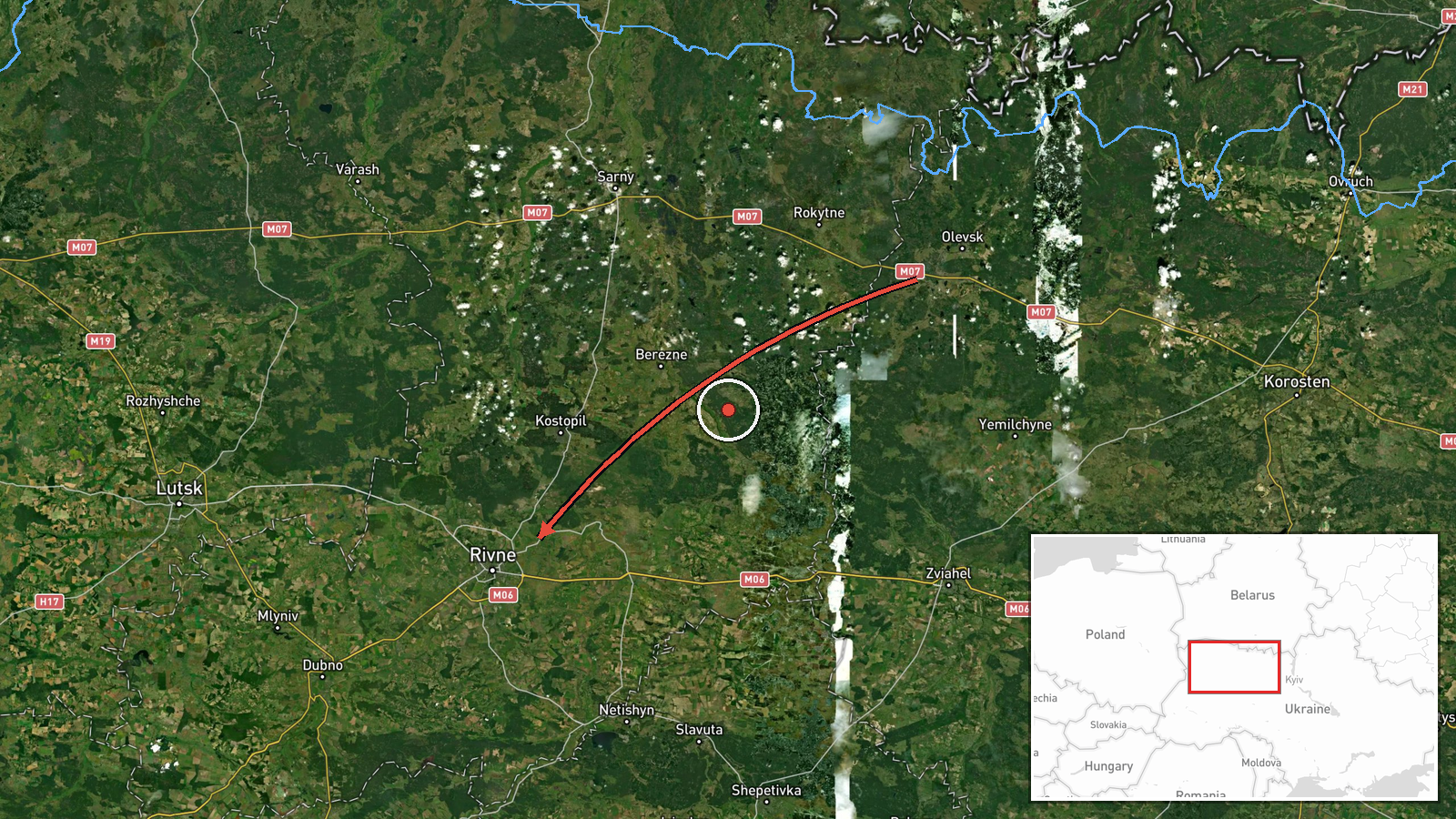
Ukrainian air monitoring reported two or more Russian jet-powered Shahed (Geran-3) drones passing near Olevsk in Zhytomyr Oblast on a course toward Rivne Oblast on the evening of 13 October. The observation was recorded by the Ukrainian Armed Forces General Staff air monitoring channel at approximately 23:50 UTC. Shahed drones are fixed-wing cruise munitions that typically carry warheads and operate at subsonic speeds.
Context and assessment
This sighting continues an intensive pattern of Russian drone activity spanning northwestern Ukraine throughout 13 October. Related reports from the same day document multiple Shahed sorties transiting through Zhytomyr and Rivne Oblasts, with individual and group tracks directed toward key towns including Rivne, Dubno, and Kostopil. Such sustained drone operations typically precede strikes on industrial, energy, or military infrastructure, or represent sustained targeting of the region's electrical grid. The northwestern trajectory through sparsely defended terrain may indicate either a coordinated multi-vector strike or sequential targeting operations against different objectives within Rivne Oblast.
Sources and confidence
Single source: Telegram channel @kpszsu (Ukrainian Armed Forces General Staff). The low confidence score of 8.0 reflects reliance on one channel and regional-level geographic precision rather than point confirmation. Cross-confirmation would come from air defense reports, damage assessment, or independent observer networks. Confidence would improve with secondary channel corroboration or strike follow-up reports from affected areas.
Location
Olevsk is a town in central Zhytomyr Oblast approximately 150 km northwest of Kyiv. The reported drone track passed near Olevsk on a northeasterly vector toward Rivne Oblast, a region roughly 80–120 km further northeast. The observation zone spans the sparsely populated agricultural and forest landscape of northwestern Ukraine between the two oblast boundaries.
Related events nearby
- Ukrainian air monitoring: 1 Russian jet-powered Shahed (Geran-3) drone heading toward Rivne.2026-10-14 00:19 UTC · Drone Transit · Rivne, Ukraine
- Ukrainian air monitoring: 1 Russian jet-powered Shahed (Geran-3) drone from Khmelnytskyi Oblast toward Rivne O2026-10-13 18:45 UTC · Drone Transit · Rivne Oblast, Ukraine
- Ukrainian air monitoring: 2+ Russian jet-powered Shahed (Geran-3) drones heading toward Rivne Oblast.2026-10-13 18:03 UTC · Drone Transit · Rivne Oblast, Ukraine
- Ukrainian air monitoring reports 1 Russian jet-powered Shahed (Geran-3) drone transiting northern Zhytomyr Obl2026-10-13 17:14 UTC · Drone Transit · Rivne Oblast, Ukraine
- Ukrainian air monitoring: 1 Russian jet-powered Shahed (Geran-3) drone from Rivne Oblast toward Kostopil.2026-10-13 17:25 UTC · Drone Transit · Kostopil, Ukraine
▶ View this event on the live map

Intel Mapper aggregates open-source reports from monitored Telegram and X channels, geolocates them, cross-checks duplicates across sources and assigns a confidence score. Entries are updated as new confirmations arrive. Read how we verify events.