Russian guided glide bomb reportedly strikes Slavhorod in Dnipropetrovsk Oblast
What happened
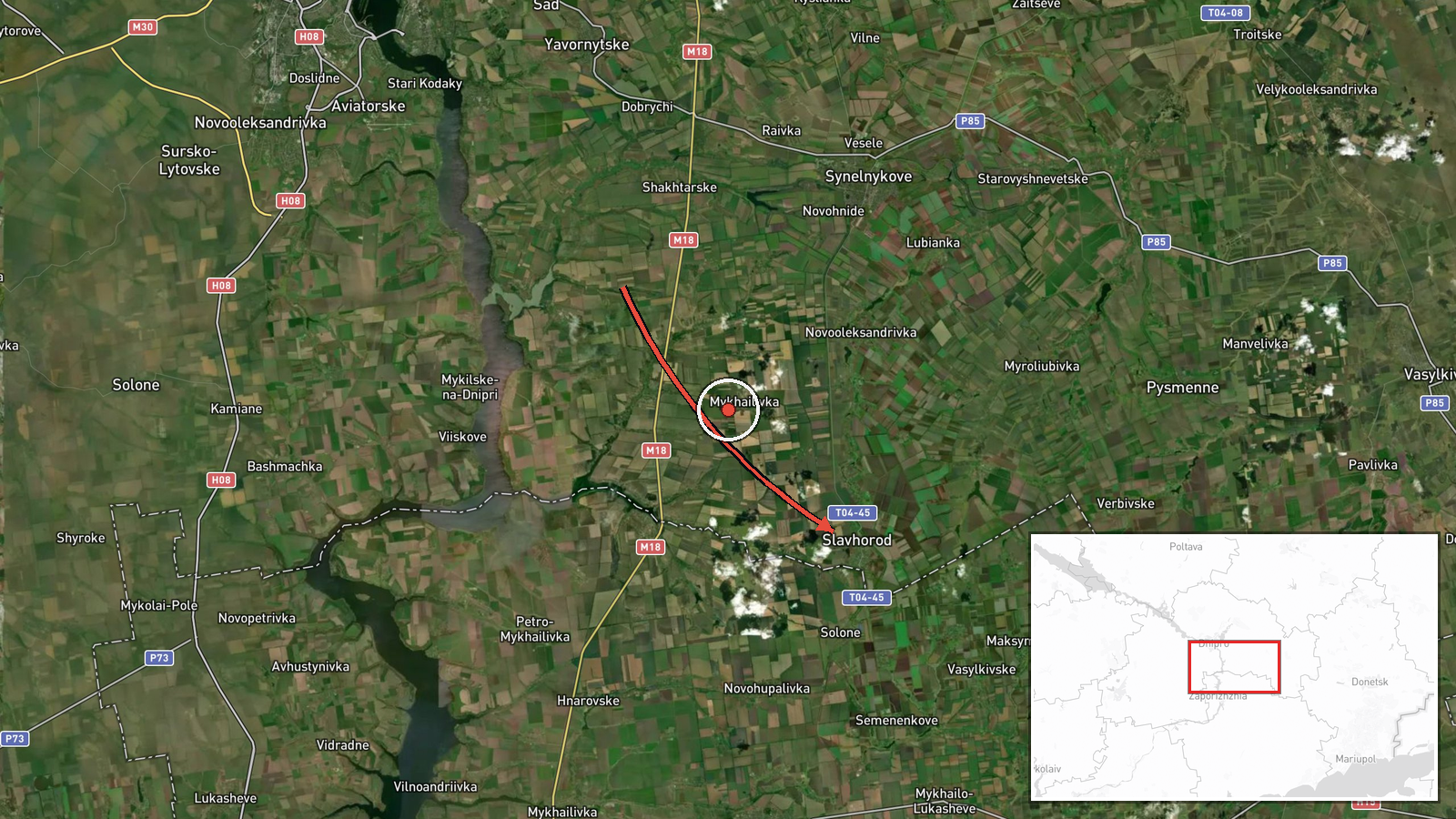
Ukrainian air monitoring reported one Russian guided glide bomb (KAB) impacting Slavhorod in Dnipropetrovsk Oblast on October 15 at 01:57 UTC. The strike was recorded by the Kyiv Post Strategic Communications unit via Telegram. The report does not specify damage or casualties. This strike occurred as part of a broader Russian air operation targeting multiple locations across southeastern Ukraine within a three-minute window.
Context and assessment
Slavhorod lies in central Dnipropetrovsk Oblast, an industrial region that has faced sustained aerial pressure throughout the conflict. The October 15 strikes represent a coordinated attack sequence, with at least five guided glide bombs directed at Zaporizhzhya Oblast, Dnipropetrovsk Oblast, and the city of Dnipro within minutes of one another. Russian use of KAB guided glide bombs—air-launched standoff munitions that extend strike range—has accelerated as Moscow seeks to damage Ukrainian infrastructure and industrial capacity while reducing exposure of crewed aircraft. The simultaneous multi-target strike pattern suggests operational emphasis on reducing Ukrainian defensive response capacity.
Sources and confidence
Single source: Telegram channel @kpszsu (Kyiv Post Strategic Communications). Confidence score of 8.0 reflects that Ukrainian air monitoring systems are established and typically reliable, but single-source reporting without independent cross-confirmation carries inherent uncertainty about strike outcome. Confidence would increase with reports from local authorities or secondary Ukrainian sources; scores would lower if subsequent evidence contradicted impact claims.
Location
Slavhorod is a settlement in central Dnipropetrovsk Oblast at approximately 48.10°N, 35.52°E. The town lies roughly 40 km south-southwest of Dnipro city and sits within the broader Dnipro industrial and agricultural region. Proximity to transport corridors and regional infrastructure makes the area a recurring Russian air target.
Related events nearby
- Ukrainian air monitoring: 1 Russian Shahed-type drone from Dnipropetrovsk Oblast toward Synelnykove.2026-10-15 02:54 UTC · Drone Transit · Synelnykove, Ukraine
- Ukrainian air monitoring: 1 Russian guided glide bomb (KAB) heading toward Zaporizhzhya Oblast.2026-10-15 01:55 UTC · Airstrike · Zaporizhzhya Oblast, Ukraine
- Ukrainian air monitoring: 1 Russian guided glide bomb (KAB) heading toward Zaporizhzhya Oblast.2026-10-15 01:52 UTC · Airstrike · Zaporizhzhya Oblast, Ukraine
- Ukrainian air monitoring: 1 Russian guided glide bomb (KAB) heading toward Dnipropetrovsk Oblast.2026-10-15 01:59 UTC · Airstrike · Dnipropetrovsk Oblast, Ukraine
- Ukrainian air monitoring: 1 Russian guided glide bomb (KAB) heading toward Dnipro.2026-10-15 01:57 UTC · Airstrike · Dnipro, Ukraine
▶ View this event on the live map

Intel Mapper aggregates open-source reports from monitored Telegram and X channels, geolocates them, cross-checks duplicates across sources and assigns a confidence score. Entries are updated as new confirmations arrive. Read how we verify events.