Russian jet-powered Shahed drone tracked toward Brovary near Kyiv
What happened
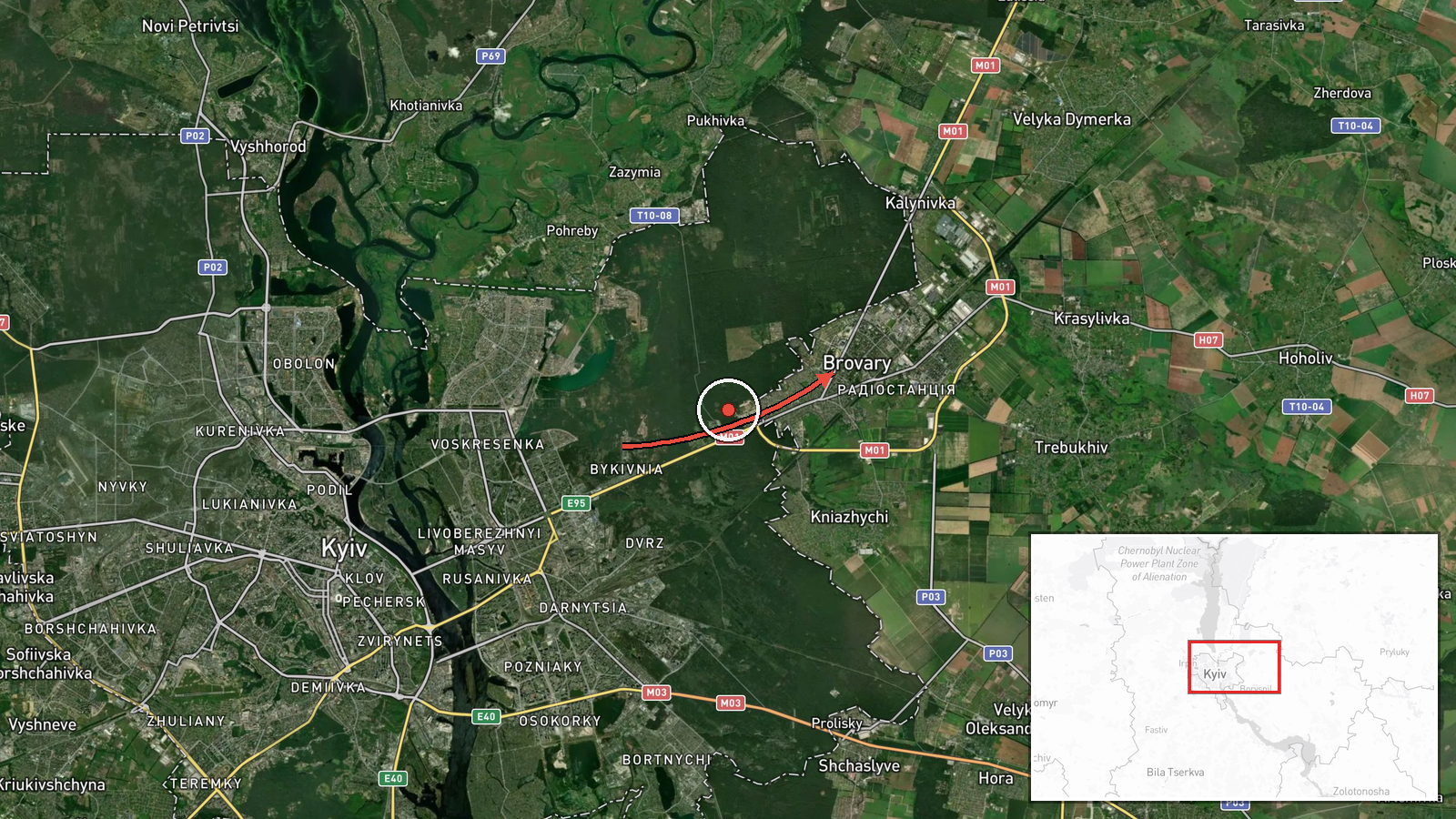
Ukrainian air monitoring detected one Russian jet-powered Shahed (Geran-3) drone in transit over Kyiv Oblast directed toward Brovary on the morning of 15 October. The detection was reported by the Kyiv Protected Sky Telegram channel (@kpszsu), which monitors Russian air activity in real time. Brovary is a major northeastern suburb of Kyiv, located approximately 15 kilometers from the capital's city center.
Context and assessment
Brovary lies on a direct approach route to Kyiv from the northeast and has been a recurring target or transit point for Russian drone strikes throughout the conflict. This detection occurred as part of a broader aerial campaign on 15 October, during which Ukrainian air monitoring reported multiple Shahed-type kamikaze drones tracked toward other populated areas of Kyiv, including Darnytsia, Pozniaky, and Vydubychi. The concentration of drone detections heading toward the capital and its suburbs suggests a coordinated attack wave, consistent with Russia's pattern of using cruise missiles and loitering munitions to strike civilian and infrastructure targets in Ukrainian population centers.
Sources and confidence
Report sourced to Telegram channel @kpszsu (Kyiv Protected Sky), the primary real-time Ukrainian air defense monitoring feed. Single-source reporting lowers confidence moderately. Confidence score of 8.0 reflects high geographic precision and alignment with concurrent detections of similar drones toward other Kyiv neighborhoods on the same date, which provides corroborating context. Higher confidence would require confirmation from Ukrainian air defense or independent observers.
Location
Brovary, a settlement and major suburb northeast of Kyiv proper, at coordinates 50.51°N, 30.79°E. The town sits approximately 15 kilometers from central Kyiv and is the administrative center of Brovary District. It straddles the Dnieper River's eastern approach to the capital and serves as a logistical and transport hub, making it strategically significant and a frequent target of Russian strikes.
Related events nearby
- Ukrainian air monitoring: 1 Russian jet-powered Shahed (Geran-3) drone from Kyiv Oblast toward Velyka Dymerka.2026-10-15 06:42 UTC · Drone Transit · Velyka Dymerka, Ukraine
- Ukrainian air monitoring: 1 Russian jet-powered Shahed (Geran-3) drone heading toward Darnytsia, Kyiv.2026-10-15 06:57 UTC · Drone Transit · Darnytsia, Kyiv, Ukraine
- Ukrainian air monitoring warns of Russian tactical aircraft and aviation strike weapon activity across northea2026-10-15 04:59 UTC · Siren · Northern and Eastern Ukraine
- Ukrainian air monitoring: 1 Russian jet-powered Shahed (Geran-3) drone heading toward Pozniaky, Kyiv.2026-10-15 06:56 UTC · Drone Transit · Pozniaky, Kyiv, Ukraine
- Ukrainian air monitoring: 1 Russian jet-powered Shahed (Geran-3) drone heading toward Vydubychi, Kyiv.2026-10-15 06:59 UTC · Drone Transit · Vydubychi, Kyiv, Ukraine
▶ View this event on the live map

Intel Mapper aggregates open-source reports from monitored Telegram and X channels, geolocates them, cross-checks duplicates across sources and assigns a confidence score. Entries are updated as new confirmations arrive. Read how we verify events.