Ukrainian air monitoring reports ballistic missile heading toward Bilhorod-Dnistrovskyi
What happened
Ukrainian air monitoring reported through the Telegram channel @kpszsu that one Russian ballistic missile was heading toward Bilhorod-Dnistrovskyi in Odesa Oblast at 11:10 UTC on 23 October 2026. The original Ukrainian wording is more general, "Швидкісна ціль на Білгород-Дністровський", which translates roughly as a high-speed target toward Bilhorod-Dnistrovskyi. The ballistic classification appears in the English summary written from that alert, not in the quoted line, so the weapon type should be read as the channel's assessment. The report is a tracking notice of an inbound object. It does not include impact, damage, casualty, or interception information. The alert came about ninety minutes after a separate drone transit warning for the same city.
Context and assessment
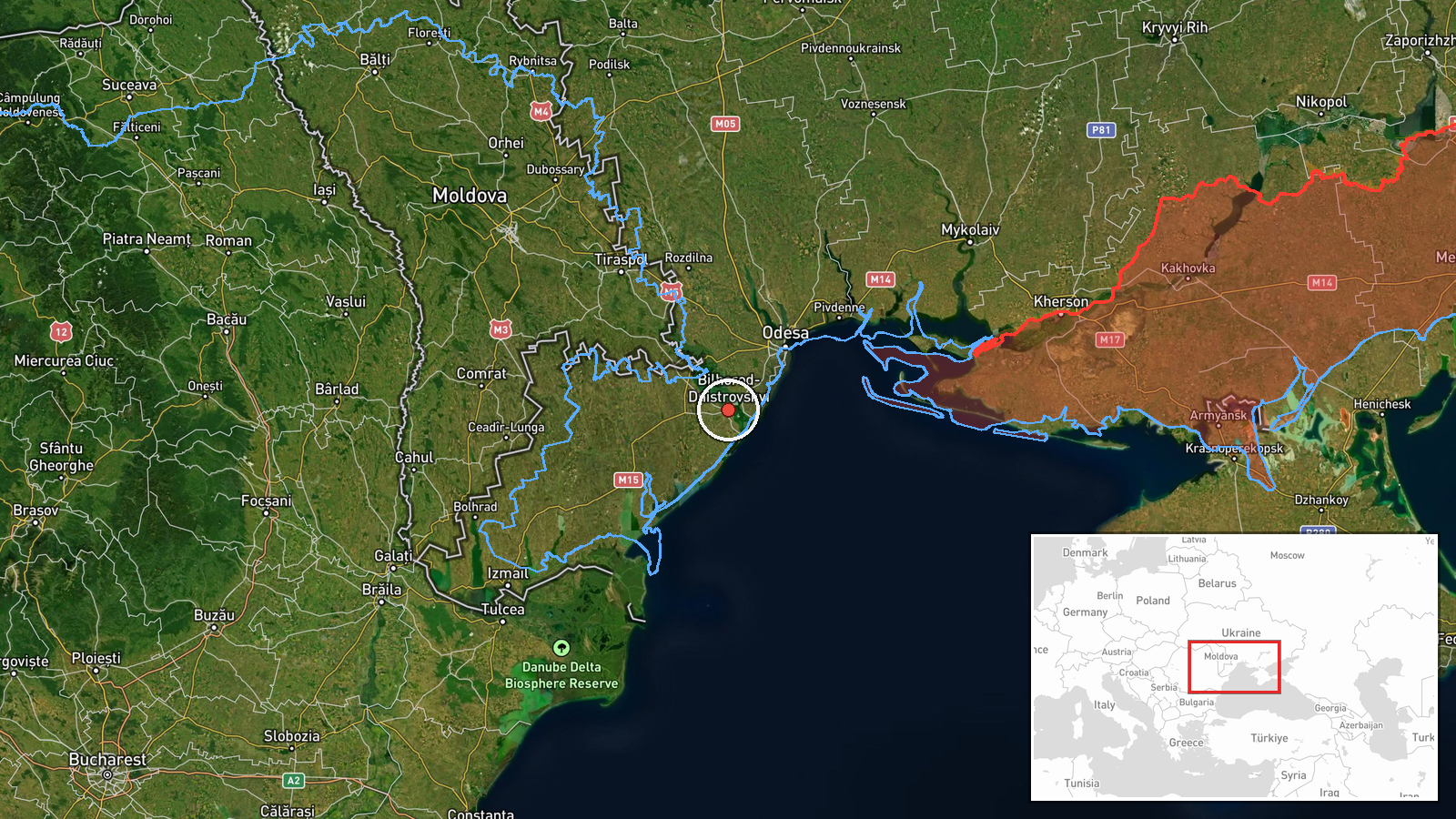
Bilhorod-Dnistrovskyi lies on the Dniester estuary near the Black Sea coast, in the Odesa region, an area Russian strikes have repeatedly targeted because of its ports, energy links and transport routes. The same town appears in the preceding alert: at 09:48 UTC a jet-powered Geran-3 drone was reported heading toward it. Earlier that morning, drones were tracked from the Black Sea into southern Mykolaiv Oblast at 06:31 and again at 11:09 UTC, the latter involving two or more Geran-3 drones. A Shahed-type drone crossed the Black Sea heading north at 02:17 on 23 October, and another passed Berezanka heading northwest the previous afternoon. The sequence suggests a sustained series of drone transits along the southwestern coast, ending with a faster object aimed at the same area. Operationally, this may indicate a mixed attack in which drones draw air defence attention or saturate coverage while a missile follows. That reading is an inference from timing and geography and is not stated in the reports.
Sources and confidence
The event rests on one Telegram channel, @kpszsu, which carries public air alerts from Ukraine's Air Force. Cross-confirmation is absent in the data, so the confidence score of 8.0 reflects a credible official alert channel with a single source and no independent corroboration. The wording of the original alert is also less specific than the summary. Confidence would rise with matching alerts from regional military administrations, Odesa-area reports of an impact or interception, or follow-up Air Force statements naming the object. It would fall if later updates reclassified the object, reported no missile in the area, or failed to appear in subsequent monitoring.
Location
The point is placed at settlement precision, 46.19 N and 30.34 E, with high location confidence. It marks the town of Bilhorod-Dnistrovskyi rather than a specific facility. The town sits on the Dniester estuary close to the Black Sea in the Odesa region, on low, flat coastal terrain. Its historic fortress and waterfront are notable local features. Because the alert names only the town, the map point should be read as the broad area of threat, not a precise target.
Related events nearby
- Ukrainian air monitoring: 1 Russian jet-powered Shahed (Geran-3) drone heading toward Bilhorod-Dnistrovskyi.2026-10-23 09:48 UTC · Drone Transit · Bilhorod-Dnistrovskyi, Ukraine
- Ukrainian air monitoring: 1 Russian Shahed-type drone passing Black Sea, heading north.2026-10-23 02:17 UTC · Drone Transit · Black Sea, Ukraine
- Ukrainian air monitoring: 1 Russian jet-powered Shahed (Geran-3) drone passing Berezanka, heading northwest.2026-10-22 16:58 UTC · Drone Transit · Berezanka, Ukraine
- Ukrainian air monitoring: 2+ Russian jet-powered Shahed (Geran-3) drones from Black Sea toward southern Mykola2026-10-23 11:09 UTC · Drone Transit · southern Mykolaiv Oblast, Ukraine
- Ukrainian air monitoring: 1 Russian jet-powered Shahed (Geran-3) drone passing southern Mykolaiv Oblast, headi2026-10-23 06:31 UTC · Drone Transit · southern Mykolaiv Oblast, Ukraine
▶ View this event on the live map

Intel Mapper aggregates open-source reports from monitored Telegram and X channels, geolocates them, cross-checks duplicates across sources and assigns a confidence score. Entries are updated as new confirmations arrive. Read how we verify events.