11 Russian Shahed drones transiting toward Kyiv Reservoir; air defense engaged
What happened
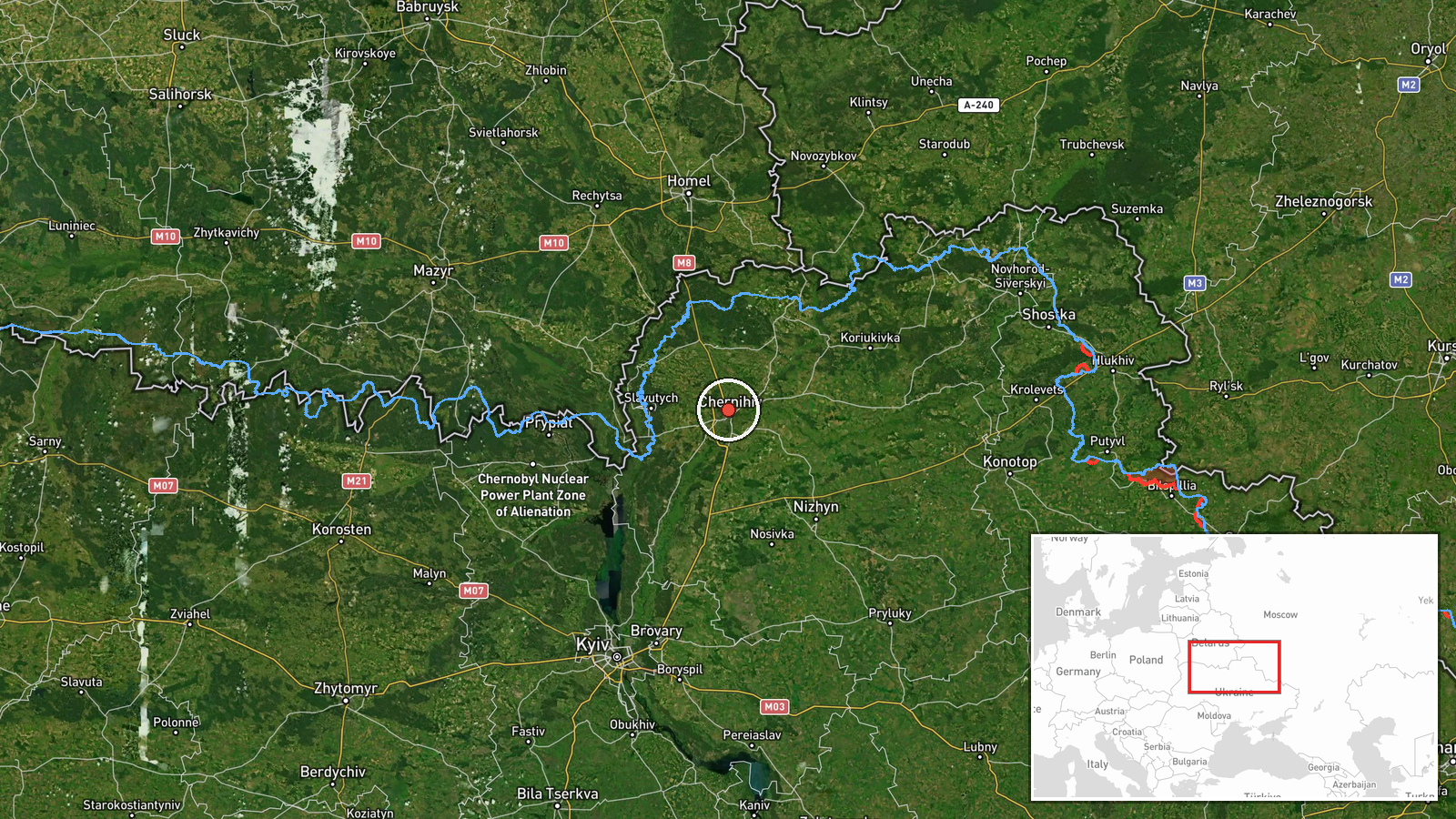
Ukrainian air monitoring detected 11 Russian reactive jet-engined Shahed variant unmanned aerial vehicles in transit over Chernihiv and Kipti, heading toward the Kyiv Reservoir area on September 24 at 00:07 UTC. Ukrainian air defense systems engaged the drone group. The report indicates continued Russian drone operations despite active interception efforts.
Context and assessment
This transit represents part of a sustained pattern of Russian drone operations targeting the Kyiv region and surrounding oblasts over the preceding 24 hours. Related reports from September 23–24 document multiple Shahed-136 and Geran-5 drone transits across northern Ukraine, with several groups detected passing through Chernihiv Oblast and the Chornobyl Exclusion Zone en route to Kyiv and Cherkasy oblasts. The Kyiv Reservoir, a major freshwater and hydroelectric asset, has been a recurring target of Russian drone and missile strikes. The scale and persistence of these transits—involving groups of 2–11 drones—suggests either sustained pressure on air defense systems or coordination with other offensive operations, though the specific intended target remains unclear from monitoring data alone.
Sources and confidence
Reported by Telegram channel @war_monitor. Single-source reporting with no cross-confirmation listed, typical of real-time air alert data. Confidence score of 6.0 reflects the authoritative nature of official Ukrainian air monitoring channels but the absence of independent verification. Confirmation from multiple independent monitors or official statements would raise confidence; clarification of intercept results would strengthen assessment.
Location
Chernihiv Oblast in northern Ukraine, approximately 140 km north-northeast of Kyiv. The drones transited over or near the cities of Chernihiv and Kipti before heading south toward the Kyiv Reservoir. The area lies along established drone approach corridors from Russian territory in Bryansk Oblast, consistent with previous attack routes documented in related events.
Related events nearby
- Two Russian Shahed-type (reactive) drones transited from Bryansk Oblast toward Slavutych, Chernihiv Oblast. Ai2026-09-23 13:11 UTC · Drone Transit · Slavutych, Chernihiv Oblast, Ukraine
- Three Russian Shahed-136 reactive (jet-motorized) kamikaze drones detected in transit from Bryansk Oblast, Rus2026-09-23 04:14 UTC · Drone Transit · Slavutych, Chornobyl Raion, Kyiv Oblast, Ukraine
- Russian Shahed-type reactive drones transited over Kyiv region. Two drones tracked near Chornobyl Exclusion Zo2026-09-23 13:38 UTC · Drone Transit · Chornobyl Exclusion Zone, Kyiv Oblast, Ukraine
- Ukrainian air monitoring reports ongoing Russian Shahed-136 and Geran-5 drone transits across Kyiv, Cherkasy, 2026-09-24 00:13 UTC · Drone Transit · Kyiv Reservoir, Kyiv Oblast, Ukraine
- Ukrainian air monitoring reports one Russian reactive (jet-engine) UAV detected transiting near Ovruch, Zhytom2026-09-23 15:43 UTC · Drone Transit · Velyka Dymerka, Kyiv Oblast, Ukraine
▶ View this event on the live map
Intel Mapper aggregates open-source reports from monitored Telegram and X channels, geolocates them, cross-checks duplicates across sources and assigns a confidence score. Entries are updated as new confirmations arrive. Read how we verify events.