Three Russian Shahed drones reported transiting Cherkasy Oblast
What happened
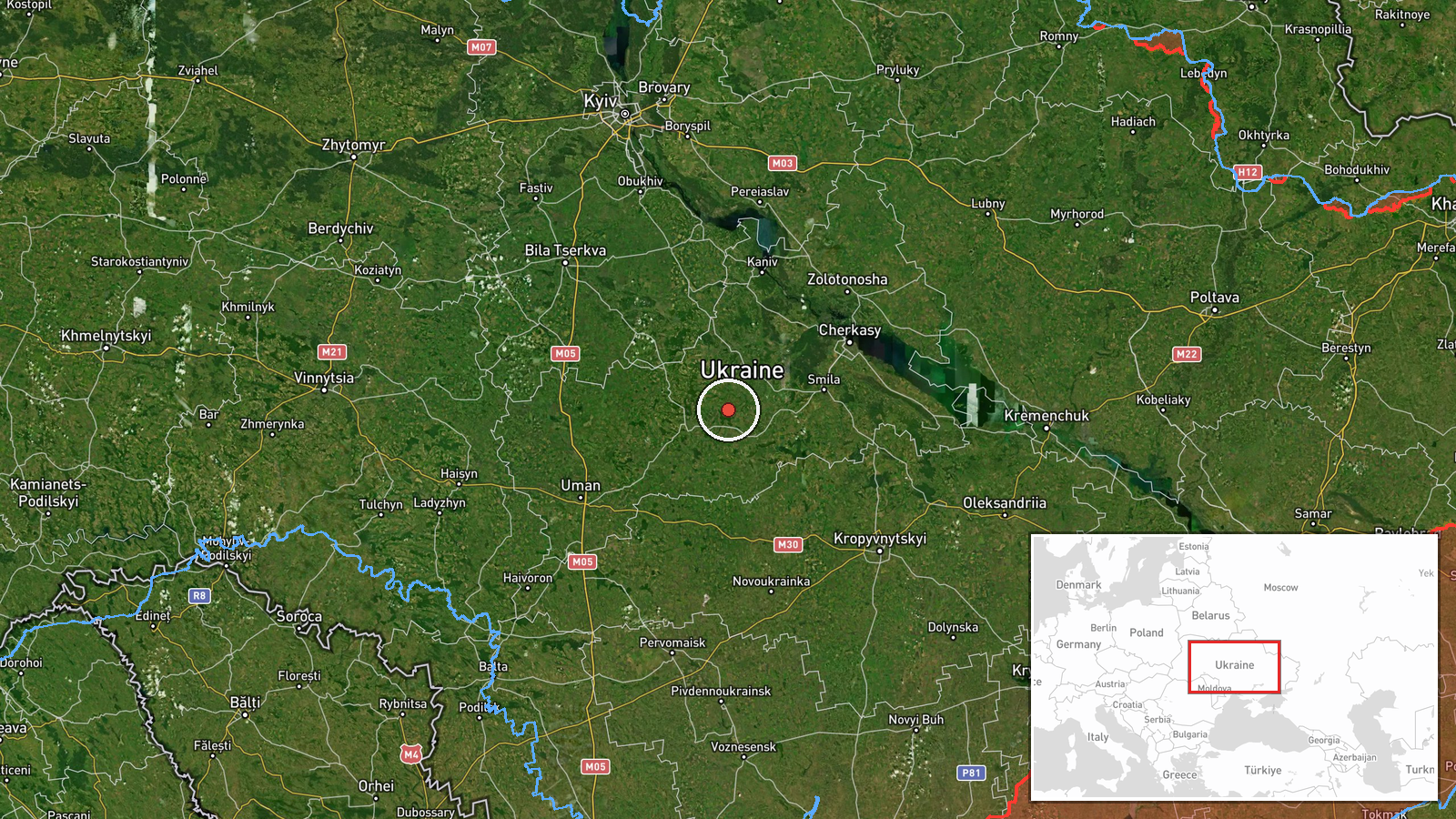
Ukrainian air monitoring reported three Russian reactive (jet-engined) Shahed-variant unmanned aerial vehicles in transit over Cherkasy Oblast on 24 September at 02:37 UTC. One drone was detected near Mankivka, a second near Zvenihorodka, and a third near Cherkasy city itself. The report does not indicate engagement, interception, or confirmed targets. Air alerts were reportedly maintained across the region during the transit.
Context and assessment
Cherkasy Oblast lies in central Ukraine and has become a frequent corridor for Russian drone operations heading northward toward Kyiv and westward toward other population centres. This event is part of a broader pattern: related observations on 23–24 September show multiple Shahed transits across Kirovohrad, Poltava, and Kyiv oblasts, suggesting coordinated or sequential waves of reconnaissance and strike operations. The reactor-powered Shahed variants are designed for deep penetration and long range, often used to probe air defences or to strike distant targets. The concentration of sightings over two days may indicate preparation for a larger attack, but without confirmed strikes or intercepts the operational intent remains unclear.
Sources and confidence
Single-source report from Telegram channel @war_monitor, a recognised Ukrainian air-monitoring aggregator. No cross-confirmation from other channels or official sources is noted. Confidence score of 6.0 reflects the consistent reporting pattern across related events in the same region over the same period, but the absence of secondary sources limits certainty. Independent confirmation by Ukrainian air defence officials or visual media would strengthen confidence.
Location
Three separate sightings across Cherkasy Oblast: Mankivka (west of Cherkasy city), Zvenihorodka (south-central oblast), and Cherkasy city proper. Cherkasy Oblast is situated in central Ukraine along the Dnipro River, approximately 150–200 km south-southeast of Kyiv. The region serves as both a transit route and populated centre vulnerable to drone strike.
Related events nearby
- Ukrainian air monitoring detects 5 Russian reactive (jet-engined) Shahed-variant UAVs transiting from Poltava 2026-09-24 02:38 UTC · Drone Transit · Zolotonosha, Cherkasy Oblast, Ukraine
- Ukrainian air monitoring detected one Russian reactive (jet-engined) Shahed variant UAV transiting over Smila 2026-09-23 17:07 UTC · Drone Transit · Uman, Cherkasy Oblast, Ukraine
- One Russian Shahed-136 reactive (jet-motorized) kamikaze drone detected in transit over Kirovohrad District, K2026-09-23 04:43 UTC · Drone Transit · Kirovohrad District, Kirovohrad Oblast, Ukraine
- Ukrainian air monitoring detects 2 Russian reactive (jet-engined) Shahed variant UAVs transiting from Aleksand2026-09-24 02:04 UTC · Drone Transit · Kropyvnytskyi District, Kirovohrad Oblast, Ukraine
- Russian Shahed-type (reactive) drone transited from Kaniv toward Obukhiv District, Kyiv Oblast. Air alert main2026-09-23 13:11 UTC · Drone Transit · Obukhiv District, Kyiv Oblast, Ukraine
▶ View this event on the live map
Intel Mapper aggregates open-source reports from monitored Telegram and X channels, geolocates them, cross-checks duplicates across sources and assigns a confidence score. Entries are updated as new confirmations arrive. Read how we verify events.