Turkish Foreign Minister calls for free passage through Strait of Hormuz amid Iranian tensions
What happened
Turkish Foreign Minister Hakan Fidan stated on September 15 that Iran's security directly affects the region and stressed the need for safe, uninterrupted, and free passage through the Strait of Hormuz. The remarks were posted to social media without additional context regarding their immediate trigger or audience.
Context and assessment
The statement comes as the Strait of Hormuz—a critical chokepoint for global oil transit between the Persian Gulf and Gulf of Oman—faces heightened operational tensions. On the same day, Iranian forces reportedly struck the oil tanker El Gaia with both missiles and drones, rendering it inoperable, while the IRGC claimed interception of a fourth U.S. MQ-1 Predator drone in four days. U.S. naval forces also issued warnings in the strait. Turkey, a NATO member and regional actor with significant maritime interests, may be signaling concern over freedom of navigation and commercial shipping safety as tensions between Iran and Western forces escalate in and around the waterway.
Sources and confidence
Reported by @ConflictTR on X (formerly Twitter) on September 15. Single-source reporting limits confirmation; the original statement appears in Turkish and circulated via Turkish diplomatic channels. Confidence of 6.0 reflects the lack of corroboration and reliance on a single social media report rather than multiple news outlets or official Turkish government statements.
Location
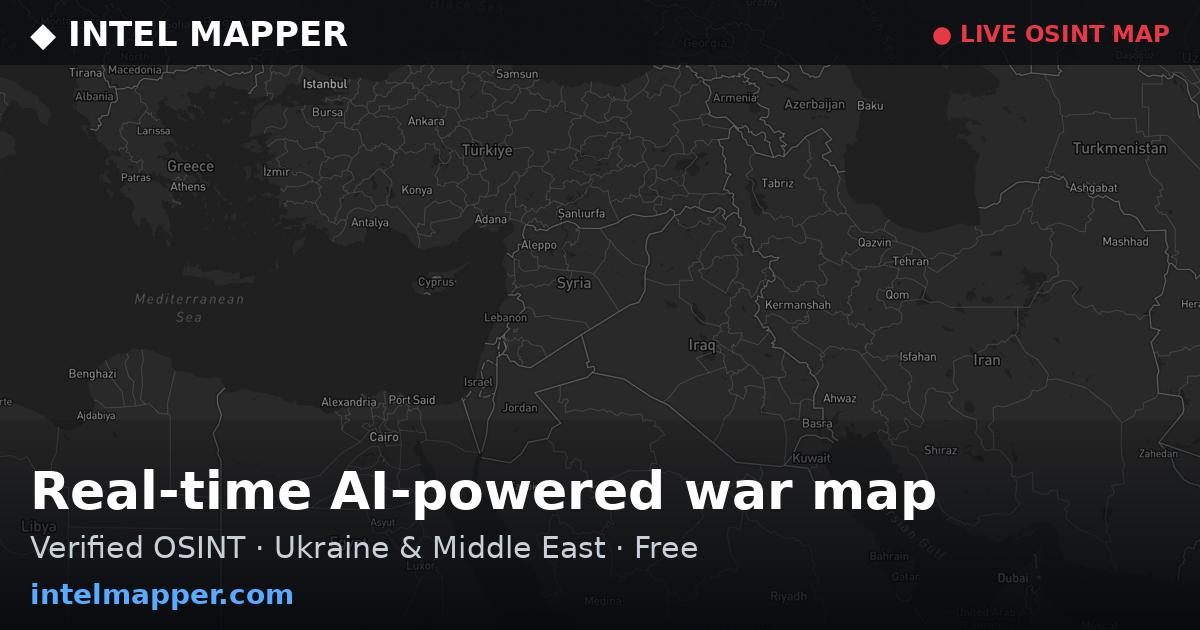
The Strait of Hormuz lies between Iran's southern coast and Oman, approximately 26.55°N, 56.4°E. The waterway connects the Persian Gulf to the Gulf of Oman and Arabian Sea, serving as a vital shipping lane for roughly one-third of world seaborne petroleum. The statement references the strait generically rather than a specific incident location.
Related events nearby
- Iranian missile and drone strikes on oil tanker El Gaia near Strait of Hormuz; vessel hit last month by missil2026-09-15 09:55 UTC · Ballistic Missile · Strait of Hormuz, Persian Gulf
- Iran's IRGC claims interception and destruction of a fourth U.S. MQ-1 Predator drone in four days east of the 2026-09-15 07:11 UTC · Drone Shootdown · East of Strait of Hormuz, Persian Gulf
- U.S. naval forces issued warning to Chinese-flagged vessel in Strait of Hormuz before engaging nearby oil tank2026-09-15 05:37 UTC · Naval · Strait of Hormuz, Persian Gulf
- Iran's IRGC conducted drone strike on Panama-flagged tanker El Gaia in Persian Gulf waters off Oman coast. Ves2026-09-14 19:03 UTC · Cargo Ship · Strait of Hormuz, Persian Gulf
▶ View this event on the live map
Intel Mapper aggregates open-source reports from monitored Telegram and X channels, geolocates them, cross-checks duplicates across sources and assigns a confidence score. Entries are updated as new confirmations arrive. Read how we verify events.