Russian Geran-3 drone tracked toward Ripky in northern Chernihiv Oblast
What happened
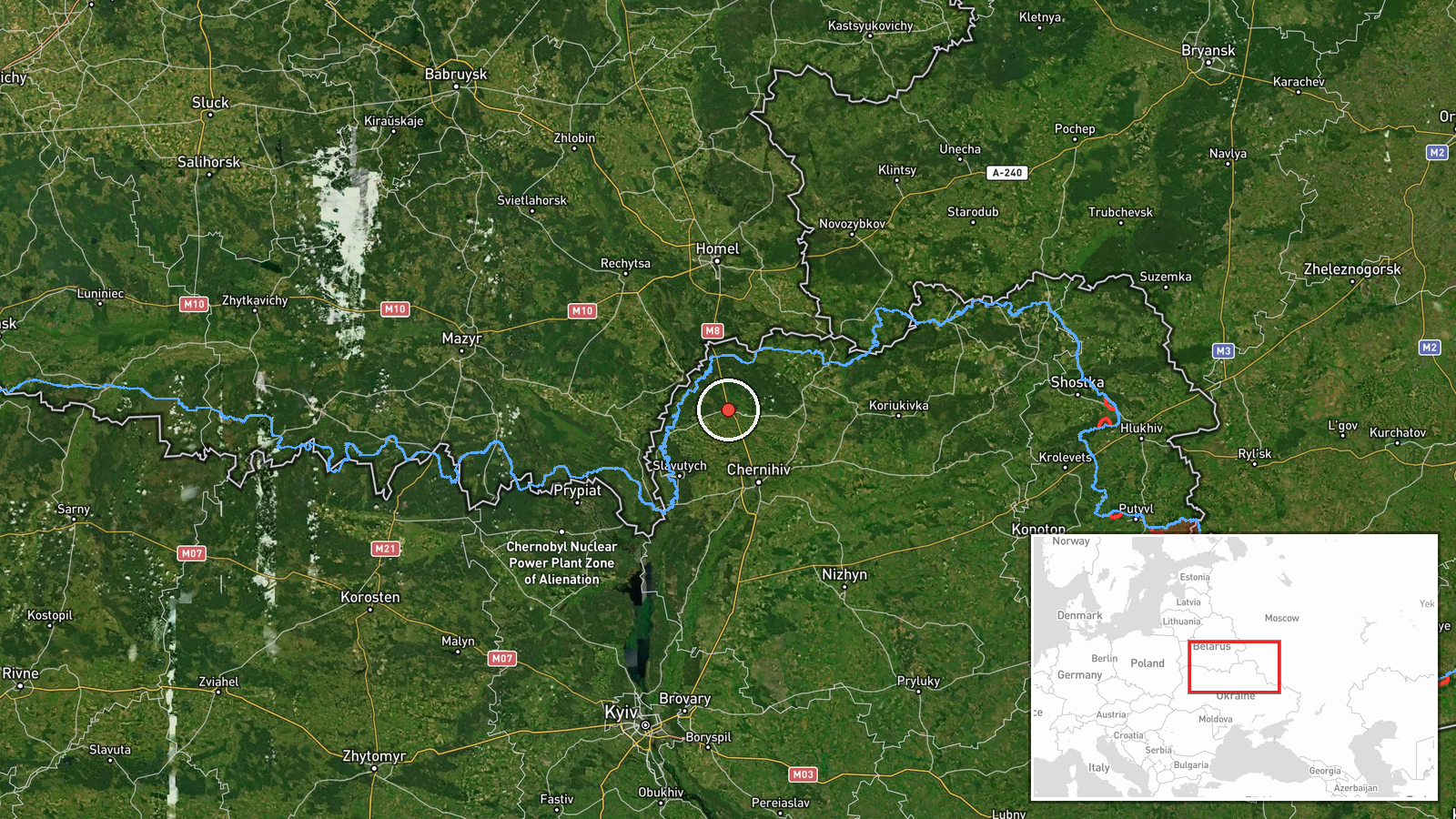
Ukrainian air monitoring reported a single Russian jet-powered Shahed (Geran-3) drone transiting toward Ripky in Chernihiv Oblast from the north on 15 October at 02:21 UTC. The report was issued by the Kyiv Post Security Service via Telegram. Geran-3 drones are air-launched cruise missiles typically used for strikes on infrastructure and populated areas. The drone's final destination or intercept status was not specified in the monitoring alert.
Context and assessment
Ripky lies in northern Chernihiv Oblast, approximately 70 km from the Russian border. The alert is part of a coordinated wave of at least four separate Geran-3 transits detected over a 3-minute window on the same date, with drones simultaneously tracked toward Slavutych, Dymer, and Ivankiv—all settlements in or near the Kyiv exclusion zone and along the Dnieper corridor. This pattern suggests a multi-vector strike operation targeting energy, military, or civilian infrastructure across the northern approaches to Kyiv. Recent Russian drone campaigns have focused on power generation and transmission assets, particularly as winter approaches.
Sources and confidence
Single source: Telegram channel of Kyiv Post Security Service (@kpszsu). No independent cross-confirmation reported. Confidence score of 8.0 reflects the official Ukrainian air monitoring origin and consistency with corroborating transit alerts in the same timeframe, though lack of multiple sources and absence of confirmed interception or impact limits certainty on outcome.
Location
Ripky is a settlement in Chernihiv Oblast, northern Ukraine, located at approximately 51.80°N, 31.09°E. It sits roughly 70 km south-southwest of the Russian border and approximately 140 km north-northeast of central Kyiv. The settlement is situated in relatively open terrain near the Dnieper River's northern approach, making it relevant as a waypoint for drones transiting toward southern targets or as a target itself for infrastructure strikes.
Related events nearby
- Ukrainian air monitoring: 2+ Russian jet-powered Shahed (Geran-3) drones heading toward Slavutych.2026-10-15 01:52 UTC · Drone Transit · Slavutych, Ukraine
- Ukrainian air monitoring: 2+ Russian jet-powered Shahed (Geran-3) drones over Belarus.2026-10-15 03:25 UTC · Drone Transit · Belarus
- Ukrainian air monitoring: 1 Russian jet-powered Shahed (Geran-3) drone passing Pivnichnyi, heading toward Dyme2026-10-15 01:52 UTC · Drone Transit · Dymer, Ukraine
- Ukrainian air monitoring: 2+ Russian jet-powered Shahed (Geran-3) drones heading toward Ivankiv.2026-10-15 01:54 UTC · Drone Transit · Ivankiv, Ukraine
- Ukrainian air monitoring: 1 Russian Shahed-type drone over Kalynivka.2026-10-14 08:54 UTC · Drone Transit · Kalynivka, Ukraine
▶ View this event on the live map

Intel Mapper aggregates open-source reports from monitored Telegram and X channels, geolocates them, cross-checks duplicates across sources and assigns a confidence score. Entries are updated as new confirmations arrive. Read how we verify events.