Ukrainian air monitoring reports one Russian ballistic missile heading toward Zaporizhzhia
What happened
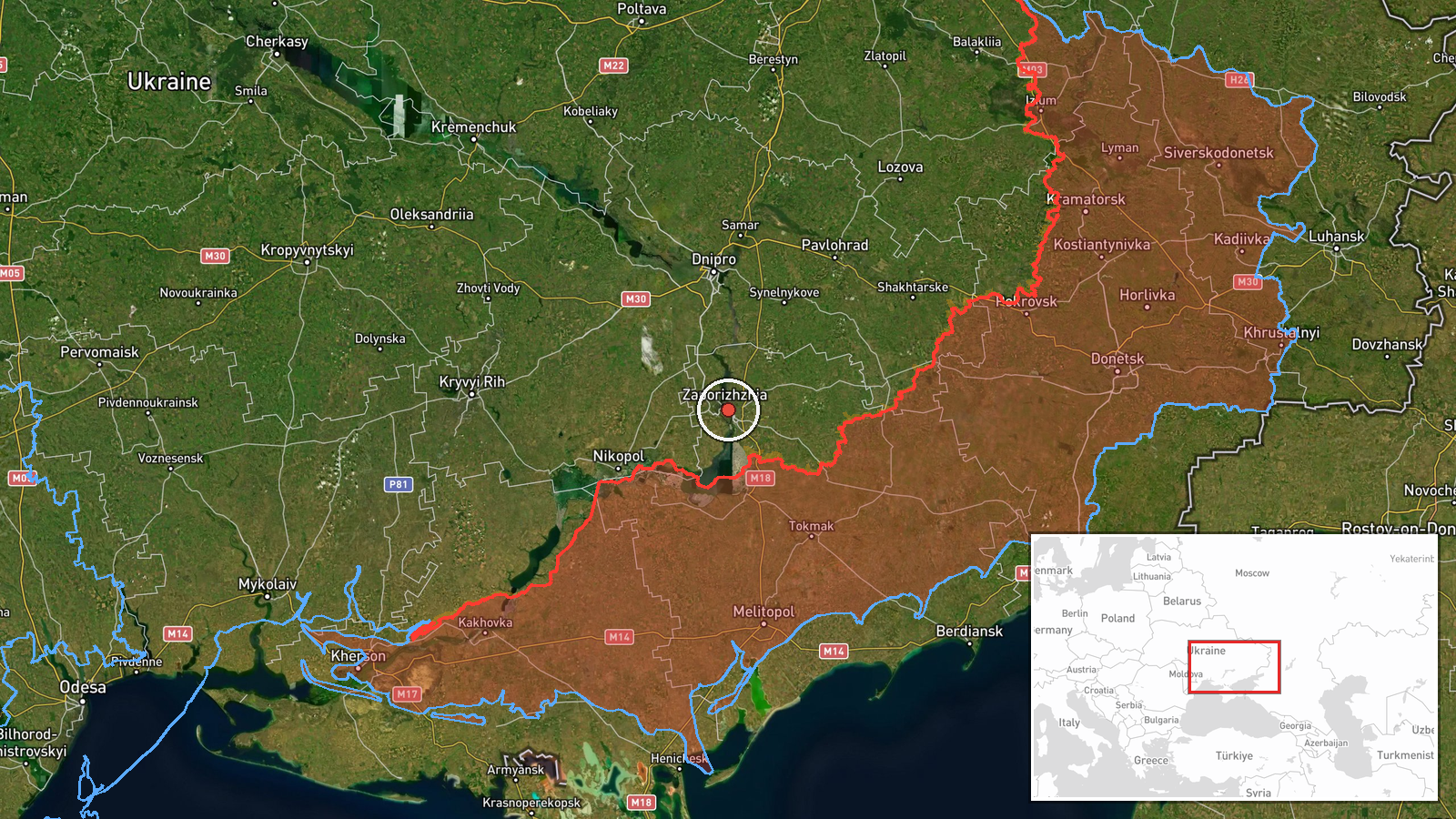
At 02:46 UTC on 19 October 2026, the Telegram channel @kpszsu, which relays Ukrainian air monitoring alerts, reported one Russian ballistic missile heading toward Zaporizhzhia, a city in southeastern Ukraine. The original Ukrainian post describes a 'high-speed target' moving toward Zaporizhzhia from the south. The alert is a warning of an inbound track rather than a confirmed impact. The report does not state whether the missile was intercepted, struck its intended target, or caused damage, and it describes no casualties or detonation points. The event is recorded as a single-source report, with the location placed at the city level.
Context and assessment
Zaporizhzhia has been a recurring focus in the monitoring feed over the preceding day. Between 18 October at 07:18 and 19 October at 02:46 UTC, related records show a guided glide bomb and a Shahed-type drone heading toward the city. Within the same overnight window, a further glide bomb was logged toward southern Dnipropetrovsk Oblast at 02:42, and a jet-powered Shahed identified as a Geran-3 was logged passing northern Zaporizhzhia and heading west at 02:44, minutes before the ballistic alert. Taken together, the sequence suggests a layered pattern in which slower, lower-cost systems and a faster ballistic track are reported within a short period across neighbouring areas. Ballistic missiles typically descend steeply at high speed, which makes them harder to track and intercept than drones or glide bombs. Their appearance alongside other weapons may indicate an effort to stretch air defence coverage, though the records do not show intent. The clustering may also reflect routine monitoring of a busy air corridor. Analysts would normally look for corroborating reports from regional officials before drawing firmer conclusions about targeting.
Sources and confidence
The report comes from one channel, Telegram's @kpszsu, which publishes Ukrainian air monitoring alerts. No second outlet, official statement, or independent monitor is listed as confirming it in the data provided. The confidence score of 8.0 reflects a credible official-style channel, a precise timestamp, and a high-confidence location, but it is held below the top range because it rests on a single source and records a warning of a track rather than an outcome. Confidence would rise with cross-reporting from regional military administration or independent trackers, or with imagery of impact. It would fall if the alert were later corrected or superseded by a revised track.
Location
The point is placed at the city of Zaporizhzhia, at roughly 47.84 N, 35.14 E, with settlement-level precision and high location confidence. The coordinates mark the urban centre rather than a specific facility, since the source names only the city. Zaporizhzhia sits on the Dnipro River, with the large Kakhovka reservoir lying further downstream to the south. The Zaporizhzhia nuclear power plant is located to the south-west of the city.
Related events nearby
- Ukrainian air monitoring: 1 Russian guided glide bomb (KAB) heading toward Zaporizhzhia.2026-10-18 07:18 UTC · Airstrike · Zaporizhzhia, Ukraine
- Ukrainian air monitoring: 1 Russian Shahed-type drone heading toward Zaporizhzhia.2026-10-18 06:17 UTC · Drone Transit · Zaporizhzhia, Ukraine
- Ukrainian air monitoring: 1 Russian guided glide bomb (KAB) heading toward Zaporizhzhya Oblast.2026-10-19 03:22 UTC · Airstrike · Zaporizhzhya Oblast, Ukraine
- Ukrainian air monitoring: 1 Russian guided glide bomb (KAB) heading toward Zaporizhzhya Oblast.2026-10-19 02:46 UTC · Airstrike · Zaporizhzhya Oblast, Ukraine
- Ukrainian air monitoring: 1 Russian guided glide bomb (KAB) heading toward southern Dnipropetrovsk Oblast.2026-10-19 02:42 UTC · Airstrike · southern Dnipropetrovsk Oblast, Ukraine
▶ View this event on the live map

Intel Mapper aggregates open-source reports from monitored Telegram and X channels, geolocates them, cross-checks duplicates across sources and assigns a confidence score. Entries are updated as new confirmations arrive. Read how we verify events.