Jet-powered Shahed drone reported transiting Horodkivka, Vinnytsia region, moving northwest
What happened
Ukraine's Air Force monitoring channel, published on Telegram as @kpszsu, reported at 10:55 UTC on 23 October 2026 that one jet-powered Shahed-type drone, identified as the Russian Geran-3, was passing Horodkivka in Vinnytsia region and moving in a northwest direction. The original Ukrainian post uses the short, emoji-headed format typical of these air alerts and describes a 'jet-powered UAV' (реактивний БпЛА) passing the settlement. The post reports no impact, casualties or damage, and it does not give altitude, speed or whether the aircraft was engaged. The same channel posted several similar transit notices for the Vinnytsia area on 22 and 23 October, covering Ladyzhyn, Rakhny-Lisovi, Zhmerynka, Pishchanka and Sharhorod. The record therefore describes a monitoring observation of a single aircraft in transit, not a report of a strike on Horodkivka.
Context and assessment
Vinnytsia region sits in central-west Ukraine, between the capital Kyiv and the Moldovan border, and it contains road and rail corridors that connect the centre of the country with the south and west. Railway junctions such as Zhmerynka and the Ladyzhyn area have been named in past air alerts, which is consistent with a wider pattern in which Russian long-range drones cross the oblast on routes toward western and central Ukraine. The five related reports in this cluster are all single-drone transit notices from the same monitoring channel, and they appear at different times, from 16:58 on 22 October to 10:55 on 23 October. Because these are separate observations rather than one continuous track, they should not be read as a confirmed single flight path. Still, the repeated naming of places along a north-south and west-east band suggests that one or more Geran-3 drones were moving through the region over an extended period. Operationally, reports of this kind usually indicate aircraft on transit or reconnaissance-style routes rather than confirmed targeting of the named settlements. Warning systems often publish them so that air defence and civil authorities can track the aircraft. The jet-powered Geran-3 variant is a faster and harder-to-intercept version of the propeller-driven Shahed design, which may explain why the channel flags its type.
Sources and confidence
The event rests on a single source, the Telegram channel @kpszsu, which is widely used for official Ukrainian air-monitoring alerts. No independent outlet, no second Ukrainian channel and no Russian statement was found to confirm this specific transit. The 8.0 confidence score reflects the channel's usual role in relaying official monitoring data, the clear wording and the consistent pattern of similar alerts in the same cluster. It is held below the maximum because the claim is single-sourced, does not include timestamps for the aircraft's own position and offers no radar or interception detail. Confidence would rise with a second official Ukrainian source, a regional military administration statement, or interception or debris reports for the same aircraft. It would fall if the aircraft's identification were later corrected or if the alert were withdrawn.
Location
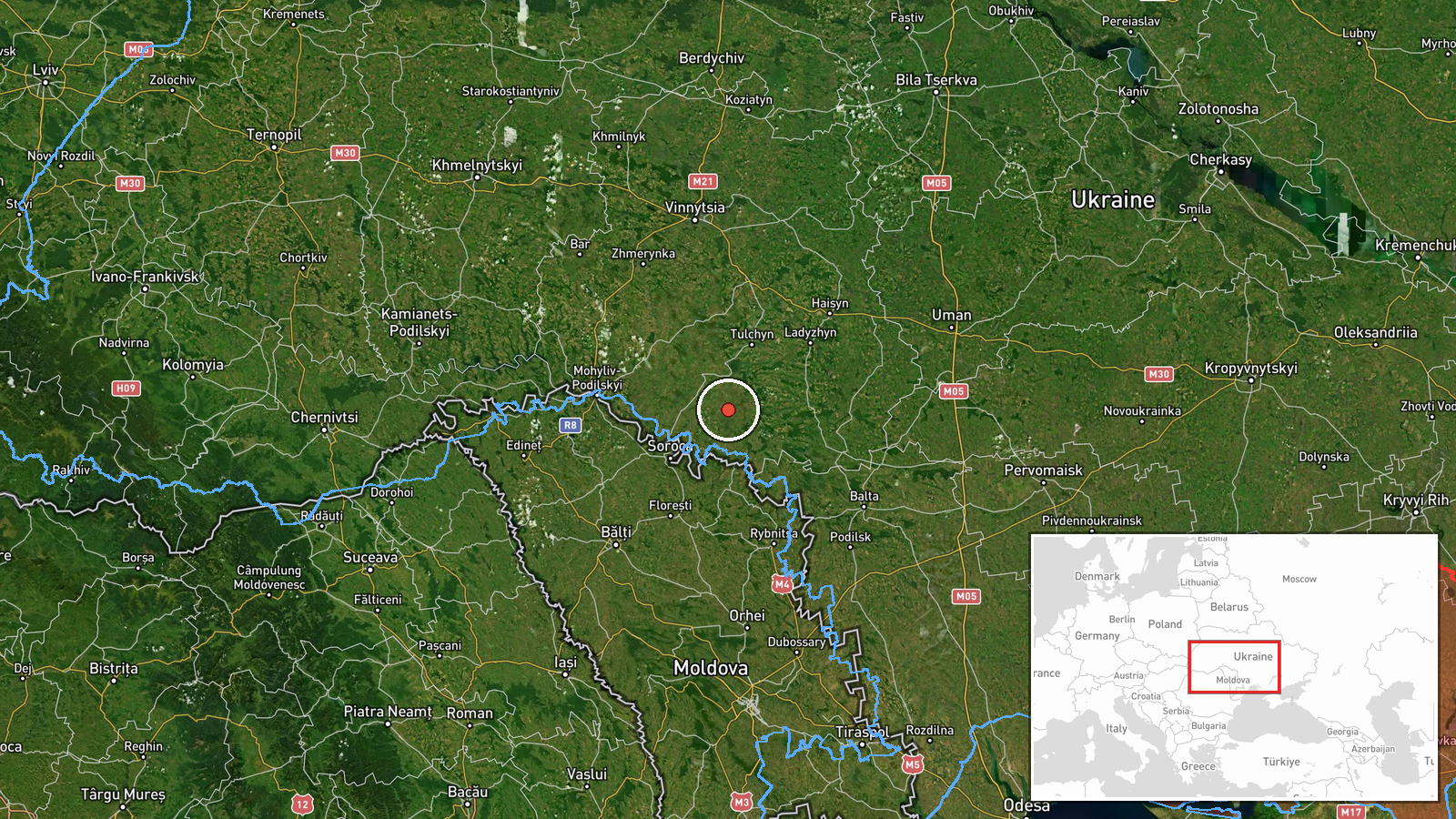
The coordinates place the event at the centre of Horodkivka, a settlement in Vinnytsia region, which gives high location confidence at settlement precision. The coordinates are at settlement level rather than at a specific street or facility. Vinnytsia region is largely agricultural and rolling, with river valleys including the Southern Bug and its tributaries crossing parts of the oblast. The nearby reported locations in this cluster, such as Zhmerynka and Ladyzhyn, lie within the same broad region and mark places that are recognisable on rail and road maps. The map position should be read as the settlement named in the alert, not as the aircraft's exact point of flight.
Related events nearby
- Ukrainian air monitoring: 1 Russian jet-powered Shahed (Geran-3) drone passing Pishchanka, heading northwest.2026-10-23 06:05 UTC · Drone Transit · Pishchanka, Ukraine
- Ukrainian air monitoring: 1 Russian jet-powered Shahed (Geran-3) drone over Rakhny-Lisovi.2026-10-22 17:00 UTC · Drone Transit · Rakhny-Lisovi, Ukraine
- Ukrainian air monitoring: 1 Russian jet-powered Shahed (Geran-3) drone heading toward Ladyzhyn.2026-10-22 16:58 UTC · Drone Transit · Ladyzhyn, Ukraine
- Ukrainian air monitoring: 1 Russian jet-powered Shahed (Geran-3) drone heading toward Sharhorod.2026-10-23 06:11 UTC · Drone Transit · Sharhorod, Ukraine
- Ukrainian air monitoring: 1 Russian jet-powered Shahed (Geran-3) drone heading toward Zhmerynka.2026-10-22 17:02 UTC · Drone Transit · Zhmerynka, Ukraine
▶ View this event on the live map

Intel Mapper aggregates open-source reports from monitored Telegram and X channels, geolocates them, cross-checks duplicates across sources and assigns a confidence score. Entries are updated as new confirmations arrive. Read how we verify events.