Russia fires Iskander-K missiles and 186 drones at Ukraine overnight; 150 reportedly downed
What happened
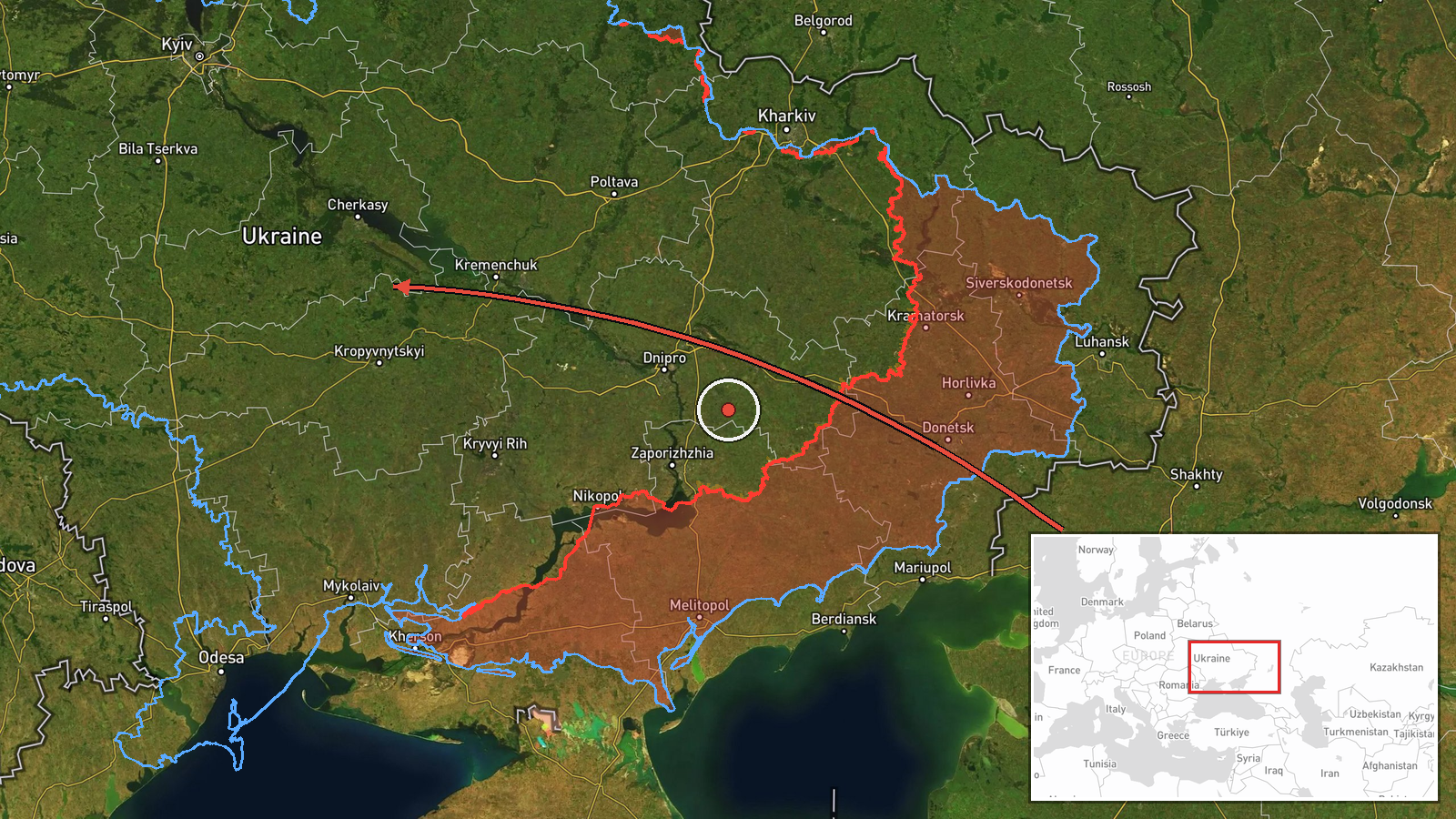
A statement posted on the Telegram channel @kpszsu says that overnight on 21 October, beginning around 18:00 on 20 October, Russia attacked Ukraine with Iskander-K cruise missiles launched from airspace over Rostov Oblast and with 186 attack drones. The statement says 88 of the drones were jet-powered and names Shahed types along with S8000 Bandarol/Dan-T, Gerbera and decoy drones called Parodiya. It lists launch directions from Oryol, Kursk and Primorsko-Akhtarsk in Russia, and from occupied Donetsk, Gvardiiske and Chauda in occupied Crimea. As of 08:30, according to the statement, air defense had downed or suppressed 150 Shahed-type drones, 63 of them jet-powered. The event summary adds that impacts were reported at 27 locations. The excerpt does not name those sites, and the missile count is not given.
Context and assessment
The raid fits a recent pattern of combined missile and drone strikes that pair long-range cruise missiles with large drone waves, which can stretch air defenses across several directions at once. The Iskander-K launch from Rostov Oblast shows that the attack used Russian territory as its staging area, a detail that matters for understanding range and the reach of Russian launch platforms. The related events point to drone activity across central Ukraine in the hours before the strike. Jet-powered Shahed-type drones were reported over Pereiaslav in Kyiv Oblast twice, once after an earlier report of drones moving from Cherkasy Oblast toward the same town, and a further drone was reported heading toward Kaharlyk. Taken together, these reports may suggest that some drones were routed across the central corridor toward the Kyiv region, though the data does not confirm their targets. A drone shootdown on 20 October, in which a Ukrainian interceptor drone reportedly downed a Geran-2, shows that interceptor drones are now part of the defensive mix. A separate WSJ report that Starlink speeds were throttled for Ukrainian military users is unrelated to the strike itself, but it bears on communications resilience during such raids. Operationally, the mix of decoys, jet-powered drones and cruise missiles is generally read as an attempt to exhaust interceptors and sensors, but the available data cannot establish the intended targets.
Sources and confidence
The event rests on a single Telegram channel, @kpszsu, with no independent cross-confirmation in the dataset. The confidence score of 8.1 reflects the specificity of the statement, including timings, launch directions and type-level drone counts, and the fact that it is an official-style air defense report. It is held below the top of the scale because the channel is the only source, the figures are interim, and impact claims are not verified. Confidence would rise with corroboration from the Ukrainian Air Force's own published figures, regional administration reports naming impact sites, or independent imagery of damage. It would fall if later official updates revise the downed count or if Russian statements contradict the launch data.
Location
The location is recorded at region level only, with approximate coordinates of 49.2 north and 31.6 east, which places the marker in central Ukraine near the border area where Cherkasy, Kyiv and Kirovohrad oblasts meet. No settlement or facility is named for the attack, so the marker reflects the broader area rather than a specific impact point, and location confidence is low. The terrain is largely flat steppe and wooded steppe along the Dnipro basin, with river valleys and reservoirs that can affect low-altitude drone routing. The stated origin, Rostov Oblast in southern Russia, lies far to the east and south of the marker.
Related events nearby
- Footage shows a Ukrainian interceptor drone downing a Russian Geran-2 loitering munition; location not reporte2026-10-20 10:11 UTC · Drone Shootdown · Ukraine (location not reported)
- WSJ reports Elon Musk ordered Starlink service speeds in Ukraine to be throttled, affecting Ukrainian military2026-10-20 23:34 UTC · Report · Ukraine
- Ukrainian air monitoring: 2+ Russian jet-powered Shahed (Geran-3) drones from Poltava Oblast toward Cherkasy O2026-10-21 06:26 UTC · Drone Transit · Cherkasy Oblast, Ukraine
- Ukrainian air monitoring: 1 Russian jet-powered Shahed (Geran-3) drone from Mykolaiv Oblast toward Kirovohrad 2026-10-21 06:23 UTC · Drone Transit · Kirovohrad Oblast, Ukraine
- Ukrainian air monitoring: 1 Russian Shahed-type drone heading toward Kaharlyk.2026-10-21 04:08 UTC · Drone Transit · Kaharlyk, Ukraine
▶ View this event on the live map

Intel Mapper aggregates open-source reports from monitored Telegram and X channels, geolocates them, cross-checks duplicates across sources and assigns a confidence score. Entries are updated as new confirmations arrive. Read how we verify events.